Key Notes
- OpenWorks gives eligible US small businesses free local AI support and three months of ChatGPT Business.
- Selected partners can receive up to $8,000 a month for hands-on work and community workshops.
- The pilot lists 20 communities, and applications do not guarantee selection or local availability.
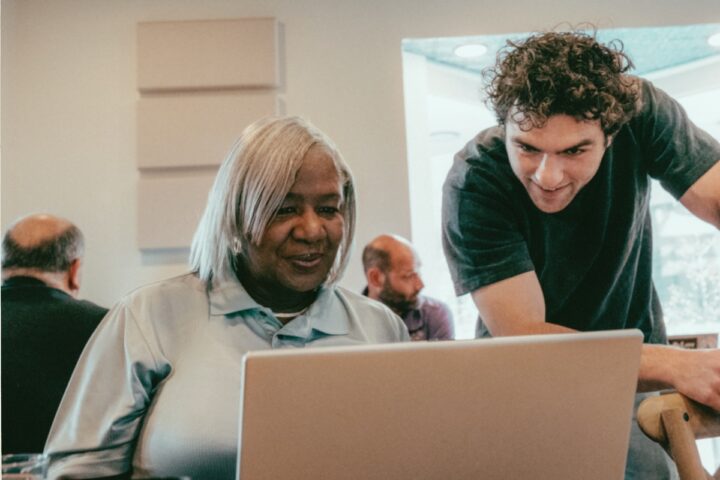
OpenAI is funding local experts to work alongside small-business owners, betting that the next stage of AI adoption will require people who can turn an owner’s everyday problem into something useful. Its new OpenWorks pilot offers that help free of charge, along with three months of ChatGPT Business.
Introduced on November 23, OpenWorks connects independently owned U.S. businesses with technically skilled partners in their communities. The owner chooses a project, while OpenAI funds the expert’s time and provides tools and training resources.
The financial offer has two distinct sides: business owners receive support, while selected partners can receive a monthly stipend of up to $8,000. That figure is a ceiling for the people providing the help, rather than a cash grant promised to each participating business.
A Local Route Into AI
OpenAI’s program page lists 20 pilot communities across the Midwest, South, West and Northeast, including Chicago, Fargo, Austin, Los Angeles, Seattle and New York. The ambition is a nationwide network, but the current map describes an initial footprint.
The company’s FAQ says businesses outside those communities can still express interest. It does not guarantee a local partner or a future launch in every applicant’s area. For this pilot, partners are expected to work in person in the United States.
The approach addresses a practical difficulty with small-business software. An owner may know that a chatbot can write an email, yet still need help connecting that capability to an order book, an inventory process or a routine that employees can repeat. The value of an adviser lies partly in deciding where a modest project will make a difference.
Who Qualifies for Free Support
The business application sets out the target audience: independently owned restaurants, retailers, service firms and manufacturers. Software and SaaS companies, venture-backed businesses and private equity-owned businesses are excluded from the small-business pilot.
OpenAI says no technical experience is required. Its FAQ also welcomes nonprofits and faith-based organizations. Owners can start with a task they want to make easier, and there is no published minimum time commitment for them.
The application asks for the business’s location and industry, with an optional description of the work. It also lets owners flag sensitive data and security requirements, such as restrictions on connected apps. Applicants are asked to identify the relevant categories without entering actual customer, medical, payment or confidential records.
That distinction is useful before any automation begins. A workflow involving a public product catalog poses different questions from one involving employee records or financial accounts. Identifying those boundaries gives the partner and owner a clearer starting point.
The Work Behind the $8,000 Stipend
The partner application asks candidates to commit at least four full days a month to helping local businesses, plus one monthly community workshop. Applicants must describe a real problem they have solved with AI and provide a social profile or portfolio link.
OpenAI is looking for practical technical ability, clear communication and a willingness to listen to owners. Its application spans research, automation, coding, marketing, operations, reporting and training. Individuals, small teams and existing software or AI consultancies can apply.
Consultancies can therefore qualify as providers even though software companies are excluded from the business-beneficiary route. These are different roles within the program.
Partners work as contractors. The FAQ does not specify how each stipend is calculated or how long payments continue. The advertised maximum should not be read as a guaranteed $8,000 payment for every accepted applicant.
What the Early Business Examples Show
OpenAI illustrates the program with customer accounts. At Tiny Things, a Fargo miniature-gift shop, a partner helped build an inventory dashboard for more than 1,000 products. Co-owner Jordan Maahs estimated that commissioning a comparable tool would have cost about $50,000.
At Sign Badgers, also in Fargo, an employee reported saving two to five hours a week after using ChatGPT and Codex to automate inventory and vendor-price checks. Pricing checks reportedly fell to 15 to 20 minutes.
Black Paper Party used ChatGPT to compare purchase orders with shipping records, helping it challenge billing errors and avoid chargebacks, according to OpenAI.

These examples show different uses for the same support model: a custom tool, a repeated administrative process and a check on business paperwork. They are selected customer accounts published by OpenAI, rather than a controlled evaluation establishing what the average participant will save.
Why OpenAI Is Funding the Human Work
OpenWorks extends an existing effort to reach smaller employers. On September 30, OpenAI announced a partnership with America’s Small Business Development Centers, with plans to train around 150 advisers and a goal of reaching at least 1,000 businesses through in-person training.
That earlier initiative also emphasized follow-up support and practical workshops. OpenWorks adds a paid local-partner route, with individual projects and a temporary ChatGPT Business offer at the center of the experience.
For OpenAI, the commercial opportunity is straightforward: a useful process can give an owner a reason to keep using its products. AIstify has also covered its push to bring business profiles and branded agents into ChatGPT. OpenWorks approaches the same small-business market through training and implementation.
The meaningful test comes after the initial help. Can employees run the process, notice mistakes and maintain it when the business changes? Does the time saved outweigh the time spent checking results and the software costs that remain? Those outcomes will say more about the program’s lasting value than the size of the stipend alone.
Eligible owners can apply for support, while prospective experts can apply as partners. Both routes are available through the official OpenWorks site; applying is not a guarantee of selection or local availability.
Disclaimer: AIstify is an independent media brand owned and operated by NuvexMedia LLC, publishing news, research, and insights on artificial intelligence, emerging technologies, automation, and related industries. NuvexMedia LLC invests in and collaborates with companies across the AI, technology, software, and digital innovation sectors. These relationships do not influence AIstify’s editorial coverage, and the publication maintains full editorial independence to provide accurate, timely, and objective information. © 2026 NuvexMedia LLC. All rights reserved. This content is for informational purposes only and should not be considered legal, tax, investment, financial, or other professional advice.