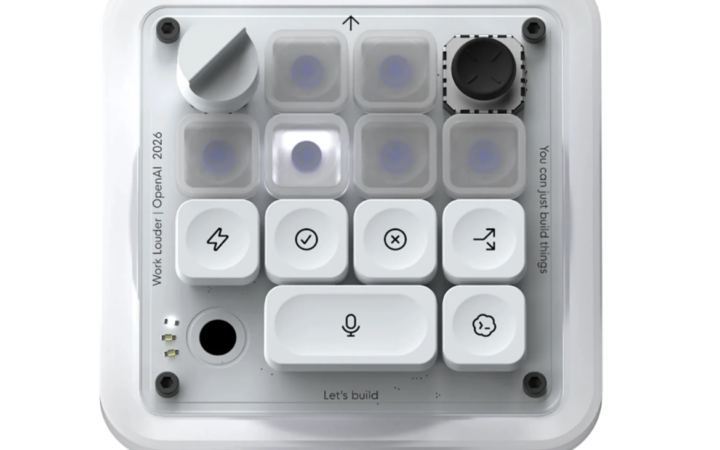
OpenAI AI Smartphone Could Enter Production In 2027
OpenAI’s rumored AI-focused smartphone could enter mass production in 2027, earlier than previously expected, according to analyst Ming-Chi Kuo.
Model quantization reduces the numerical precision used to store weights or perform calculations, such as converting 32-bit values to 8-bit or lower formats. Smaller representations can reduce memory, speed up inference, lower energy use, and enable models to run on phones, browsers, vehicles, or edge hardware. Quantization may be applied after training or included during training so the model learns to tolerate reduced precision. The efficiency gain can come with accuracy loss, especially for sensitive layers or unusual inputs. Hardware support, calibration data, activation ranges, and task requirements determine the best method. Every quantized version should be evaluated independently rather than assumed equivalent to its original model.
OpenAI’s rumored AI-focused smartphone could enter mass production in 2027, earlier than previously expected, according to analyst Ming-Chi Kuo.
OpenAI has launched GPT-5.5, a new flagship model designed for coding, computer use, knowledge work, and scientific research, with stronger performance, lower token usage, and broader real-world autonomy than GPT-5.4.
As John Ternus prepares to take over as Apple CEO, investors are demanding a clearer AI strategy. The company risks falling behind rivals investing heavily in AI.
Intel has joined Elon Musk’s Terafab project aimed at scaling AI chip production, though its exact role remains unclear. The effort targets massive compute output for AI and robotics.
Alibaba has unveiled a new CPU designed for AI agents, focusing on inference and customizable workloads. The chip reflects China’s push to build domestic AI infrastructure.
Elon Musk announced plans for Terafab, a dual chip factory project by Tesla and SpaceX to produce AI chips for vehicles, robots, and space-based data centers.
Nvidia CEO Jensen Huang said demand for Blackwell and Vera Rubin systems could reach $1 trillion by 2027, as the company unveiled new chips, racks, and AI infrastructure at GTC.
Nvidia CEO Jensen Huang will deliver the keynote at the GTC 2026 conference, where investors expect new AI product announcements and demand outlook updates.
Amazon and Cerebras have partnered to combine their AI chips in a new AWS service designed to accelerate inference for chatbots, coding tools, and other generative AI applications.
Palantir and Nvidia unveiled a sovereign AI OS reference architecture designed to deliver turnkey AI data centers. The platform integrates Nvidia Blackwell systems with Palantir’s enterprise AI software stack.