Google Expands Personal Intelligence Across Search and Gemini to All US Users
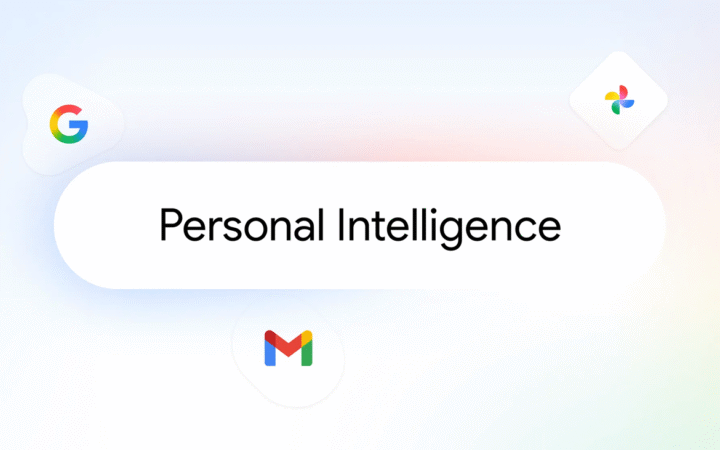
Google is expanding Personal Intelligence in the U.S., enabling Gemini and AI Search to deliver personalized answers by connecting data across apps like Gmail and Photos.
A KV cache, or key-value cache, speeds up autoregressive transformer inference by storing attention information calculated for tokens that have already been processed. Without the cache, the model would recompute those keys and values each time it generates another token. Reusing them reduces repeated work and improves response latency, especially for long prompts and outputs. The tradeoff is memory: cache size grows with sequence length, batch size, layer count, and model dimensions. Production systems manage this cost with paging, quantization, eviction, prompt caching, and request scheduling. KV caching changes inference efficiency, not the model’s learned knowledge, and cached data must be protected when prompts contain sensitive information.
Google is expanding Personal Intelligence in the U.S., enabling Gemini and AI Search to deliver personalized answers by connecting data across apps like Gmail and Photos.

OpenAI is preparing a strategic pivot toward coding and enterprise users, as leadership evaluates which projects to scale back after a period of rapid expansion.
Elon Musk’s xAI is recruiting investment bankers, traders, and crypto experts to train its Grok chatbot on financial markets as it competes for enterprise customers.
Nvidia CEO Jensen Huang said demand for Blackwell and Vera Rubin systems could reach $1 trillion by 2027, as the company unveiled new chips, racks, and AI infrastructure at GTC.
Nvidia CEO Jensen Huang will deliver the keynote at the GTC 2026 conference, where investors expect new AI product announcements and demand outlook updates.
ByteDance has reportedly paused the global rollout of its Seedance 2.0 AI video generator after viral clips sparked backlash from Hollywood studios over intellectual property concerns.
OpenAI is reportedly negotiating with TPG, Advent, Bain, and Brookfield to create a $10 billion joint venture aimed at deploying its enterprise AI tools across private equity portfolio companies.
Encyclopaedia Britannica and Merriam-Webster have sued OpenAI, alleging the company copied nearly 100,000 articles and dictionary entries to train ChatGPT without permission.
Qiwi co-founder Sergey Solonin will lead Mercuryo AI Labs, developing infrastructure that allows AI agents to autonomously make payments using programmable virtual cards and policy-based controls.
Nebius has signed a long-term AI infrastructure agreement with Meta worth up to $27 billion, providing large-scale compute capacity powered by Nvidia’s Vera Rubin platform.