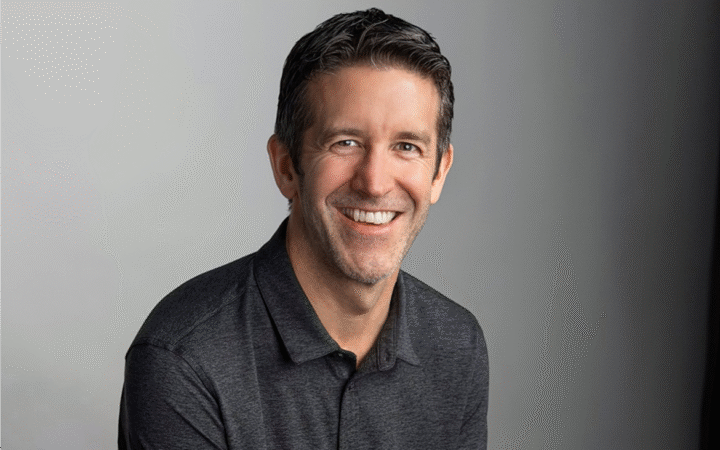
Apple’s Next CEO Faces Growing Pressure to Catch Up in AI
As John Ternus prepares to take over as Apple CEO, investors are demanding a clearer AI strategy. The company risks falling behind rivals investing heavily in AI.
Inference is the stage when a trained AI model uses new input to produce a prediction, classification, recommendation, or generated response. Training may take days across specialized hardware, while inference happens whenever a user submits a prompt, a camera captures an image, or an application requests a score. Production systems optimize inference for latency, throughput, memory use, energy consumption, and cost without degrading output quality. The model may run in a cloud service, data center, phone, vehicle, or edge device. Monitoring remains necessary because real-world inputs change, hardware can fail, and a model that performed well during evaluation may behave differently under live traffic.
As John Ternus prepares to take over as Apple CEO, investors are demanding a clearer AI strategy. The company risks falling behind rivals investing heavily in AI.

Intel has joined Elon Musk’s Terafab project aimed at scaling AI chip production, though its exact role remains unclear. The effort targets massive compute output for AI and robotics.
Alibaba has unveiled a new CPU designed for AI agents, focusing on inference and customizable workloads. The chip reflects China’s push to build domestic AI infrastructure.
Elon Musk announced plans for Terafab, a dual chip factory project by Tesla and SpaceX to produce AI chips for vehicles, robots, and space-based data centers.
Nvidia CEO Jensen Huang said demand for Blackwell and Vera Rubin systems could reach $1 trillion by 2027, as the company unveiled new chips, racks, and AI infrastructure at GTC.
Nvidia CEO Jensen Huang will deliver the keynote at the GTC 2026 conference, where investors expect new AI product announcements and demand outlook updates.
Amazon and Cerebras have partnered to combine their AI chips in a new AWS service designed to accelerate inference for chatbots, coding tools, and other generative AI applications.
Palantir and Nvidia unveiled a sovereign AI OS reference architecture designed to deliver turnkey AI data centers. The platform integrates Nvidia Blackwell systems with Palantir’s enterprise AI software stack.
Meta introduced four new in-house MTIA chips designed for AI training and inference as the company accelerates data center expansion. The chips aim to improve performance and reduce reliance on external hardware suppliers.
Nvidia and Nebius have formed a strategic partnership to build hyperscale AI cloud infrastructure, with Nvidia investing $2 billion to support gigawatt-scale AI computing capacity.