AI’s Quiet Threat May Be to Government Tax Revenue
Economists warn AI’s biggest near-term danger may be fiscal: if it displaces high-earning workers, income-tax revenue could fall sharply while welfare costs rise, straining public budgets.

A hyperparameter is a setting or configuration value that defines how a machine learning or AI model learns from data. Unlike model parameters, which are learned automatically during training, hyperparameters are manually set before training begins and control aspects such as learning rate, batch size, number of layers, or regularization strength. The correct selection of hyperparameters greatly influences a model’s performance, accuracy, and ability to generalize to new data. Finding the best combination is often achieved through techniques like grid search, random search, or Bayesian optimization. Effective hyperparameter tuning is essential for optimizing AI systems and achieving stable, efficient learning outcomes.
Economists warn AI’s biggest near-term danger may be fiscal: if it displaces high-earning workers, income-tax revenue could fall sharply while welfare costs rise, straining public budgets.
Chinese startup Moonshot released Kimi K3, a 2.8-trillion-parameter open-weight model it says rivals Anthropic’s Claude, as the US-China AI gap narrows.
A Reuters analysis found xAI installed 59 unpermitted gas turbines to power its Colossus 2 data center, releasing pollution near predominantly Black Memphis-area communities.
Twenty-six Meta workers sued the company, alleging its AI systems used metrics like token consumption to select layoff targets, disadvantaging people on medical or family leave.
Visa, Mastercard, Stripe, Google and 36 others formed a Linux Foundation body to steward x402, an open standard letting AI agents pay for services directly over HTTP.
IBM shares sank about 23% after it warned that preliminary second-quarter results fell short, as clients diverted spending toward memory and servers ahead of price increases.
Google DeepMind CEO Demis Hassabis proposed a US-led standards body to test the most powerful AI models before release and coordinate an industry slowdown if risks mount.
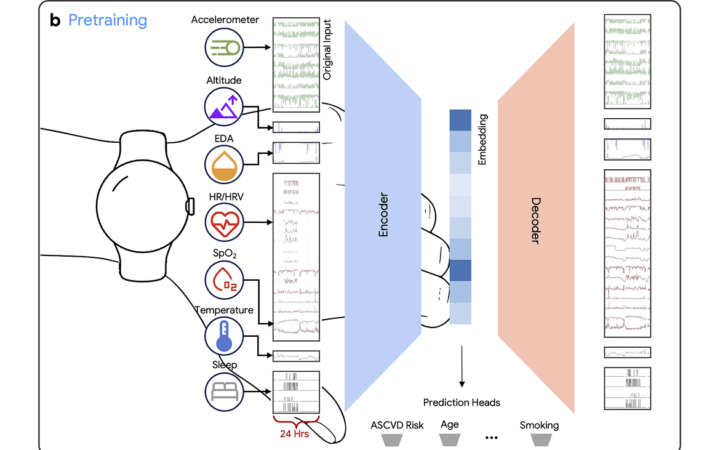
Google unveiled SensorFM, a health AI trained on over a trillion minutes of smartwatch data from 5 million people, that predicts 35 health measures from cardiovascular risk to depression.
SpaceXAI’s Grok 4.5 tied GPT-5.6 Sol for first on the SWE-Atlas-QnA coding benchmark, a narrow win that highlights the model’s real edge: efficiency and low cost.
Apple sued OpenAI for trade secret theft, alleging former employees now at OpenAI stole confidential hardware information to build its first AI device. OpenAI denies it.