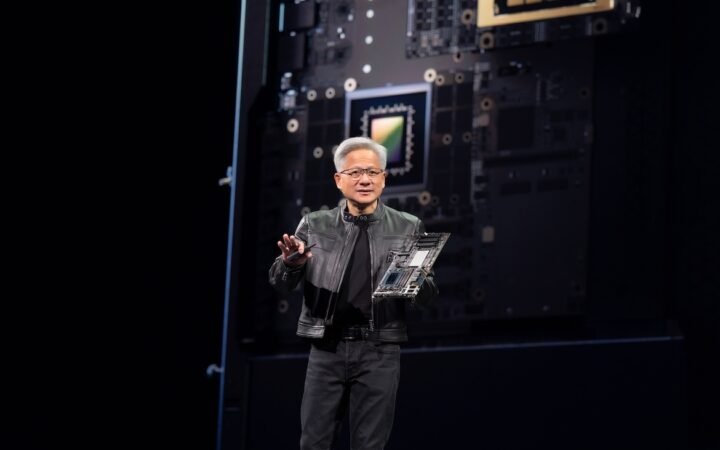
Nvidia’s Jensen Huang Softens His ‘China Will Win the AI Race’ Comment
Nvidia CEO Jensen Huang clarified remarks suggesting China would win the AI race, saying the U.S. can stay ahead by innovating faster and empowering global developers.
An expert system is an AI program designed to solve a bounded class of problems using a knowledge base and an inference engine. Specialists encode facts, relationships, and if–then rules, while the inference process applies those rules to a user’s case and may explain how it reached a recommendation. Expert systems were widely used before modern machine learning and remain useful where decisions must follow explicit, auditable logic. They do not automatically learn from data unless combined with other methods, and maintaining the rule base can become difficult as a domain changes. Their reliability depends on complete knowledge, conflict handling, and clear boundaries for cases requiring human judgment.
Nvidia CEO Jensen Huang clarified remarks suggesting China would win the AI race, saying the U.S. can stay ahead by innovating faster and empowering global developers.

OpenAI is laying the groundwork for an initial public offering that could value the company at up to $1 trillion, positioning it as one of the most anticipated tech listings in history.
Ark Invest CEO Cathie Wood says humanoid robots could become the most transformative opportunity in artificial intelligence, eclipsing sectors like autonomous transport and healthcare.
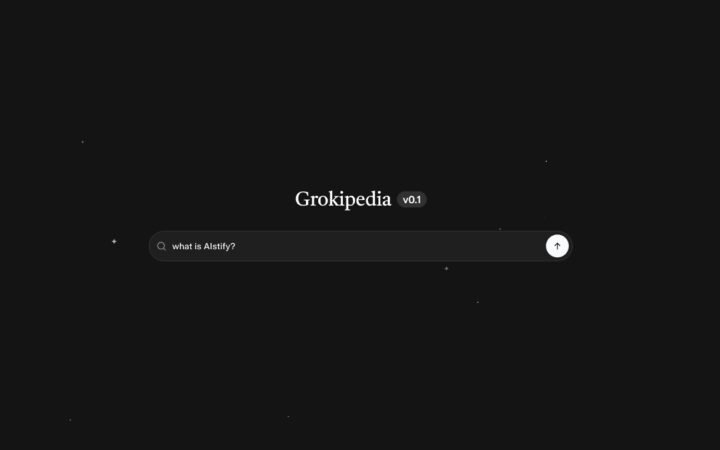
Elon Musk has unveiled Grokipedia – an AI-driven encyclopedia built on Grok that aims to offer factual, bias-free knowledge as an alternative to Wikipedia.
A study by the University of Maryland and Microsoft found that Polish outperforms English and other major languages in long-context AI prompts, surprising researchers.
Neobank Revolut has acquired Berlin-based AI travel agent start-up Swifty, integrating its conversational booking technology into Revolut’s loyalty and lifestyle platform for over 65 million users.
Opera today introduced Neon, an AI-powered browser that can run tasks and navigate pages autonomously — aiming to shift web browsing from passive to “agentic.”
AI search startup Perplexity has reportedly raised $200 million at a $20 billion valuation, just two months after a $100 million round – signaling its rapid rise as a major rival to Google.