Telling AI It’s an ‘Expert’ Might Actually Make It Worse, Study Finds
New research shows that telling AI models they are “experts” can reduce accuracy in tasks like coding and math, while improving safety and alignment outcomes.
Every interaction with a language model must fit inside a limited working space called the context window. It contains the tokens the model can consider at one time, including instructions, conversation history, retrieved documents, and the response being generated. When the total exceeds the model’s limit, older or less important material must be removed, summarized, or processed separately. A larger context window can support long reports, extended conversations, and analysis across many files, but capacity alone does not guarantee that the model will use every detail correctly. Information placement, prompt structure, retrieval quality, and computational cost still matter. Context windows differ from permanent memory because their contents apply to the current request unless another system explicitly stores them.
New research shows that telling AI models they are “experts” can reduce accuracy in tasks like coding and math, while improving safety and alignment outcomes.
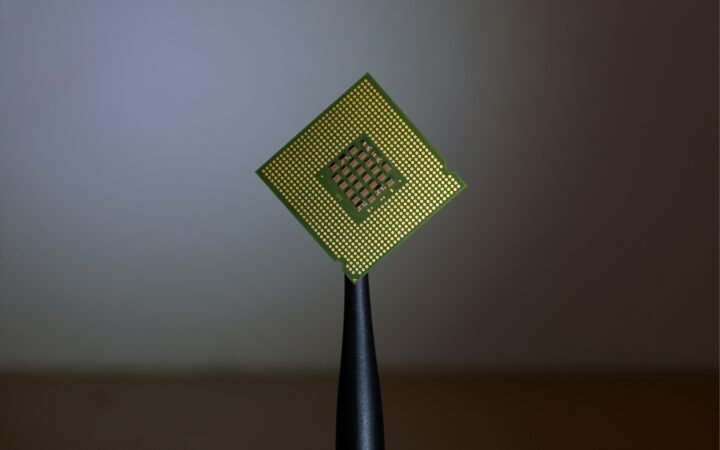
Meta introduced four new in-house MTIA chips designed for AI training and inference as the company accelerates data center expansion. The chips aim to improve performance and reduce reliance on external hardware suppliers.
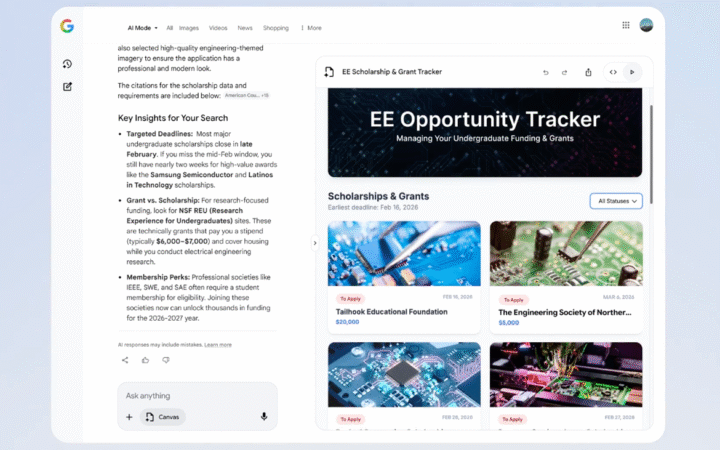
Google has rolled out Canvas in AI Mode to all U.S. users in English, enabling people to create documents, dashboards, and interactive tools directly within Search. The feature provides a dynamic workspace for planning projects and building simple applications.
Andrej Karpathy argues AI coding agents now fundamentally change programming workflows, enabling long-running autonomous tasks and redefining software engineering.
MSCI introduces AI connectors enabling access to its data via MSCI ONE, ChatGPT, and Claude, debuting IndexAI Insights to deliver conversational index analytics powered by large language models.
ŌURA unveils a proprietary large language model for women’s health, combining clinical research and biometric data to deliver personalized, privacy-first AI guidance through Oura Advisor.
A former Citigroup executive says commercially available humanoid robots can now deliver a return on investment in under 10 weeks, potentially accelerating enterprise automation.
Former DeepMind researcher David Silver has raised $1 billion for London-based Ineffable Intelligence, aiming to build a superintelligence that learns autonomously through experience.
Google is rolling out Gemini 3.1 Pro across consumer, developer, and enterprise products, touting major gains in reasoning performance and benchmark results.
India’s AI Impact Summit in New Delhi delivered more than $250 billion in investment commitments, spanning data centers, AI infrastructure, and global expansion plans.