Elon Musk Launches Grokipedia, an AI-Powered Rival to Wikipedia
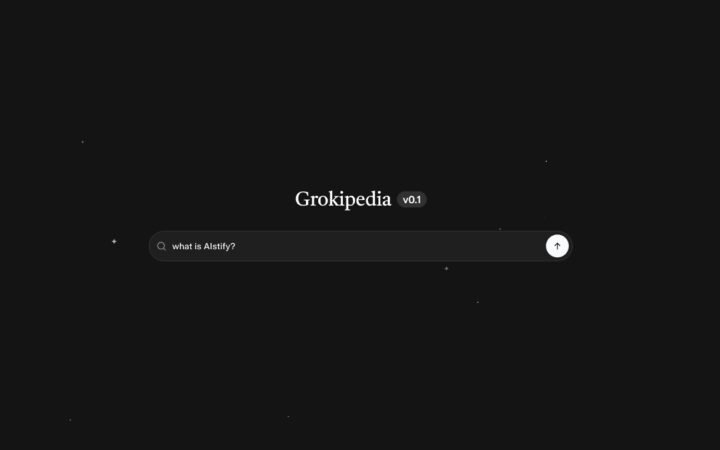
Elon Musk has unveiled Grokipedia – an AI-driven encyclopedia built on Grok that aims to offer factual, bias-free knowledge as an alternative to Wikipedia.

An AI system can appear accurate overall while consistently producing worse results for certain people, situations, or types of data; this pattern is known as bias. It may enter a model through unrepresentative training examples, historical inequalities, labeling decisions, feature selection, optimization targets, or the environment in which the system is deployed. Bias can affect hiring tools, facial recognition, lending models, medical software, and other high-impact applications. Reducing it requires more than removing sensitive fields, because related variables may preserve the same patterns. Teams typically examine data coverage, compare performance across relevant groups, document limitations, test real-world outcomes, and involve domain experts and affected communities throughout development and monitoring.
Elon Musk has unveiled Grokipedia – an AI-driven encyclopedia built on Grok that aims to offer factual, bias-free knowledge as an alternative to Wikipedia.

A study by the University of Maryland and Microsoft found that Polish outperforms English and other major languages in long-context AI prompts, surprising researchers.
Neobank Revolut has acquired Berlin-based AI travel agent start-up Swifty, integrating its conversational booking technology into Revolut’s loyalty and lifestyle platform for over 65 million users.
Opera today introduced Neon, an AI-powered browser that can run tasks and navigate pages autonomously — aiming to shift web browsing from passive to “agentic.”
AI search startup Perplexity has reportedly raised $200 million at a $20 billion valuation, just two months after a $100 million round – signaling its rapid rise as a major rival to Google.