Key Notes
- DeepSeek moved its flagship V4 Pro out of a ~4-month preview to general availability as build "0813"; it's a 1.6-trillion-parameter Mixture-of-Experts model (~49B active per token), with a 1M-token context window and up to 384K-token output, aimed at coding, reasoning and long agentic tasks.
- On a community-computed composite of agentic benchmarks it lands around 62.5, within ~2 points of GPT-5.6 Sol (65.5), Fable 5 (64.5) and Opus 5 (64.0), at roughly 1/60th of Fable's price ($0.435/M input, $0.87/M output); these are largely vendor-reported figures.
- A steep price increase (peak/off-peak billing) takes effect August 16, and the model is text-only with no vision; the V4 family's weights are MIT-licensed, though the exact 0813 build's open-weight release lagged the API endpoint.
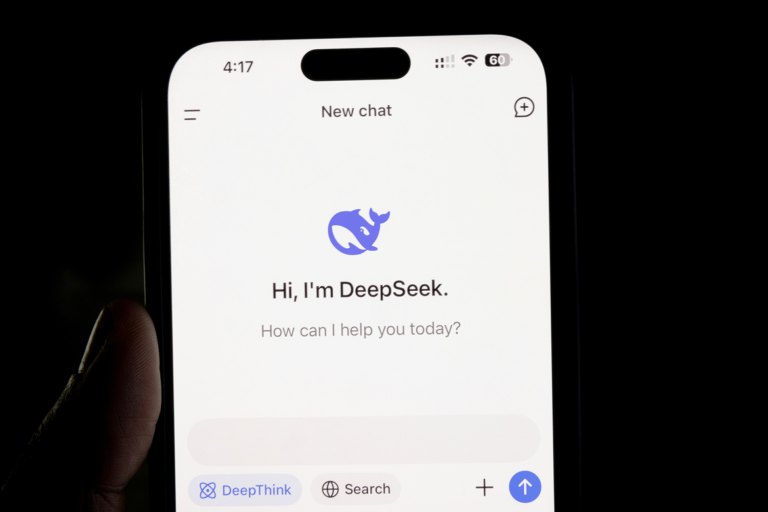
DeepSeek moved its flagship V4 Pro model to general availability on August 12, closing a preview that had run since the V4 family’s debut on April 24. The release is identified by the build tag “0813,” and the deepseek-v4-pro API endpoint quietly began pointing to it.
V4 Pro is a Mixture-of-Experts model with 1.6 trillion total parameters, of which roughly 49 billion are active per token, an architecture that keeps inference costs close to a much smaller dense model while retaining the knowledge capacity of a large one. It offers a 1-million-token context window and can produce outputs up to 384,000 tokens, and it was pretrained on more than 32 trillion tokens.
The model is aimed squarely at programming, reasoning and long-running agentic tasks. It is text-only, with no vision support, a limitation that drew mixed reactions from developers.
The headline is price. V4 Pro costs about $0.435 per million input tokens on a cache miss and $0.87 per million output tokens, with cache hits far cheaper. That is roughly a sixtieth of the cost of Anthropic’s Fable 5, and dramatically below GPT-5.6 Sol and Claude Opus 5.
On capability, the framing that it lands “close to Opus” needs a precise reading. On a community-computed geometric mean across agentic benchmarks, V4 Pro scored about 62.5, within roughly two points of GPT-5.6 Sol at 65.5, Fable 5 at 64.5 and Opus 5 at 64.0, and marginally ahead of Kimi K3. Those are strong numbers, but they are largely vendor-reported or community-aggregated rather than independently audited, and DeepSeek’s benchmark figures have historically varied widely depending on the testing harness.
The Cost-Efficiency King
V4 Pro’s real story is value, not a capability crown. Placing a model within a couple of points of the most expensive systems on the market, at a tiny fraction of their price, changes the economics for anyone running high-volume, cost-sensitive coding or agent pipelines.
That efficiency is an engineering achievement, not just aggressive pricing. DeepSeek’s published figures show V4 Pro using a small fraction of the inference compute and memory of its predecessor at long context, thanks to a hybrid attention design, which is why the company has been able to make its price cuts structural rather than promotional.
The competitive effect is the same pressure Chinese labs have applied all year: rather than out-innovating US frontier models outright, they undercut them on price while closing the capability gap enough that the discount becomes hard to ignore. It joins Kimi K3 and Qwen 3.8 in a wave of large Chinese models arriving within weeks of each other.
The Caveats Beneath the Launch
Several important qualifications temper the release. A steep price increase takes effect at 16:00 UTC on August 16, when DeepSeek shifts to peak and off-peak billing that roughly triples the headline rates during peak hours, so the sub-dollar pricing that makes V4 Pro striking is partly time-limited.
The benchmark claims also warrant caution, since independent, contamination-free tests have at times placed earlier V4 Pro builds far lower than vendor-run harnesses suggested, a reminder to test on real workloads before trusting launch figures. The staged rollout has been unusual too: the cheaper V4 Flash reached general availability first on July 31 and was reported to beat the V4 Pro preview on several agent benchmarks, so part of this flagship launch is simply DeepSeek reclaiming the lead from its own budget model.
The V4 family’s weights are MIT-licensed and downloadable, keeping DeepSeek in the open-weight camp, though the precise timing of the 0813 build’s weight release lagged its API availability, underscoring that API access and open weights are not the same thing.
For now, V4 Pro reads as the strongest value proposition in frontier-class coding, with its capability parity still to be confirmed by independent testing and its cheapest pricing about to expire.
Disclaimer: AIstify is an independent media brand owned and operated by NuvexMedia LLC, publishing news, research, and insights on artificial intelligence, emerging technologies, automation, and related industries. NuvexMedia LLC invests in and collaborates with companies across the AI, technology, software, and digital innovation sectors. These relationships do not influence AIstify’s editorial coverage, and the publication maintains full editorial independence to provide accurate, timely, and objective information. © 2026 NuvexMedia LLC. All rights reserved. This content is for informational purposes only and should not be considered legal, tax, investment, financial, or other professional advice.