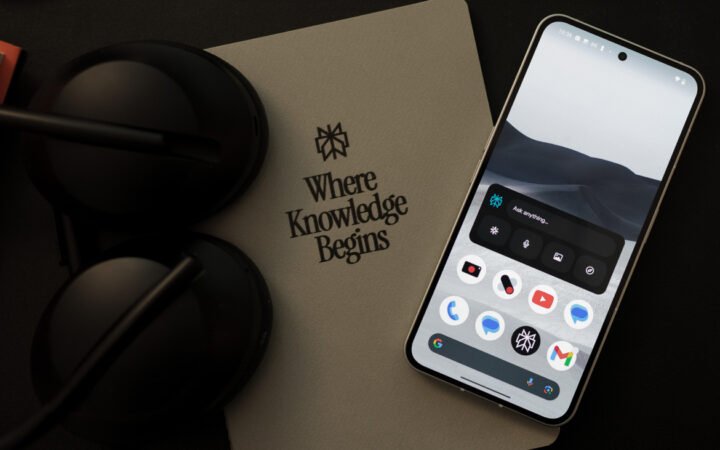
Opera Launches Neon AI Browser to Join Agentic Web Race
Opera today introduced Neon, an AI-powered browser that can run tasks and navigate pages autonomously — aiming to shift web browsing from passive to “agentic.”
Low-rank adaptation, known as LoRA, fine-tunes a model by training small added matrices while leaving the original weights frozen. The method assumes that useful task-specific changes can be represented with far fewer parameters than the full model contains. This lowers memory requirements, shortens training, and makes it practical to store separate adapters for different domains or styles. LoRA is common with large language and image models, although adapter quality still depends on data, rank, target layers, and evaluation. It does not update a model’s knowledge automatically or remove inherited risks, and combining several adapters can create interactions that require additional testing before deployment.
Opera today introduced Neon, an AI-powered browser that can run tasks and navigate pages autonomously — aiming to shift web browsing from passive to “agentic.”
OpenAI’s next version of its Sora video generator will default to including copyrighted content unless owners explicitly opt out – drawing criticism from media creators.
OpenAI introduces ChatGPT Pulse, a proactive feature delivering daily updates and suggestions directly in the app, positioning it as a potential challenger to social media feeds.
AI search startup Perplexity has reportedly raised $200 million at a $20 billion valuation, just two months after a $100 million round – signaling its rapid rise as a major rival to Google.