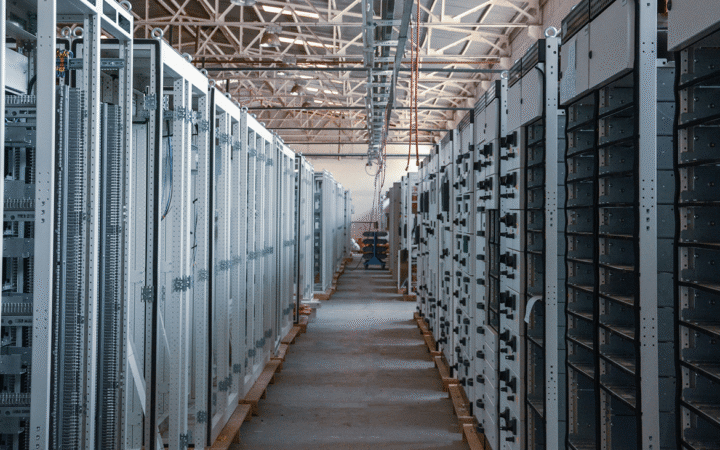
Alibaba and China Telecom Launch AI Data Center Powered by Custom Chips
Alibaba and China Telecom are building a major AI data center powered by Alibaba’s own chips, marking a push toward domestic infrastructure amid U.S. restrictions.
AI infrastructure refers to the combination of hardware, software, and cloud systems that provide the computing foundation needed to build, train, and deploy artificial intelligence models. It includes powerful GPUs, TPUs, data storage, networking, and specialized frameworks optimized for large-scale machine learning. Modern AI infrastructure supports the full lifecycle of model development — from data preprocessing and training to deployment and monitoring. Cloud providers such as Google, AWS, and Microsoft Azure have built robust AI infrastructure platforms that enable organizations to scale workloads efficiently and securely. As AI systems grow more complex, scalable infrastructure has become a strategic asset, powering breakthroughs in generative AI, automation, and enterprise applications.
Alibaba and China Telecom are building a major AI data center powered by Alibaba’s own chips, marking a push toward domestic infrastructure amid U.S. restrictions.
Intel has joined Elon Musk’s Terafab project aimed at scaling AI chip production, though its exact role remains unclear. The effort targets massive compute output for AI and robotics.
Broadcom is expanding its role in AI infrastructure through new chip and compute deals with Google and Anthropic. The move reflects accelerating demand for large-scale AI capacity.
Chinese chipmakers report record revenue driven by AI demand, memory shortages, and U.S. export curbs boosting domestic semiconductor growth.
OpenAI has closed a $122 billion funding round at an $852 billion valuation to scale its AI infrastructure and products. The company aims to accelerate enterprise adoption and global deployment of intelligent systems.
Nvidia has invested $2 billion in Marvell as part of a partnership to expand AI infrastructure, including custom chips, networking, and silicon photonics.
Nebius will build a 310MW AI data center in Finland, expanding Europe’s growing push to develop large-scale compute infrastructure.
Starcloud reaches $1.1B valuation to build orbital AI data centers, launching GPU-powered satellites and targeting space-based compute infrastructure.
SpaceX is preparing a record-breaking IPO that could raise $75 billion, combining its space business with AI ambitions through xAI integration.
DDR5 memory prices are showing early signs of decline after Google’s TurboQuant algorithm reduced AI memory requirements, easing pressure on global DRAM supply.