Microsoft Adds Multi-Model AI Workflows to Copilot
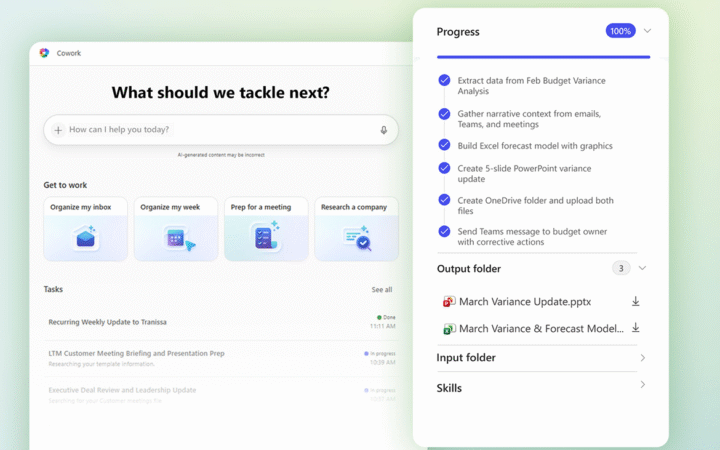
Microsoft has introduced multi-model capabilities in Copilot, allowing GPT and Claude to collaborate on responses to improve accuracy and reliability.

AI benchmarks provide repeatable ways to evaluate how models perform on tasks such as reasoning, coding, image recognition, factual recall, instruction following, or safety. A benchmark usually combines a dataset, scoring method, and evaluation protocol so results can be compared across systems or model versions. Scores are useful, but they do not automatically represent real-world quality: training-data contamination, narrow test formats, weak baselines, and optimized test-taking can distort conclusions. Strong evaluation therefore uses several benchmarks alongside human review, domain-specific testing, cost and latency measurements, and analysis of failure cases rather than treating a single leaderboard number as a complete measure of intelligence.
Microsoft has introduced multi-model capabilities in Copilot, allowing GPT and Claude to collaborate on responses to improve accuracy and reliability.
OpenAI has launched plugin support for Codex, enabling integrations with tools like Slack, Notion, and Gmail as it builds an ecosystem for AI-driven workflows.
DDR5 memory prices are showing early signs of decline after Google’s TurboQuant algorithm reduced AI memory requirements, easing pressure on global DRAM supply.
A data leak at Anthropic exposed details of its upcoming Claude Mythos model, described as a major leap in AI capabilities, along with internal documents.
SoftBank has secured a $40 billion bridge loan to deepen its investment in OpenAI and accelerate its broader AI strategy.
Google has expanded Search Live globally, enabling users to interact with AI using voice and camera through its Gemini-powered search experience.
A U.S. federal judge has blocked the Pentagon’s attempt to ban Anthropic’s AI tools, allowing continued use of its systems during an ongoing legal dispute.
Anthropic is exploring an IPO as early as October, as both it and OpenAI accelerate enterprise strategies and infrastructure investments ahead of potential public listings.
ByteDance is rolling out its Seedance 2.0 AI video model in CapCut, enabling prompt-based video creation as competition in generative video intensifies.
AI-driven bots now generate more internet traffic than humans, according to a new report, highlighting the growing impact of automated systems online.