Figma Launches AI Design Agent for Collaborative Workflows
Figma introduced a new AI design agent that can generate interfaces, edit designs, and automate creative workflows using natural language prompts.

Figma is a leading collaborative design and product software company shaping software platforms, AI assistants, automation, and productivity tools across AI, software, data, automation, and enterprise technology.
Figma is an important technology company in software platforms, AI assistants, automation, and productivity tools. It belongs in an AIstify company directory because many of the strongest technology companies outside the largest global giants are now defining how artificial intelligence reaches practical work. These companies influence the market through data platforms, developer tools, workflow software, design systems, commerce platforms, automation, observability, communications APIs, collaboration tools, and AI-enabled business applications. Founded in 2012, Figma is headquartered in San Francisco, California, United States. Its leadership field is listed as Dylan Field, and its business profile is best described as a Private collaborative design, product development, prototyping, whiteboarding, and AI design platform company. The organization is associated with Dylan Field and Evan Wallace. Its major brands, platforms, or programs include Figma, FigJam, Dev Mode, Figma Make, Figma Sites, Config.
Within AIstify’s company directory, Figma fits into the Collaborative Design and Product Software category. Employee count is listed as 1,500+, funding status is Private funding rounds, valuation is described as Private valuation varies, ownership is Private, and stock ticker information is N/A. The company’s products and services include Interface design, collaborative prototyping, design systems, developer handoff, whiteboarding, AI design generation, product design workflows. This product surface matters because AI adoption is not limited to foundation model labs or hyperscale cloud providers. A large part of the market is moving through specialized platforms that sit close to real workflows. Data teams need trusted analytics and governance. Developers need faster delivery and safer code. Sales, support, marketing, finance, HR, design, logistics, and operations teams need AI that connects with the systems they already use.
Figma’s relevance can be understood through several practical layers. The first layer is workflow depth: software becomes more valuable when it understands a specific business process. The second layer is data access: AI features need reliable, governed, and timely information. The third layer is ecosystem: APIs, integrations, marketplaces, and partner programs help the product become part of daily operations. The fourth layer is trust: customers need privacy, security, permissions, auditability, and reliability before deploying AI inside core business workflows. AI is now central to how modern technology platforms compete. Data platforms are adding vector search, AI assistants, model tooling, and governed data sharing. Developer platforms are adding code generation, security suggestions, release automation, and documentation help. Collaboration and productivity products are adding summarization, writing, research, and project intelligence. Customer platforms are adding personalization, sales automation, support automation, and marketing intelligence.
Design tools are adding generative creation, prototyping assistance, asset generation, and brand workflow automation. The competitive context around Figma is changing quickly. Buyers are comparing whether AI features save time, reduce manual work, improve decision quality, or create new product capabilities. Vendors are competing on model partnerships, proprietary data access, security posture, pricing, user experience, integration depth, and measurable return on investment. Public companies are under pressure to show AI-driven growth, while private companies must prove that adoption can turn into durable revenue. The strongest platforms are usually the ones that combine a useful workflow with a credible AI roadmap. From an operator, investor, or technology buyer perspective, Figma is worth tracking because these companies often show where AI becomes normal business software.
Their product releases, customer case studies, developer ecosystems, enterprise adoption, AI assistants, automation features, data strategy, and partner integrations can reveal how the technology market is shifting beyond early experimentation. AIstify tracks Figma with tags including figma, collaborative design, design ai, product design, prototyping, software technology, figma profile, figma company profile. The company’s public website is https://www. figma. com/.
Additional comparison signals include platforms models cloud developers enterprise data security commerce infrastructure services partners ecosystems pricing adoption governance productivity agents automation analytics research compute applications collaboration design workflows software hardware platforms models cloud developers enterprise data security commerce infrastructure services partners ecosystems pricing adoption governance productivity agents automation analytics research compute applications collaboration design workflows software hardware platforms models cloud developers enterprise data security commerce infrastructure services partners ecosystems pricing adoption governance productivity agents automation analytics research compute applications collaboration design workflows software hardware platforms models cloud developers enterprise data security commerce infrastructure services partners ecosystems pricing adoption governance productivity agents automation analytics research compute applications collaboration design workflows software hardware platforms models cloud developers enterprise data security commerce infrastructure services partners ecosystems pricing adoption governance productivity agents.
For AIstify, this makes Figma a useful reference point for tracking how important technology companies bring AI into software platforms, cloud services, data systems, automation, design tools, commerce, and productivity workflows.
Cloud platforms, developer tools, AI services, APIs, SDKs, data platforms, enterprise software marketplaces, app ecosystems, or partner integrations where available.
Software subscriptions, enterprise licenses, usage-based services, platform fees, transaction fees, marketplace revenue, professional services, and customer support plans.
Figma introduced a new AI design agent that can generate interfaces, edit designs, and automate creative workflows using natural language prompts.

OpenAI has launched plugin support for Codex, enabling integrations with tools like Slack, Notion, and Gmail as it builds an ecosystem for AI-driven workflows.
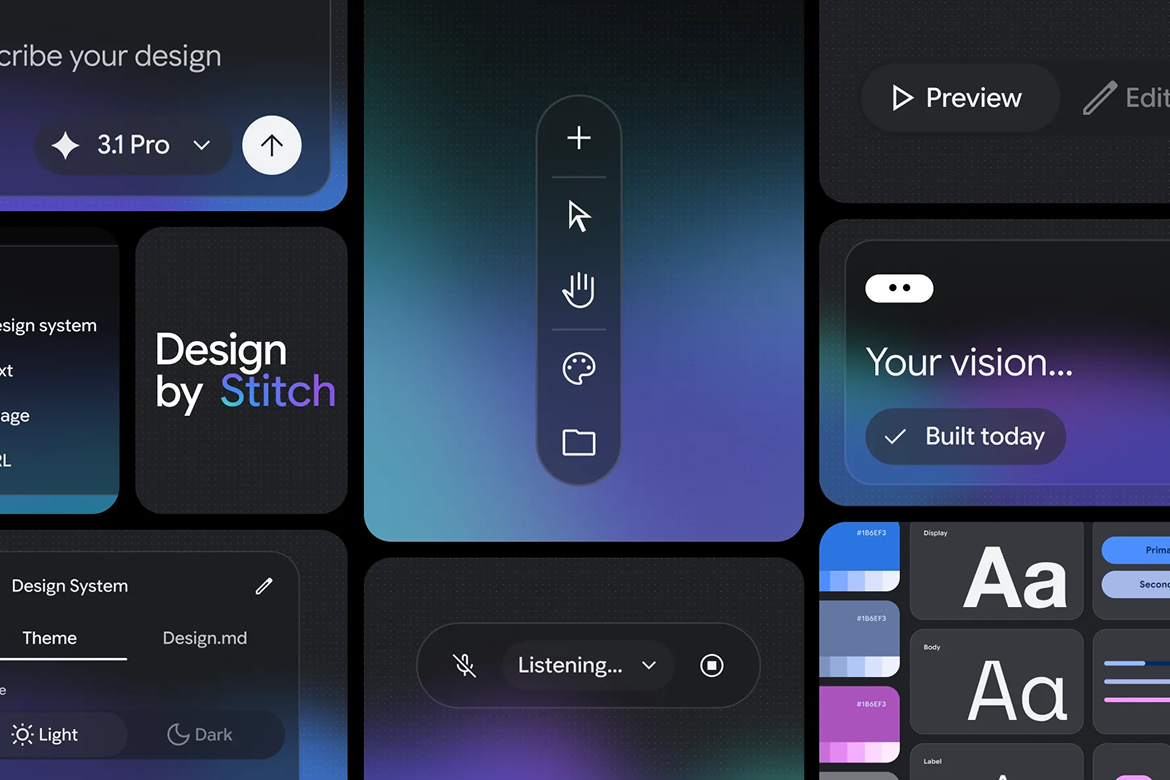
Google has upgraded Stitch into a full AI-native design platform that converts natural language into interactive UI prototypes. The update introduces a design agent, voice input, and a new design system format.
Figma shares surged after the company issued stronger-than-expected revenue guidance and detailed plans to expand AI-driven features and monetization.
Figma has introduced a new MCP integration that allows work created in Claude Code to be sent directly into Figma as fully editable design layers, linking AI-assisted coding with visual design workflows.

Anthropic’s Claude AI now allows users to interact directly with workplace tools like Slack, Figma, and Canva inside the chat interface. The update aims to reduce context switching and make collaboration more visible and interactive.
Figma has opened a new office in Bengaluru, India, to strengthen ties with its developer community and expand adoption of AI-powered features like Figma Make.
OpenAI reports more than 1 million business customers and strong growth in ChatGPT for Work, supported by new enterprise tools, integrations, and model capabilities.

Google has unveiled Gemini Enterprise, a next-generation AI platform designed for business productivity and collaboration, positioning itself directly against Microsoft’s Copilot and OpenAI’s enterprise solutions in the race for workplace AI dominance.

Google Cloud and Figma have launched an expanded partnership to embed Google’s generative AI models - including Gemini 2.5 Flash and Imagen 4 - directly into Figma’s design tools, reducing latency and accelerating creative workflows.