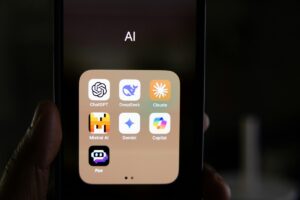
Anthropic Will Ban Extreme Abuse of Claude Under New Usage Policy
Anthropic’s new policy bans extreme, repeated abuse of Claude from November 12, while excluding ordinary frustration, disagreement, fiction and testing.
Explore the complete archive of AIstify’s news coverage, encompassing all reporting on artificial intelligence across industries, markets, and policy arenas. This archive compiles daily developments, investigative pieces, executive commentary, funding announcements, product launches, and regulatory updates into a single chronological record. It enables readers to track the evolution of AI narratives, corporate strategies, geopolitical shifts, and technological milestones over time.
Anthropic’s new policy bans extreme, repeated abuse of Claude from November 12, while excluding ordinary frustration, disagreement, fiction and testing.

Jeff Bezos says AI could let families live on one income or work three days a week, but has offered no timetable or plan for sharing the gains.

Manus raises more than $500 million in its first funding round since separating from Meta, with Boyu Capital and IDG Capital leading the financing.

Claude Haiku 5.5 cuts costs for everyday AI tasks, with API rates up to 20x below Sonnet and Anthropic-reported benchmark gains over GPT-6 Luna.

Google’s SynthID Detector is now available globally for image, video and audio checks. It detects supported AI watermarks, rather than proving a file is real.

Google Playground turns prompts into browser games without coding. Unity Spark will add a more advanced creation path, with a closed beta coming soon.

OpenAI has released 722 mathematics manuscripts from an unreleased AI model, with many Lean proofs available and some results still awaiting verification.

BlackRock sees stablecoins as a potential payment method for AI agents buying data and compute, while the Bitcoin savings thesis rests on simulations.

Arthur Hayes argues an AI investment bust could bring rescue liquidity for Bitcoin and cheaper compute for agents, while pitching his developing FLOP network.

Meta, Sierra, Stripe and Walmart are developing Personal Agent Protocol to define how AI agents access business services, with a first specification due in October.