
Tencent Launches Hy4 Flash for Cheaper AI Agents
Hy4 Flash lists rates of $0.07 for input and $0.281 for output per million tokens, with a 50% API launch discount through November 30.
Generative AI is rewriting how content is made and how work gets done. In AIstify’s Generative AI section, we cover the models and products behind text, images, video, audio, and code - and the business shifts they trigger across media, software, and the enterprise. Expect reporting on major releases, real deployments, and vendor competition, plus the guardrails that decide adoption: quality, safety, rights, and cost. Whether you are building with generative tools or setting policy for their use, this hub keeps you focused on what is changing and what holds up in practice.
Hy4 Flash lists rates of $0.07 for input and $0.281 for output per million tokens, with a 50% API launch discount through November 30.

GDC’s survey of more than 2,600 game industry professionals finds AI use rising to 40%, while negative views remain broadly steady at 55%.
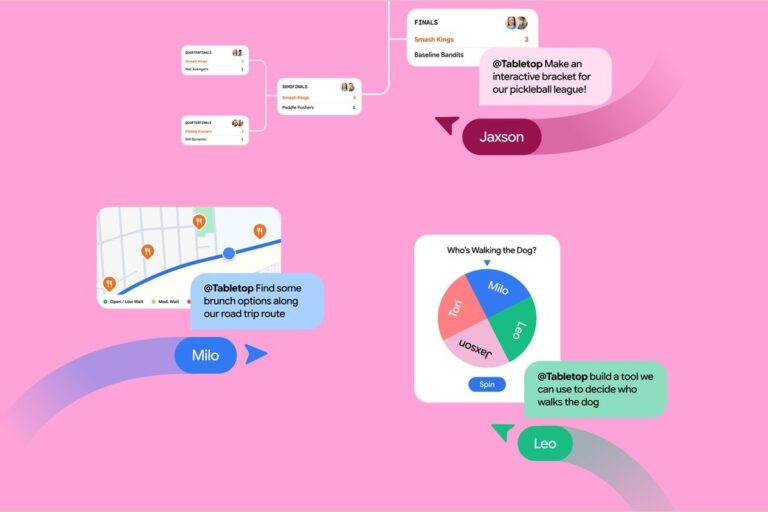
Google Labs’ Tabletop lets groups build shared AI tools for trips, polls and everyday plans. The experiment is opening through a US waitlist.
Google’s Gemini Decision 1 handles up to 1,000 questions per request, with multimodal input at $0.10 per million tokens and a free testing tier.
Qwen4-Max Preview brings a million-token context window to Qwen apps and Token Plan subscribers. Testing ends November 25; a full release date remains unannounced.
Acrobat is headed to Gmail and Drive as Adobe expands Gemini connectors and explores faster Photoshop editing with Google DeepMind.
Muse Ember starts at $0.10 per million input tokens and $0.50 per million output tokens, with higher rates for prompts above 200,000 input tokens.

An Anthropic engineer reports an eight-hour shooter build costing about $550 at API rates, as other creators share an Earth simulation and a kart racer.
ByteDance says Seedream 5.5 preserves unedited regions across repeated changes, and adds native transparent assets and improved text rendering.

ActivTrak found workday spans of 8.4–9.1 hours for AI users versus 7.6 for non-users. The gap does not prove AI caused longer working hours.