Pope Leo XIV has issued a sweeping call for global oversight of artificial intelligence, warning that unchecked AI development could deepen inequality, destabilize democracy, accelerate warfare, and displace workers on a massive scale.
In his first major encyclical, titled Magnifica Humanitas (“Magnificent Humanity”), the pope argued that AI development can no longer be left primarily in the hands of private technology companies and market forces.
Pope Warns About Concentrated AI Power
The nearly 43,000-word document describes AI as a transformative technology increasingly controlled by a small number of powerful corporations operating beyond effective public oversight.
“The main drivers of development are private, often transnational, parties that are endowed with resources and the capacity to intervene that surpass those of many Governments,” the pope wrote.
He warned that concentrated technological power risks creating “new dependencies, exclusions, manipulations and inequalities,” while making it harder for democratic institutions to govern AI development in the public interest.
The encyclical calls for international regulation, independent oversight, stronger legal frameworks, and limits on private control over data and AI infrastructure.
“It is not enough to invoke ethics in the abstract,” the pope wrote. “Robust legal frameworks, independent oversight, informed users and a political system that does not abdicate its responsibility are required.”
AI, Labor, and Economic Disruption
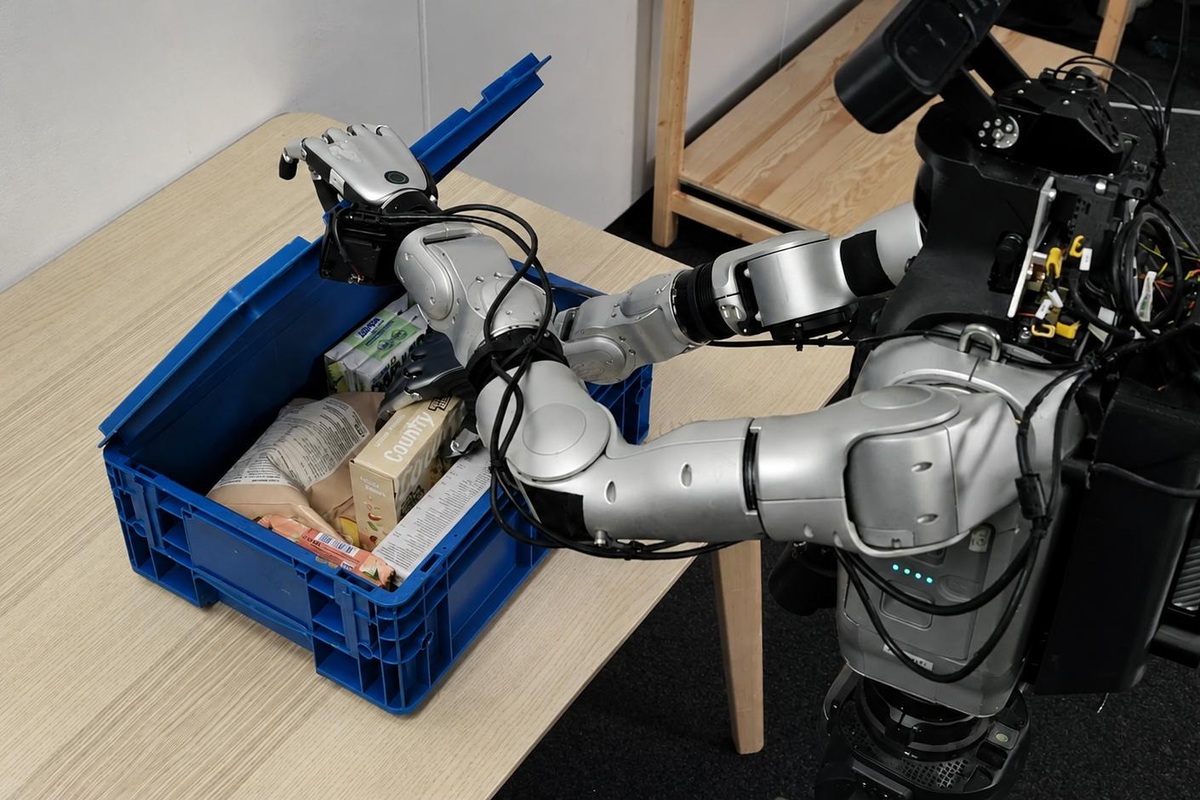
A major section of the encyclical focuses on AI-driven labor disruption and automation.
Leo warned that AI systems could displace workers at large scale and criticized the idea that technological progress automatically benefits society.
“The convergence of automation, robotics and AI is rapidly transforming the very structure of work,” the pope wrote. “The ‘new ways’ of working are not necessarily better.”
He argued that profit motives should not justify mass layoffs or the erosion of workers’ rights, adding that governments and international institutions must protect employment opportunities and vulnerable populations.
The pope also criticized what he described as “new forms of slavery” tied to global technology supply chains, including exploitative labor conditions linked to the extraction of rare earth materials and the maintenance of AI infrastructure.
Strong Warning on AI Warfare
The document also contains one of the Vatican’s strongest statements yet against autonomous weapons and AI-driven warfare.
Leo warned that AI is reshaping modern conflict through cyberattacks, automated strategic systems, information warfare, and surveillance.
“The development and use of AI in warfare must be subject to the most rigorous ethical constraints,” he wrote, adding that “it is not permissible to entrust lethal or otherwise irreversible decisions to artificial systems.”
The pope argued that AI could lower the threshold for military conflict by distancing humans from responsibility and reducing victims to “collateral damage.”
He also criticized the growing influence of the military-industrial complex and warned that economic incentives increasingly drive global conflicts.
Disinformation and Democracy
Another major theme of the encyclical is the role AI may play in weakening democratic systems through misinformation and manipulation.
“Indifference to the truth leads, slowly but surely, to a descent into totalitarianism,” Leo wrote.
He expressed concern over business models designed to monetize human attention and warned that AI-generated content and algorithmic systems could further distort public discourse.
The pope called for stronger cooperation between governments, schools, families, and civil society organizations to protect children and young people from harmful digital environments.
Vatican Engages Directly With AI Industry
The Vatican presentation included participation from Chris Olah, co-founder of Anthropic, who echoed concerns about the risks surrounding advanced AI systems.
Olah said frontier AI companies operate under commercial and geopolitical pressures that can conflict with broader public interests, arguing that outside scrutiny is essential.
The event highlighted the growing involvement of the Catholic Church in global AI governance debates as governments and technology companies race to deploy increasingly powerful systems.
The encyclical arrives amid rising global concern over AI’s impact on jobs, warfare, misinformation, and political systems, as companies including OpenAI, Google, Anthropic, and Meta continue accelerating development of large-scale AI agents and autonomous systems.
Disclaimer: AIstify is an independent media brand owned and operated by NuvexMedia LLC, publishing news, research, and insights on artificial intelligence, emerging technologies, automation, and related industries. NuvexMedia LLC invests in and collaborates with companies across the AI, technology, software, and digital innovation sectors. These relationships do not influence AIstify’s editorial coverage, and the publication maintains full editorial independence to provide accurate, timely, and objective information. © 2026 NuvexMedia LLC. All rights reserved. This content is for informational purposes only and should not be considered legal, tax, investment, financial, or other professional advice.