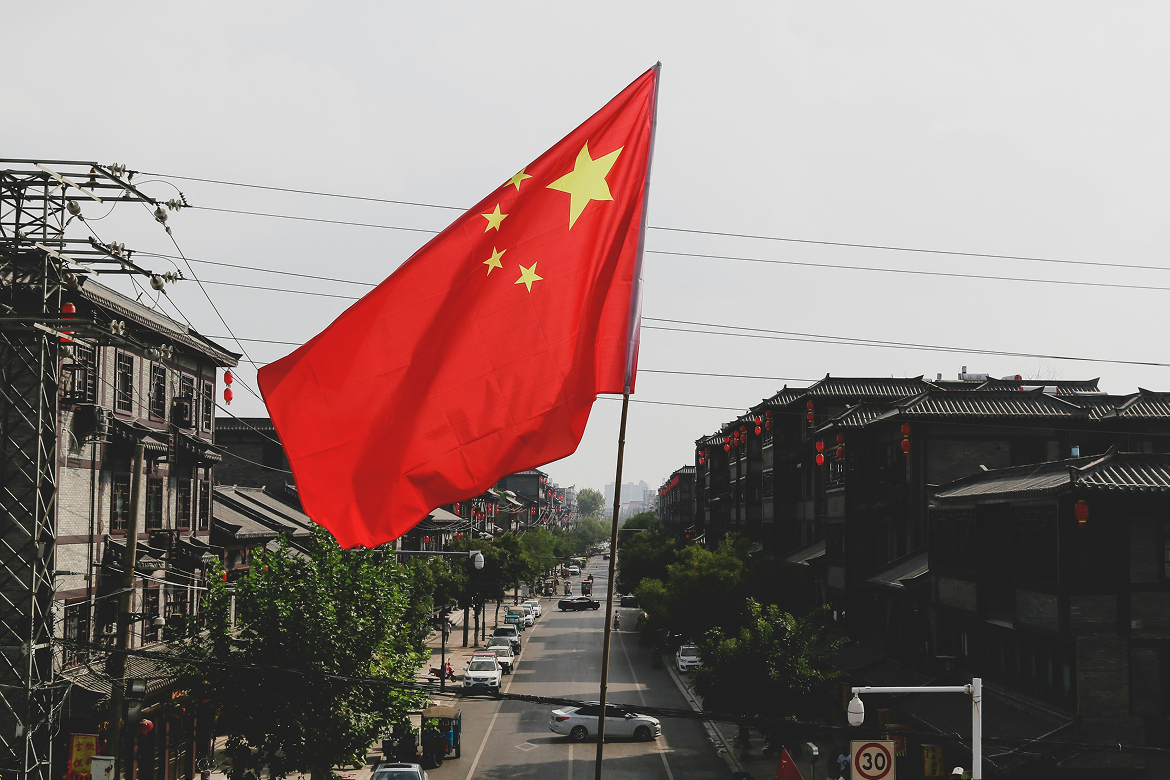
ByteDance, Tencent Get Nvidia H200 Chips, but Beijing Wants Them in Hong Kong
ByteDance and Tencent each received about 10,000 Nvidia H200 chips, but Chinese regulators want the hardware kept in Hong Kong, which lacks the power to run it.

Huawei is a leading telecom, cloud, and ai infrastructure company shaping enterprise infrastructure, servers, edge systems, and AI hardware across AI, cloud, chips, software, devices, and enterprise technology.
Huawei is a major big technology company in enterprise infrastructure, servers, edge systems, and AI hardware. It belongs in an AIstify company directory because the largest technology companies increasingly define how artificial intelligence is built, distributed, commercialized, and adopted. These companies influence the market through cloud infrastructure, semiconductors, consumer devices, enterprise software, developer ecosystems, digital commerce, operating systems, data platforms, and AI-enabled workflows. Founded in 1987, Huawei is headquartered in Shenzhen, China. Its leadership field is listed as Ren Zhengfei, and its business profile is best described as a Private employee-owned telecom, cloud, consumer device, enterprise infrastructure, and AI technology company. The organization is associated with Ren Zhengfei. Its major brands, platforms, or programs include Huawei, Ascend, HarmonyOS, Huawei Cloud, Kunpeng, Pangu models. Within AIstify’s company directory, Huawei fits into the Telecom, Cloud, and AI Infrastructure category.
Employee count is listed as 200,000+, funding status is Private company, valuation is described as N/A, ownership is Private employee-owned, and stock ticker information is N/A. The company’s products and services include Telecom equipment, cloud services, AI chips, smartphones, enterprise infrastructure, operating systems, data center hardware, developer platforms. This product surface matters because big tech companies tend to control several layers of the AI value chain at once. One company might supply cloud compute, another might manufacture chips, another might own consumer distribution, and another might provide enterprise software that brings AI into daily business processes. The most important companies are not only building models; they are also shaping procurement, developer tooling, infrastructure spending, data governance, security expectations, and customer adoption. Huawei’s relevance can be understood through several practical layers.
The first layer is infrastructure: compute, networks, storage, chips, servers, and data centers determine what AI systems can run at scale. The second layer is software: operating systems, cloud platforms, business applications, creative tools, developer frameworks, and databases determine how AI reaches users. The third layer is ecosystem: partners, app stores, marketplaces, system integrators, and enterprise channels determine how quickly technology spreads. The fourth layer is trust: privacy, security, reliability, compliance, and responsible deployment matter when AI becomes part of everyday products and workflows. AI is now central to the competitive strategy of major technology companies. Semiconductor firms are building faster accelerators, memory, networking, and manufacturing equipment for model training and inference. Cloud providers are competing on model hosting, AI agents, developer services, and managed infrastructure.
Enterprise software companies are embedding AI into CRM, ERP, service management, analytics, design, documents, and collaboration. Device companies are bringing AI to phones, PCs, wearables, and edge hardware. Networking and infrastructure vendors are redesigning systems for data-intensive AI workloads. The competitive context around Huawei is changing quickly. Capital spending on AI infrastructure is reshaping cloud, chip, and data center markets. Generative AI is changing search, creativity, enterprise productivity, customer service, coding, analytics, and business operations. Regulators are paying closer attention to platform power, data use, competition, privacy, and safety. Customers are asking whether AI features produce measurable value, whether vendors can control costs, and whether large platforms can be trusted with sensitive workflows. In this environment, scale is powerful, but execution still matters.
From an operator, investor, or technology buyer perspective, Huawei is worth tracking because big tech companies can move entire markets with product launches, pricing changes, developer tools, supply agreements, cloud regions, chip roadmaps, AI model releases, and partner programs. AIstify tracks Huawei with tags including huawei, big tech, telecom ai, cloud computing, ai chips, enterprise infrastructure, huawei profile, huawei company profile. The company’s public website is https://www. huawei. com/en/.
Additional comparison signals include platforms models chips cloud devices developers enterprise data security commerce infrastructure services partners ecosystems pricing adoption governance productivity agents automation analytics research compute storage networks applications edge software hardware platforms models chips cloud devices developers enterprise data security commerce infrastructure services partners ecosystems pricing adoption governance productivity agents automation analytics research compute storage networks applications edge software hardware platforms models chips cloud devices developers enterprise data security commerce infrastructure services partners ecosystems pricing adoption governance productivity agents automation analytics research compute storage networks applications edge software hardware platforms models chips cloud devices developers enterprise data security commerce infrastructure services partners ecosystems pricing adoption governance productivity agents automation analytics research compute storage networks applications edge software hardware platforms models chips cloud devices developers enterprise data security commerce infrastructure services partners ecosystems pricing adoption governance productivity.
For AIstify, this makes Huawei a useful reference point for tracking how big technology companies shape AI infrastructure, software platforms, chips, cloud services, devices, and enterprise automation.
Cloud platforms, developer tools, AI model services, APIs, SDKs, data platforms, chip software, enterprise software marketplaces, or partner ecosystems where available.
Hardware sales, cloud consumption, software subscriptions, enterprise licenses, usage-based AI services, advertising, marketplace revenue, services contracts, and platform fees.
ByteDance and Tencent each received about 10,000 Nvidia H200 chips, but Chinese regulators want the hardware kept in Hong Kong, which lacks the power to run it.

The U.S. Commerce Department will let Nvidia export H200 AI chips to approved Chinese customers, with a 25% revenue share going to the U.S., despite Congressional concerns over national security.
Baidu is scaling up its in-house AI-chip business via its Kunlunxin unit, unveiling a five-year roadmap with M100 and M300 chips and aiming to fill the gap left by restricted Nvidia GPU access in China.