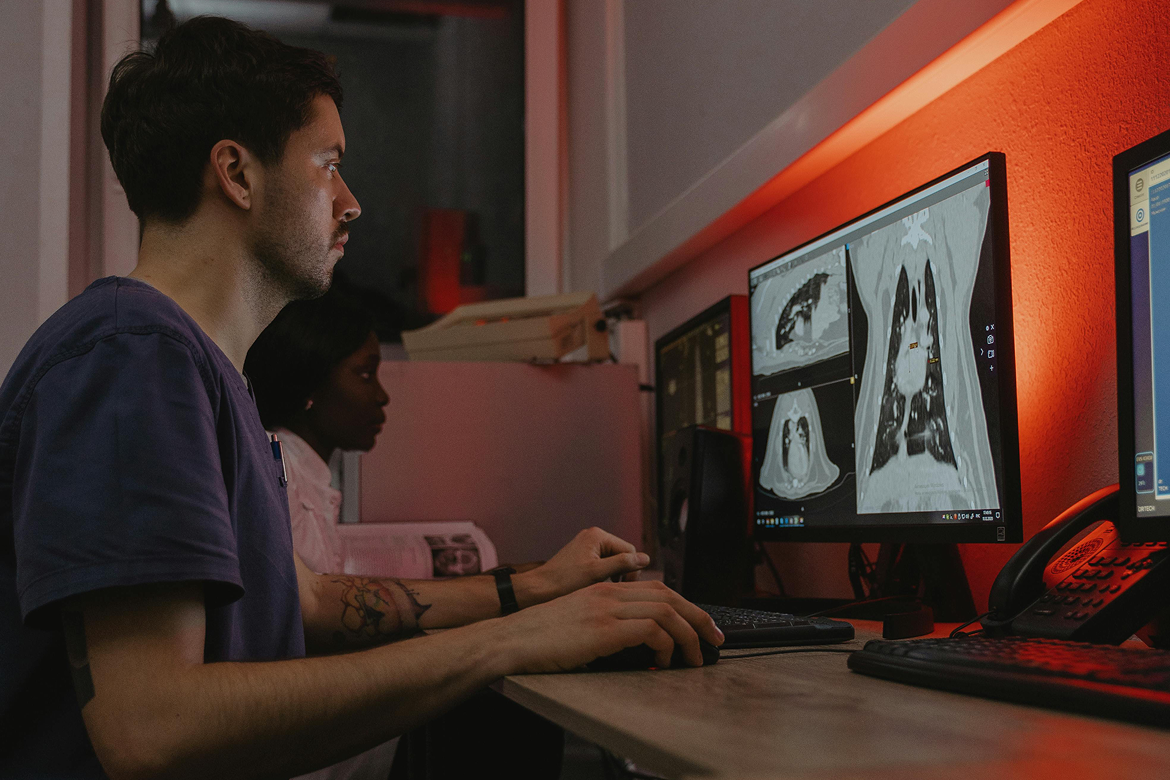

Bristol Myers Squibb announced a partnership with Microsoft to advance early detection of lung cancer through AI-powered radiology solutions. The collaboration will deploy U.S. FDA-cleared AI algorithms via Microsoft’s Precision Imaging Network, part of the Microsoft for Healthcare radiology platform. The AI tools automatically analyze X-ray and CT scans to identify lung disease, supporting radiologists in detecting nodules and potentially diagnosing cancer at earlier stages.
Lung cancer is the leading cause of cancer-related deaths in the U.S., with roughly 227,000 new cases and 125,000 deaths reported annually. Mortality rates are higher in medically underserved populations, where guideline-based screening is less common. The partnership aims to address these disparities by integrating AI workflows with patient tracking tools to ensure follow-up care for patients with lung nodules.
Focus on Health Equity and Operational Efficiency
Dr. Alexandra Goncalves, VP and Head of Digital Health at BMS, emphasized that the AI-enabled workflow combines Microsoft’s scalable radiology technology with BMS’ oncology expertise to guide patients with Non-Small Cell Lung Cancer (NSCLC) toward appropriate care pathways and precision therapies. The integrated system is designed to streamline patient flow, reduce clinical workload, and improve operational efficiency.
A core objective of the initiative is to expand access to early detection in rural hospitals and community clinics, promoting more equitable outcomes. Andrew Whitehead, VP and Head of Population Health at BMS, noted that health equity is embedded in the company’s approach, with advanced AI tools supporting earlier diagnosis and consistent follow-up.
Microsoft highlighted the widespread deployment of its AI radiology platform across U.S. healthcare systems. Peter Durlach, Corporate VP and Chief Strategy Officer, Microsoft Health and Life Sciences, stated that the technology helps clinicians detect early signs of cancer often before patients experience symptoms, enabling timely intervention and improved patient care.
The collaboration represents a convergence of digital health innovation, AI-driven radiology, and oncology expertise, aiming to reduce lung cancer mortality through early detection, scalable workflows, and equitable access to care.
The initiative also reflects a broader trend in the pharmaceutical industry of leveraging artificial intelligence for oncology research and drug development. For example, NVIDIA and Eli Lilly recently launched a $1 billion AI co-innovation lab designed to accelerate drug discovery by integrating AI, biomedical data, and robotics, demonstrating how AI is increasingly shaping both therapeutic development and clinical care.