Notion Transforms Its Workspace Into an AI Agent Hub
Notion has introduced a developer platform that expands its AI agent capabilities with workflow orchestration, external integrations, and custom code execution.
Notion has introduced a developer platform that expands its AI agent capabilities with workflow orchestration, external integrations, and custom code execution.
Anthropic has introduced Agent View for Claude Code, allowing developers to manage multiple AI coding agents from a single interface. The update also adds a continuous execution mode that lets Claude work uninterrupted until a task is completed.

The U.S. approved several Chinese companies to buy Nvidia’s H200 AI chips, but deliveries remain stalled amid political pressure and security concerns in both Washington and Beijing.
Microsoft is exploring acquisitions of AI startups including Inception as it builds internal AI capabilities beyond OpenAI. The move reflects growing competition for top AI talent and Microsoft’s effort to develop advanced models independently.

Anthropic has launched Claude for Small Business, a package of AI workflows and software connectors designed to automate finance, operations, marketing, and customer service tasks for small businesses. The platform integrates directly with tools including QuickBooks, PayPal, HubSpot, Canva, and Microsoft 365.
Nvidia has partnered with AI startup Ineffable Intelligence to develop large-scale reinforcement learning systems aimed at superintelligence research. The company was founded in late 2025 by former Google DeepMind researcher David Silver.

OpenAI CEO Sam Altman testified that Elon Musk abandoned the company during a critical funding period rather than being pushed out of a nonprofit mission. The testimony came during the ongoing Musk v. Altman trial over OpenAI’s corporate structure and commercialization.

Anthropic has surpassed OpenAI in verified business customer adoption for the first time, according to new data from fintech firm Ramp. The shift highlights Anthropic’s growing traction among enterprise and technical customers.

Amazon has launched Alexa for Shopping, a generative AI assistant that combines Alexa+, Rufus, and customer shopping history to deliver personalized product recommendations, price tracking, and automated purchasing. The assistant is available across Amazon’s app, website, and Echo Show devices.
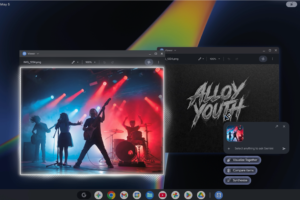
Google has unveiled Googlebook, a new laptop category combining Android and ChromeOS technologies with Gemini AI integrated throughout the system. The devices introduce features such as Magic Pointer contextual actions and AI-generated desktop widgets.

Google is reportedly in talks with SpaceX and other launch providers as it explores deploying orbital data centers under its Project Suncatcher initiative. The discussions reflect growing interest in space-based AI infrastructure and computing capacity.

Major U.S. banks are rapidly patching software vulnerabilities uncovered by Anthropic’s Mythos AI model as concerns grow over AI-driven cybersecurity risks. The system is reportedly identifying weaknesses and attack chains at speeds beyond traditional security workflows.
OpenAI has introduced Daybreak, a cybersecurity initiative designed to integrate AI-driven defense directly into software development workflows. The platform combines GPT-5.5 models, Codex Security, and partnerships with major security firms to automate vulnerability analysis and remediation.
SoftBank has invested more than $450 million into Graphcore as the Japanese technology group expands its AI infrastructure and semiconductor ambitions. The funding follows SoftBank’s acquisition of the British AI chip company in 2024.

Thinking Machines Labs introduced a research preview of “interaction models” designed for continuous real-time collaboration across audio, video, and text. The system combines live multimodal interaction with asynchronous reasoning and tool use.