Amazon Launches Connect Health Agentic AI for Care Systems

Amazon introduced Connect Health, an agentic AI system designed to automate administrative tasks in healthcare. The platform integrates with electronic health records to assist with scheduling, documentation, and billing.

By Daniel Mercer Edited by Maria Konash Published:
Amazon Launches Connect Health Agentic AI for Care Systems
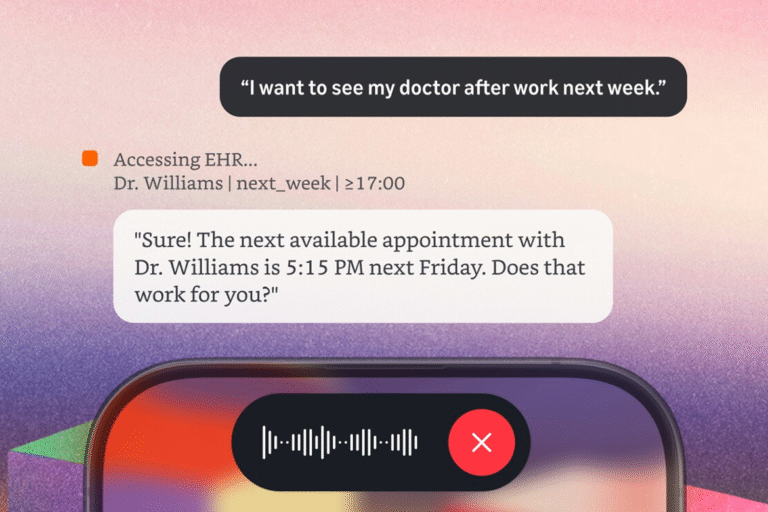
Amazon launches Connect Health, an agentic AI platform that automates healthcare administration. Photo: Amazon

Amazon has introduced Amazon Connect Health, a new agentic AI platform designed to automate administrative work across healthcare systems. The solution integrates with electronic health records (EHRs) to help manage patient verification, appointment scheduling, documentation, and billing tasks.

Healthcare providers often face heavy administrative workloads that reduce time available for patient care. According to Amazon Web Services, healthcare staff can spend as much as 80% of call time compiling information across multiple systems when assisting patients. Administrative complexity has also affected patient experience, with surveys showing that scheduling challenges and long wait times are a common reason patients switch providers.

Amazon Connect Health is built to address these inefficiencies by automating routine interactions while maintaining human oversight. The system can interact with patients in natural language and assist with tasks such as verifying patient identity, checking insurance eligibility, reviewing provider schedules, and booking appointments during a single call.

The platform combines Amazon Connect, AWS’s AI-powered customer experience service, with real-time connections to EHR systems. When a request requires clinical expertise or human judgment, the system can transfer the interaction to staff based on rules defined by healthcare providers.

AI Support Across the Care Journey

Amazon designed Connect Health to support clinicians before, during, and after medical visits. Before an appointment, the system reviews patient medical histories and compiles summaries that highlight relevant conditions, recent events, and long-term trends.

During visits, with patient consent, the AI can transcribe conversations between clinicians and patients and generate draft clinical notes in real time. Each element of the documentation can be traced back to the specific part of the conversation where it originated.

After the appointment, the platform generates patient-friendly summaries and prepares medical codes needed for insurance billing. The system links suggested codes to source evidence in medical records or conversation transcripts, allowing clinicians to review and finalize them quickly. According to Amazon, the process can reduce the time required to prepare billing documentation from hours or days to minutes.

Early deployments show measurable results. UC San Diego Health, which manages more than 3 million patient interactions each year, reported saving about one minute per call and redirecting roughly 630 hours per week from patient verification tasks to direct assistance. The health system also saw call abandonment rates decline by about 30%, with some departments reporting reductions of up to 60%.

Amazon One Medical has also deployed the technology across more than one million patient visits, using ambient documentation features to streamline clinical workflows.

Security and Responsible AI Design

Amazon said the system was built with healthcare-specific safeguards and privacy protections. AWS offers more than 130 HIPAA-eligible services and compliance certifications designed for healthcare organizations.

Amazon Connect Health uses evidence mapping, a feature that links AI-generated outputs to their original sources, such as conversation transcripts, medical records, or billing guidelines. The transparency allows clinicians to audit recommendations and verify information before finalizing documentation.

The AI models powering the platform were trained using healthcare-specific datasets and evaluated using multiple safety and accuracy checks, including clinician oversight and automated evaluation systems.

Amazon said the goal of Connect Health is to reduce administrative friction for providers while improving patient access to care, enabling clinicians to spend more time with patients and less time on documentation and scheduling tasks.

AI & Machine Learning, News

Nvidia Partners Google Cloud to Launch New AI Infrastructure and Agent Tools”

Nvidia and Google Cloud unveiled new AI infrastructure and agentic AI capabilities at Google Cloud Next, targeting large-scale enterprise and industrial deployments.

By Maria Konash Published:
Nvidia Partners Google Cloud to Launch New AI Infrastructure and Agent Tools”
Nvidia and Google Cloud expand AI partnership with new infrastructure, Blackwell GPUs, and agentic tools for enterprise. Image: Google Cloud

NVIDIA and Google Cloud have expanded their long-standing partnership with a new set of AI infrastructure and platform updates unveiled at the Google Cloud Next conference in Las Vegas. The announcements focus on scaling “AI factories” and enabling enterprise deployment of agentic and physical AI systems.

The collaboration introduces new infrastructure, including A5X bare-metal instances powered by NVIDIA’s next-generation Vera Rubin architecture, alongside expanded support for Gemini models running on NVIDIA Blackwell GPUs. The companies aim to provide a fully integrated stack, from chips and networking to software and cloud services, designed for high-performance AI workloads.

The updates reflect growing demand for infrastructure capable of supporting advanced AI systems that can operate autonomously and interact with real-world environments.

Next-Generation AI Infrastructure

At the core of the announcement is the A5X platform, built on NVIDIA’s Vera Rubin NVL72 systems. Google said the new infrastructure delivers up to 10 times lower inference cost per token and 10 times higher throughput compared to previous generations.

The system is designed to scale to massive clusters, supporting up to 80,000 GPUs in a single site and nearly one million GPUs across multiple locations. This enables enterprises to train and deploy large-scale AI models, including multimodal and reasoning systems.

Google Cloud’s broader Blackwell portfolio also includes a range of virtual machine configurations, allowing customers to scale from fractional GPU usage to full rack-scale deployments depending on workload requirements.

Secure and Distributed AI Deployment

The partnership also emphasizes security and flexibility. Gemini models can now run on Google Distributed Cloud with NVIDIA Blackwell GPUs, allowing organizations to deploy AI closer to sensitive data environments.

Confidential computing capabilities ensure that prompts, training data, and model outputs remain encrypted, even from infrastructure operators. This is particularly relevant for regulated industries such as finance, healthcare, and government.

New confidential virtual machines extend these protections to public cloud environments, offering secure access to high-performance AI resources without compromising data privacy.

Advancing Agentic and Physical AI

NVIDIA and Google Cloud are also targeting the next wave of AI applications, including autonomous agents and physical systems such as robots and digital twins. The platform supports a wide range of models, from Google’s Gemini family to NVIDIA’s open Nemotron models, enabling developers to build systems that can reason, plan, and act.

Integration with tools like NVIDIA Omniverse and Isaac Sim allows developers to simulate real-world environments and train robotics systems before deployment. This opens up use cases in manufacturing, logistics, and industrial automation.

Companies including OpenAI, Salesforce, and Snap are already using the infrastructure for tasks ranging from large-scale inference to data processing and simulation.

From Experimentation to Production

The expanded platform is designed to help organizations move AI projects from experimentation to production. Startups and enterprises are using the combined infrastructure to build applications in areas such as software development, drug discovery, and real-time analytics.

With more than 90,000 developers already participating in the joint ecosystem, the partnership highlights the scale at which AI infrastructure is evolving. As demand for compute and advanced models continues to grow, collaborations like this are shaping the foundation for the next generation of AI systems.

SpaceX May Acquire Cursor for $60B Later This Year

SpaceX has secured rights to acquire AI coding startup Cursor for up to $60 billion, deepening its push into AI alongside xAI ahead of a potential IPO.

By Samantha Reed Edited by Maria Konash Published:
SpaceX May Acquire Cursor for $60B Later This Year
SpaceX secures option to buy Cursor for $60B, signaling major AI push into coding tools. Image: SpaceX

SpaceX has struck a deal with AI coding startup Cursor that gives it the option to acquire the company for up to $60 billion later this year. Alternatively, SpaceX can pay $10 billion tied to ongoing collaboration between the two firms, according to a statement posted on X.

The agreement highlights SpaceX’s growing ambitions in artificial intelligence, following Elon Musk’s earlier move to merge the company with his AI venture xAI in a deal valued at $1.25 trillion. The combined entity is expected to pursue a public listing, potentially becoming one of the largest IPOs in technology history.

Cursor CEO Michael Truell said the partnership will focus on scaling the company’s AI systems, including its “Composer” model, as part of a broader effort to build advanced coding and knowledge work tools.

Strategic Push Into AI Development Tools

Cursor develops AI tools designed to assist software engineers with tasks such as testing code, tracking changes, and documenting workflows through logs, screenshots, and video. The company has gained traction as part of a growing wave of startups building AI-powered coding agents.

The partnership with SpaceX signals an effort to compete more directly with offerings from OpenAI and Anthropic, which provide similar tools through products like Codex and Claude.

SpaceX said the collaboration aims to create “the world’s best coding and knowledge work AI,” suggesting a broader ambition beyond software development into general productivity applications.

Deal Comes Amid Fundraising and Industry Competition

The announcement comes as Cursor is reportedly in talks to raise $2 billion at a valuation exceeding $50 billion. Investors expected to participate include Andreessen Horowitz, Nvidia, and Thrive Capital, all of which have backed AI companies across the sector.

The structure of the SpaceX deal gives the company flexibility, allowing it to deepen collaboration before committing to a full acquisition. It also positions SpaceX to secure a strategic asset in a rapidly evolving market where AI coding tools are becoming central to software development.

Broader Implications for Musk’s AI Strategy

The move reflects Musk’s broader effort to build a vertically integrated AI ecosystem spanning infrastructure, models, and applications. His previous acquisition of X (formerly Twitter) through xAI and ongoing hiring from Cursor indicate a strategy focused on consolidating talent and capabilities.

The timing is notable, coming just days before a high-profile legal case involving Musk and Sam Altman, further underscoring tensions between leading players in the AI industry.

If completed, the Cursor deal would rank among the largest acquisitions in the AI sector, reinforcing the growing importance of coding agents and developer tools as a battleground for next-generation software platforms.

AI & Machine Learning, News, Startups & Investment

Recursive Superintelligence Raises $500M to Build Self-Improving AI

AI startup Recursive Superintelligence has raised $500 million from Nvidia and GV to pursue self-improving AI systems, despite having no public product.

By Laura Bennett Edited by Maria Konash Published:

A new artificial intelligence startup, Recursive Superintelligence, has raised $500 million in fresh funding, reaching a $4 billion valuation despite not yet releasing a public product. The round was backed by Nvidia and GV, underscoring continued investor appetite for next-generation AI systems.

The company was founded by former researchers from Google DeepMind and OpenAI, and is focused on developing AI models capable of recursive self-improvement. The concept aims to move beyond current approaches that rely heavily on human-labeled data and manual fine-tuning.

Instead, Recursive Superintelligence is building systems that can design, evaluate, and refine their own architectures with minimal human input, potentially accelerating the pace of AI development.

Toward Self-Teaching AI Systems

At the core of the company’s strategy is the idea that human involvement has become a bottleneck in AI progress. As models grow more complex, the need for human supervision slows iteration cycles.

Recursive’s approach seeks to create a “closed-loop” system where AI models continuously improve themselves. This includes generating hypotheses, testing them, and integrating successful changes into future versions without external intervention.

If successful, this could significantly reduce development timelines. Instead of requiring months or years between major model upgrades, new iterations could emerge in hours or days.

The company is also exploring deeper integration between software and hardware, working closely with Nvidia to optimize AI systems alongside the chips they run on. This could enable more efficient training and faster experimentation cycles.

A High-Risk, High-Reward Bet

The funding comes at a time of intense competition and consolidation in the AI sector. While some startups face pressure to demonstrate clear revenue models, companies focused on foundational AI technologies continue to attract large investments.

Recent funding activity across the industry, including major rounds for infrastructure and model developers, suggests that investors are prioritizing long-term breakthroughs over short-term returns.

However, the valuation has raised questions. Critics warn that the company’s $4 billion price tag, achieved without a commercial product, reflects broader concerns about a potential AI investment bubble.

Building Toward First Autonomous Training Run

Recursive Superintelligence plans to use the funding to recruit top AI talent and build the large-scale compute infrastructure required for its first autonomous training cycle, referred to internally as a “Level 1” run. This milestone is expected later this year.

The outcome of that effort will be closely watched. Demonstrating meaningful self-improvement without human intervention would represent a major shift in how AI systems are developed.

For now, the company embodies a growing trend in the industry: betting that the next leap in AI will come not just from bigger models, but from systems that can redesign themselves.

AI & Machine Learning, News, Research & Innovation

OpenAI Launches ‘Chronicle’ Screen Memory Feature in Codex

OpenAI has introduced Chronicle, a new Codex feature that tracks screen activity and builds context automatically. The tool raises privacy and security concerns.

By Daniel Mercer Edited by Maria Konash Published:
OpenAI Launches ‘Chronicle’ Screen Memory Feature in Codex
OpenAI launches Chronicle for Codex, adding screen-aware memory and automation while raising privacy concerns. Image: OpenAI

OpenAI has introduced Chronicle, a new experimental feature for its Codex app that allows the AI to observe a user’s screen activity and build contextual memory automatically. The feature, now available in preview for ChatGPT Pro users on macOS, represents a significant step toward more autonomous and context-aware AI assistants.

Chronicle operates in the background by periodically capturing screenshots, analyzing them, and converting them into structured text summaries. These summaries are stored locally and used to provide context for future interactions, allowing Codex to understand ongoing tasks without requiring users to repeatedly explain their work.

OpenAI president Greg Brockman described the feature as giving the assistant the ability to “see and remember” recent activity, enabling a more seamless and responsive workflow.

Turning Activity Into Context

The core goal of Chronicle is to reduce friction in AI-assisted work. By tracking what users are doing across applications, Codex can infer project context, tools in use, and recent actions, making interactions more efficient.

This approach aligns with a broader trend in AI development toward persistent memory and agent-like behavior, where systems can operate continuously and build knowledge over time. Instead of responding to isolated prompts, Codex can maintain continuity across sessions and tasks.

However, this deeper integration also introduces technical and operational trade-offs, particularly around data handling and system performance.

Privacy and Security Concerns

Chronicle’s architecture has raised concerns about user privacy and security. Screenshots captured by the system are sent to OpenAI servers for processing and are deleted within six hours. However, the generated summaries are stored locally as unencrypted Markdown files, potentially accessible to other applications.

OpenAI has acknowledged the risks, noting that the feature could increase exposure to prompt injection attacks and accidental leakage of sensitive information visible on screen. The company advises users to disable Chronicle when working with confidential data.

The feature may also increase usage costs, as continuous background processing consumes more request capacity within subscription limits.

Echoes of Industry Challenges

The launch draws comparisons to Microsoft’s earlier attempt to introduce a similar feature, Recall, in Windows. That tool also captured user activity for AI processing but faced strong backlash over privacy concerns, leading Microsoft to delay its rollout and make it optional.

Chronicle reflects the same tension facing the industry: balancing the benefits of highly contextual AI systems with the risks of continuous data capture. As AI tools become more integrated into daily workflows, managing that balance will be critical for user trust and adoption.

The feature signals OpenAI’s push toward more proactive, agent-like assistants, but its long-term success may depend on how effectively the company addresses privacy and security challenges.

AI & Machine Learning, News

GPT-Image-2 Dominates Image Arena Rankings with Record Lead

OpenAI’s GPT-Image-2 has taken the top spot across all Image Arena benchmarks, outperforming rivals by record margins in human preference rankings.

By Samantha Reed Edited by Maria Konash Published:
GPT-Image-2 Dominates Image Arena Rankings with Record Lead

OpenAI’s latest image model, GPT-Image-2, has secured the top position across all major categories on Image Arena, a widely followed benchmark based on blind human evaluations. The model, which powers ChatGPT Images 2.0, ranked first in Text-to-Image, Single-Image Edit, and Multi-Image Edit tasks, marking one of the most dominant performances recorded on the platform.

Image Arena evaluates models using anonymous user voting, where participants compare outputs without knowing which system generated them. This method is considered one of the more reliable ways to measure real-world performance and user preference in generative AI.

GPT-Image-2 achieved a score of 1,512 in Text-to-Image, outperforming Nano Banana 2 from Google by 242 points. According to Arena, this represents the largest gap ever recorded between first and second place.

Dominance Across Categories

The model’s performance extended beyond a single leaderboard. GPT-Image-2 scored 1,513 in Single-Image Edit and 1,464 in Multi-Image Edit, maintaining significant leads over competing models in each category.

It also ranked first across all seven Text-to-Image subcategories, including art, photorealism, product design, and 3D imagery. Improvements over its predecessor were substantial, with gains ranging from nearly 200 to over 300 points depending on the category.

One of the most notable advances is in text rendering within images, an area where AI models have historically struggled. GPT-Image-2 showed strong improvements in accurately generating text, including non-Latin scripts such as Japanese, Korean, and Hindi, suggesting deeper underlying improvements rather than incremental tuning.

From Anonymous Testing to Public Release

Before its official launch, versions of the model appeared anonymously on Arena under codenames such as “maskingtape” and “gaffertape.” These early tests generated attention for their strong performance, a strategy similar to how Google tested its own models before release.

The approach allows companies to validate models in real-world conditions before announcing them publicly, using Arena’s ranking system to build credibility.

Intensifying Competition in Image AI

The results highlight intensifying competition in AI image generation. Google’s Nano Banana models previously led the leaderboard and drove significant user growth for its Gemini platform, demonstrating how performance improvements can translate into broader adoption.

GPT-Image-2’s lead suggests OpenAI has regained momentum in this segment, at least in terms of benchmark performance. However, whether these gains will translate into widespread user adoption remains uncertain.

For developers and enterprises choosing AI tools, the results provide a strong signal of capability. A large margin in blind human evaluations indicates that GPT-Image-2 may offer more consistent and preferred outputs in practical use cases, from design and marketing to content creation.