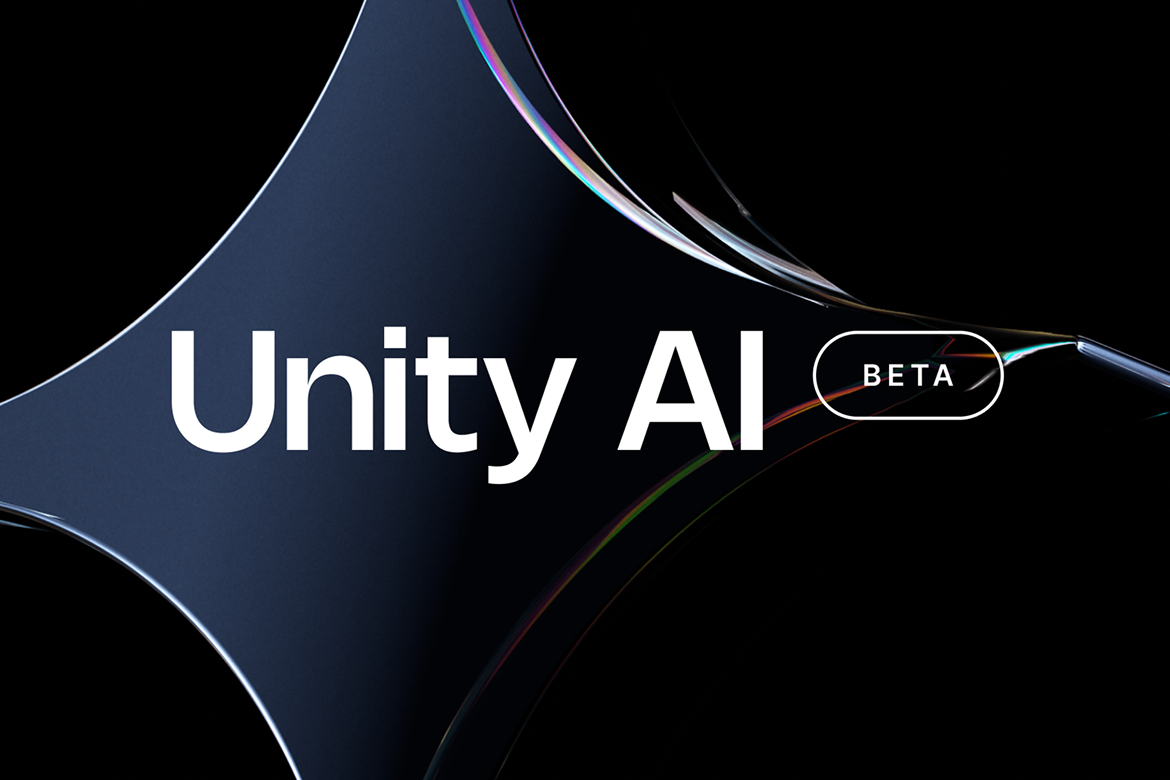

Unity Technologies has launched the open beta of Unity AI, a new set of artificial intelligence tools embedded directly within its game development editor. The company says the assistant is designed to streamline production by helping developers generate assets, audio, and even playable scenes from simple text prompts or visual references. The move reflects growing demand for faster development cycles as studios seek to reduce repetitive tasks and accelerate iteration.
Unity AI is integrated into the Unity Editor and tailored to the specific workflows of the engine. Unlike general purpose AI tools, the system is designed to understand project structure, game logic, and the broader creative context of development. This allows it to deliver more relevant outputs, from generating environment assets to assembling interactive scenes that can be tested immediately. Developers can also connect external AI tools through an AI Gateway or integrate workflows via their preferred development environments.
The company emphasized that control remains with developers. Changes introduced by Unity AI can be reviewed, modified, or fully undone, and teams can set permissions to limit how autonomously the AI operates. Generated assets can also be tagged for easier tracking and iteration. Unity says this approach ensures that AI acts as an assistant rather than replacing creative decision making.
Unity AI is available to all developers using Unity 6 and newer versions of the engine. The rollout comes as competitors across the gaming and software industries increasingly embed generative AI into creative tools. By focusing on engine specific context, Unity aims to differentiate its offering from standalone AI platforms that may lack awareness of game development pipelines.
What It Means
The introduction of Unity AI highlights how generative AI is becoming a core component of development environments rather than an external add on. For studios, this could reduce production time and costs, particularly for smaller teams that lack dedicated resources for asset creation or prototyping. Faster iteration may also lead to more experimentation and shorter development cycles.
For the broader industry, Unity’s move adds pressure on competing engines and tool providers to integrate similar capabilities. It also raises questions about workflow changes, skill requirements, and how developers balance automation with creative control. For end users, the impact may appear in the form of more frequent game releases and increasingly diverse content.
Industry Backdrop
Unity has long been one of the most widely used game engines, particularly among indie developers and mobile studios. In recent years, the company has expanded its focus beyond core engine tools to include services for monetization, analytics, and now AI driven development.
The rise of generative AI has already influenced areas such as art creation, code generation, and design prototyping. Major technology companies and startups are racing to embed these capabilities into existing platforms. Unity AI represents a continuation of that trend, aiming to bring AI directly into the day to day workflows of game developers while maintaining compatibility with established production pipelines.
Disclaimer: AIstify is an independent media brand owned and operated by NuvexMedia LLC, publishing news, research, and insights on artificial intelligence, emerging technologies, automation, and related industries. NuvexMedia LLC invests in and collaborates with companies across the AI, technology, software, and digital innovation sectors. These relationships do not influence AIstify’s editorial coverage, and the publication maintains full editorial independence to provide accurate, timely, and objective information. © 2026 NuvexMedia LLC. All rights reserved. This content is for informational purposes only and should not be considered legal, tax, investment, financial, or other professional advice.