
Salesforce Unveils Headless 360 to Power AI Agent Workflows

Salesforce has launched Headless 360, exposing its entire platform to AI agents via APIs and tools. The move redefines how enterprise software is accessed and used.

By Daniel Mercer Edited by Maria Konash Published:
Salesforce Unveils Headless 360 to Power AI Agent Workflows
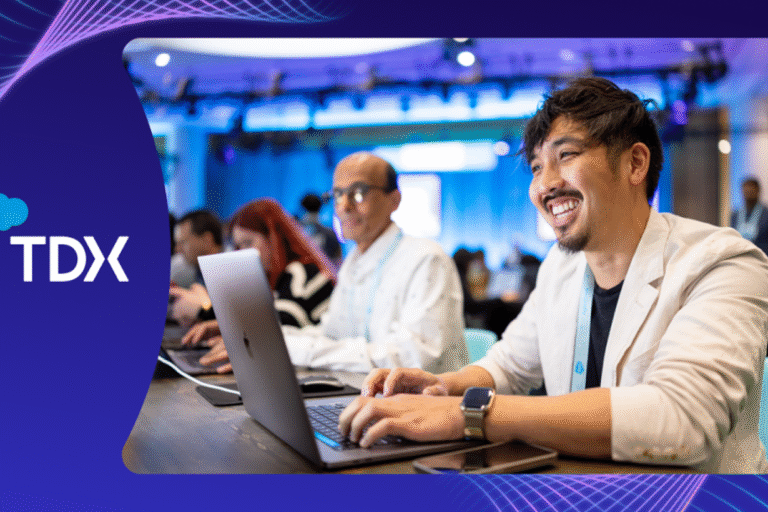
Salesforce launches Headless 360, enabling AI agents to run its platform without a UI. Image: Salesforce

Salesforce has unveiled Headless 360, a major architectural overhaul that exposes its entire platform as programmable endpoints for AI agents. Announced at the company’s TDX developer conference in San Francisco, the initiative introduces more than 100 new tools and marks a shift away from traditional user interfaces toward agent-driven workflows.

The core idea behind Headless 360 is to allow AI systems to operate Salesforce directly through APIs, command-line interfaces, and Model Context Protocol (MCP) tools, eliminating the need for users to interact with a graphical interface. The move reflects a broader industry question: whether enterprise applications like CRM systems still need a UI in an era where AI agents can execute tasks autonomously.

Salesforce’s answer is to make its platform fully programmable. Developers can now use external AI coding tools such as Claude Code or Codex to build, deploy, and manage applications directly within Salesforce environments without relying on its native development tools.

Opening the Platform to Agents

Headless 360 is built on three main pillars. The first focuses on flexible development, offering dozens of MCP tools and preconfigured coding skills that give AI agents full access to Salesforce data, workflows, and business logic. This allows developers to work from any environment while integrating AI agents into enterprise systems.

The second pillar introduces a new “experience layer” that separates logic from presentation. Applications can now be deployed across multiple surfaces, including Slack, mobile apps, and third-party AI interfaces, without rewriting code for each platform. This enables companies to deliver services directly within the tools their customers already use.

The third pillar centers on trust and control. Salesforce is introducing tools for testing, monitoring, and managing AI agents at scale, including a new scripting language called Agent Script. The language allows organizations to define deterministic workflows while still leveraging the flexible reasoning capabilities of AI models.

Balancing Automation and Control

A key challenge in enterprise AI is balancing the probabilistic nature of large language models with the need for predictable outcomes. Salesforce addresses this by supporting two types of agent architectures: tightly controlled workflows for customer-facing applications, and more autonomous systems for internal use cases where human oversight is available.

This dual approach allows businesses to deploy AI agents across different scenarios without compromising reliability. Both models operate on the same underlying system, simplifying infrastructure while supporting a range of use cases.

Strategic Shift in Enterprise Software

Headless 360 also reflects a broader shift in Salesforce’s business model. As AI agents take on more operational tasks, the company is moving away from traditional per-seat licensing toward consumption-based pricing.

The platform integrates with multiple AI ecosystems, including models from OpenAI, Anthropic, and Google, highlighting a more open approach to enterprise AI. Salesforce is also expanding its marketplace to include thousands of apps and agent tools from partners.

The announcement comes at a time of uncertainty for enterprise software, as AI capabilities raise questions about the future of traditional SaaS models. By removing its own interface and positioning itself as infrastructure for AI agents, Salesforce is effectively betting that its value lies not in how users access the platform, but in the data, workflows, and systems it provides.

The strategy signals a fundamental shift: instead of defending its existing model, Salesforce is restructuring around a future where software is operated primarily by AI.

AI & Machine Learning, Enterprise Tech, News

Apple’s Next CEO Faces Growing Pressure to Catch Up in AI

As John Ternus prepares to take over as Apple CEO, investors are demanding a clearer AI strategy. The company risks falling behind rivals investing heavily in AI.

By Samantha Reed Edited by Maria Konash Published:
Apple’s Next CEO Faces Growing Pressure to Catch Up in AI
John Ternus faces pressure to define Apple’s AI strategy as rivals ramp up investment in generative AI. Image: Apple

Apple is entering a new leadership era as John Ternus prepares to take over as CEO on September 1, 2026, succeeding Tim Cook. While Cook leaves behind a company valued at roughly $4 trillion, the transition comes at a critical moment as investors increasingly focus on Apple’s position in artificial intelligence.

Despite its dominance in consumer devices, Apple has largely stayed on the sidelines of the generative AI boom. Competitors such as Microsoft, Google, Amazon, and Meta have committed hundreds of billions of dollars to AI infrastructure, data centers, and custom chips. Apple, by contrast, has taken a more measured approach, avoiding large capital expenditures and relying partly on external partners for AI capabilities.

The company’s current strategy includes integrating third-party models such as Gemini and ChatGPT into its ecosystem, alongside its own “Apple Intelligence” features. However, consumer response has been mixed, and Apple has yet to introduce a flagship AI product comparable to offerings from its peers.

Hardware-Centric Approach to AI

Ternus, a longtime hardware leader, is expected to lean into Apple’s core strength: tightly integrated devices. The company has been building AI capabilities into its chips since 2017 and is betting that future workloads will increasingly run on-device rather than in the cloud.

This strategy could differentiate Apple in areas such as privacy, performance, and energy efficiency. However, it also raises questions about whether the company can keep pace with competitors developing large-scale AI models and cloud-based services.

Apple continues to see strong demand for its core products. iPhone revenue recently jumped 23% year over year to $85.3 billion, driven by the latest device lineup. Yet analysts warn that hardware growth alone may not satisfy investors if AI becomes the primary driver of value in the tech sector.

Expanding Into AI-Driven Devices and Services

The company is reportedly exploring new AI-powered hardware categories, including smart glasses, enhanced AirPods, and other wearable devices. A foldable iPhone is also expected, which some analysts view as a potential catalyst for the next phase of hardware innovation.

At the same time, Apple’s services business presents another opportunity for AI integration. Subscription offerings such as iCloud, Apple TV+, and payment services could benefit from more personalized, AI-driven experiences. However, this may require balancing Apple’s long-standing emphasis on privacy with the data demands of advanced AI systems.

A Defining Moment for Apple’s Next Chapter

Ternus will inherit a company that remains highly profitable and influential but faces growing pressure to articulate its role in the AI era. Analysts suggest that Apple may need to return to a faster pace of innovation, particularly as consumer behavior shifts toward AI-driven interfaces and services.

While Apple has avoided the costly infrastructure race dominating the industry, the coming years may force a clearer strategic choice: whether to double down on device-centric AI or expand more aggressively into cloud-based intelligence.

As the leadership transition approaches, investors will be watching closely for signals of how Apple plans to compete in what is rapidly becoming the most important battleground in technology.

AI & Machine Learning, News

Apple Names John Ternus CEO, Tim Cook Becomes Chairman

Apple will appoint John Ternus as CEO in September 2026, with Tim Cook transitioning to executive chairman. The move marks a major leadership shift after more than a decade.

By Samantha Reed Edited by Maria Konash Published:
Apple Names John Ternus CEO, Tim Cook Becomes Chairman
John Ternus to become CEO in Sept 2026 as Tim Cook shifts to executive chairman, marking a major leadership transition at Apple. Image: Apple

Apple has announced a major leadership transition, naming John Ternus as its next chief executive officer, effective September 1, 2026. Current CEO Tim Cook will move into the role of executive chairman, continuing to support the company’s strategy and global policy engagement.

The decision, approved unanimously by Apple’s board, follows a long-term succession planning process. Cook will remain CEO through the summer to ensure a smooth transition before formally stepping into his new position. Ternus, currently senior vice president of Hardware Engineering, will also join Apple’s board of directors.

The transition marks the end of a 15-year tenure in which Cook transformed Apple into one of the most valuable companies in the world, overseeing major product expansions and a shift toward services and custom silicon.

A Successor from Within

Ternus is a longtime Apple executive, having joined the company in 2001. He has played a central role in hardware engineering across key product lines, including iPhone, Mac, iPad, and Apple Watch. He became vice president of Hardware Engineering in 2013 and joined Apple’s executive team in 2021.

Under his leadership, Apple introduced multiple product innovations and improvements in design, durability, and materials. He has also been involved in advancing Apple’s transition to in-house silicon and expanding its hardware portfolio.

His appointment reflects Apple’s preference for internal leadership continuity, maintaining a consistent approach to product development and long-term strategy.

Cook’s Legacy and Continued Role

Since becoming CEO in 2011, Cook has overseen significant growth at Apple. During his tenure, the company’s market capitalization increased from roughly $350 billion to $4 trillion, while annual revenue nearly quadrupled to more than $400 billion.

Cook also led the expansion of Apple’s services business into a major revenue driver and oversaw the launch of new product categories, including wearables and spatial computing devices. His leadership emphasized privacy, sustainability, and accessibility as core company values.

As executive chairman, Cook will remain closely involved in Apple’s direction, particularly in external relations and policy discussions, ensuring continuity during the leadership transition.

Board Changes and Future Direction

As part of the reshuffle, Arthur Levinson will transition from non-executive chairman to lead independent director. The changes take effect alongside Ternus’s appointment.

The leadership transition comes at a time when Apple faces evolving challenges in areas such as artificial intelligence, hardware innovation, and global competition. With Ternus at the helm, the company is expected to maintain its focus on integrated hardware and software ecosystems while continuing to expand into new product categories.

The move signals a new chapter for Apple, balancing continuity with a generational shift in leadership as it navigates the next phase of growth.

AI & Machine Learning, News

Amazon Commits Up to $25B More to Anthropic AI Partnership

Amazon will invest up to $25 billion more in Anthropic to expand AI infrastructure. The deal deepens their partnership around AWS and custom AI chips.

By Samantha Reed Edited by Maria Konash Published:
Amazon Commits Up to $25B More to Anthropic AI Partnership
Amazon expands Anthropic deal with up to $25B, boosting AWS AI infrastructure and Trainium adoption. Image: BoliviaInteligente / Unsplash

Amazon has agreed to invest up to $25 billion more in Anthropic, significantly expanding their partnership around artificial intelligence infrastructure. The deal builds on Amazon’s previous $8 billion investment and includes an initial $5 billion injection, with up to $20 billion tied to future milestones.

As part of the agreement, Anthropic will commit to spending more than $100 billion over the next decade on Amazon Web Services (AWS) technologies. This includes using Amazon’s custom AI chips, particularly the Trainium family, to train and deploy its Claude models. Anthropic has also secured up to 5 gigawatts of compute capacity, reflecting the scale of infrastructure required to support growing demand.

The announcement comes as both companies seek to strengthen their positions in the increasingly competitive AI market, where access to large-scale compute resources is becoming a key differentiator.

Scaling AI Infrastructure at Massive Levels

Anthropic said it plans to bring nearly 1 gigawatt of Trainium2 and Trainium3 capacity online by the end of the year. The company’s reliance on AWS as its primary cloud and training partner signals a deepening alignment between the two firms.

The investment also highlights Amazon’s broader push into AI infrastructure. The company has indicated it could spend around $200 billion on capital expenditures this year, largely focused on expanding data center capacity and supporting generative AI workloads.

At the same time, Anthropic is facing rapidly growing demand. The company said increased enterprise adoption and rising consumer usage of its Claude models have begun to strain its infrastructure, affecting performance and reliability. The expanded AWS partnership is intended to address these constraints.

Intensifying Competition Among AI Leaders

The deal comes amid intensifying competition between leading AI companies and cloud providers. Anthropic’s main rival, OpenAI, has also secured large-scale infrastructure commitments, including a recent agreement with Amazon reportedly worth up to $50 billion.

Anthropic, founded in 2021 by former OpenAI researchers, has positioned itself as a major enterprise AI provider, with annualized revenue exceeding $30 billion. The company has also formed partnerships with other cloud providers, including Microsoft and Google, reflecting a multi-cloud strategy despite AWS being its primary partner.

The scale of these investments underscores a broader shift in the AI industry, where access to compute infrastructure is becoming as critical as model innovation. Companies are racing to secure capacity and build custom hardware to support increasingly complex models.

For Amazon, the expanded deal strengthens AWS’s position as a key provider of AI infrastructure. For Anthropic, it ensures access to the compute resources needed to scale its models and meet growing demand, as both companies prepare for what could be a new phase of competition in enterprise and consumer AI markets.

AI & Machine Learning, Cloud & Infrastructure, News, Startups & Investment

Cursor Seeks $2 Billion Raise at $50 Billion Valuation

AI coding startup Cursor is reportedly raising $2 billion at a $50 billion valuation. The move highlights strong investor demand for AI developer tools.

By Samantha Reed Edited by Maria Konash Published:
Cursor Seeks $2 Billion Raise at $50 Billion Valuation
Cursor eyes $2B raise at $50B valuation as investors bet on AI coding agents. Image: Cursor

AI coding startup Cursor is in talks to raise $2 billion in a new funding round that could value the company at more than $50 billion, according to a CNBC report. The round is expected to be co-led by Andreessen Horowitz, with participation from Nvidia and Thrive Capital, all of which are existing investors.

The potential deal underscores continued investor enthusiasm for startups building AI-powered coding agents, a rapidly expanding category within enterprise software. Cursor has emerged as one of the leading players in this space, offering tools that automate software development tasks such as writing, testing, and debugging code.

The reported valuation marks a sharp increase from the company’s previous funding. In November, Cursor raised $2.3 billion at a $29.3 billion post-money valuation, following a $900 million round earlier in 2025. The new round, if completed, would nearly double the company’s valuation in less than a year.

Rising Competition in AI Coding Tools

Cursor was among the early startups to focus on AI coding agents, but competition has intensified as major technology companies expand into the space. Firms such as Google, Anthropic, and OpenAI have all introduced their own coding assistants, increasing pressure on independent players.

Despite this, Cursor has continued to differentiate its product by focusing on autonomous agent capabilities. In recent updates, the company added features that allow AI agents to test their own code, document actions through logs and screenshots, and provide more transparent workflows for developers.

The broader appeal of these tools lies in their ability to reduce the time and effort required to build software. By automating repetitive tasks and assisting with complex coding challenges, AI agents are becoming increasingly integrated into development pipelines.

Investor Momentum Behind AI Agents

The scale of the proposed funding round reflects a broader shift in venture capital toward AI infrastructure and developer tools. Investors are betting that coding agents will play a central role in how software is created, potentially reshaping workflows across industries.

Cursor’s existing backers include firms such as Accel, DST Global, and Coatue, as well as strategic investors like Google. Continued support from top-tier investors suggests confidence in the company’s long-term position despite increasing competition.

The reported funding discussions come at a time when demand for AI-driven development tools is accelerating. As organizations adopt these systems to improve productivity, startups like Cursor are attracting significant capital to scale their platforms and expand capabilities.

If completed, the round would further cement Cursor’s status as one of the most valuable companies in the emerging AI coding agent market.

AI & Machine Learning, Enterprise Tech, News, Startups & Investment

ChatGPT Outage Disrupts Access for Thousands of Users

OpenAI’s ChatGPT and related services experienced a widespread outage, leaving thousands unable to access the platform. The company is investigating the issue.

By Daniel Mercer Edited by Maria Konash Published:
ChatGPT Outage Disrupts Access for Thousands of Users
ChatGPT outage hits thousands as OpenAI investigates issues across chatbot, Codex, and API services. Image: ilgmyzin / Unsplash

OpenAI confirmed that ChatGPT experienced a major outage, preventing users from accessing the platform along with related services including Codex and its API. The disruption began Monday morning and quickly escalated, with thousands of users reporting issues across multiple regions.

According to outage tracking site Downdetector, reports surged throughout the morning, surpassing 5,000 incidents within hours. Many users said they were unable to load ChatGPT entirely, while others experienced failures when attempting to use developer tools or APIs.

OpenAI’s status page acknowledged the issue, stating that users were unable to access core services and that the company was actively investigating. At the time of the latest update, no clear cause had been identified and services had not been fully restored.

Widespread Impact Across AI Services

The outage affected not only ChatGPT but also OpenAI’s broader ecosystem, including its API platform used by developers and businesses. This suggests the issue may be tied to underlying infrastructure rather than a single application.

The disruption highlights how dependent many users and organizations have become on AI services for daily workflows. From coding assistance to customer support and content generation, outages can have immediate operational impacts.

The number of reported issues continued to climb throughout the morning, indicating the problem persisted for several hours. OpenAI has not yet provided a timeline for full resolution or details on what caused the disruption.

AI & Machine Learning, News