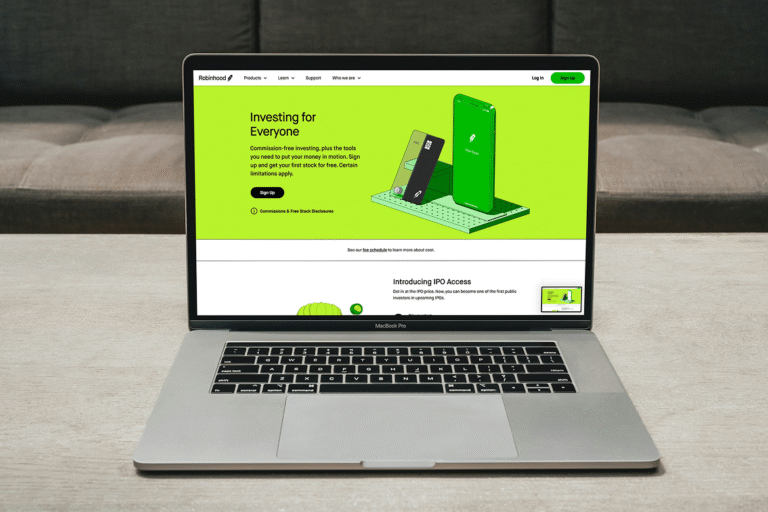

Robinhood is giving retail traders a new way to gain exposure to OpenAI after its publicly traded Robinhood Ventures Fund I invested $75 million in the artificial intelligence firm.
The move allows everyday investors to effectively “go long” on OpenAI through the fund, which aggregates stakes in private technology companies and trades on the New York Stock Exchange. It marks one of the most direct avenues yet for retail participants to access the fast-growing AI sector, where many leading firms remain privately held.
Robinhood said the investment is among the largest in the fund’s portfolio and reflects strong demand for exposure to frontier AI companies.
Opening the Door to Private AI Giants
Access to companies like OpenAI has traditionally been limited to institutional investors and venture capital firms. However, as top AI startups delay IPOs and raise massive private funding rounds, retail investors have increasingly looked for alternative entry points.
Robinhood’s fund structure offers one such pathway, bundling private company stakes into a tradable vehicle. Alongside OpenAI, the fund includes positions in firms such as Databricks, Revolut, and Oura.
The $75 million investment is relatively small compared to OpenAI’s overall valuation but significant in terms of expanding retail participation in private markets.
From Conflict to Collaboration
The investment comes after tensions between the two companies last year. OpenAI and its CEO Sam Altman publicly criticized Robinhood’s earlier attempt to offer tokenized shares tied to private companies, arguing that such instruments do not represent actual equity ownership.
Despite that dispute, Robinhood’s latest move suggests a shift toward more conventional investment structures, aligning with regulatory expectations while still broadening access.
Rising Demand for AI Exposure
The development reflects a broader trend in financial markets, where demand for AI-related investments continues to surge. Companies such as Anthropic and xAI have attracted significant capital, reinforcing investor interest in the sector.
At the same time, the growing gap between public and private markets has made early-stage access more valuable. By offering indirect exposure through a listed fund, Robinhood is positioning itself at the center of that shift.
For retail investors, the opportunity comes with trade-offs, including less transparency and liquidity compared to direct equity ownership. Still, the ability to participate in the growth of companies like OpenAI marks a notable evolution in how access to high-growth technology is distributed.
Disclaimer: AIstify is an independent media brand owned and operated by NuvexMedia LLC, publishing news, research, and insights on artificial intelligence, emerging technologies, automation, and related industries. NuvexMedia LLC invests in and collaborates with companies across the AI, technology, software, and digital innovation sectors. These relationships do not influence AIstify’s editorial coverage, and the publication maintains full editorial independence to provide accurate, timely, and objective information. © 2026 NuvexMedia LLC. All rights reserved. This content is for informational purposes only and should not be considered legal, tax, investment, financial, or other professional advice.