ASML Sees Record Orders Thanks to AI Demand, Raises 2026 Sales Forecast
ASML posted record orders and raised its 2026 sales outlook, supported by sustained demand for AI-driven chip manufacturing equipment.
Ricursive Intelligence hits a $4 billion valuation after raising $300 million to develop AI systems that autonomously design and improve AI chips.
Samsung plans HBM4 memory chip production for Nvidia next month, targeting AI accelerator demand while competing with SK Hynix in advanced memory supply.
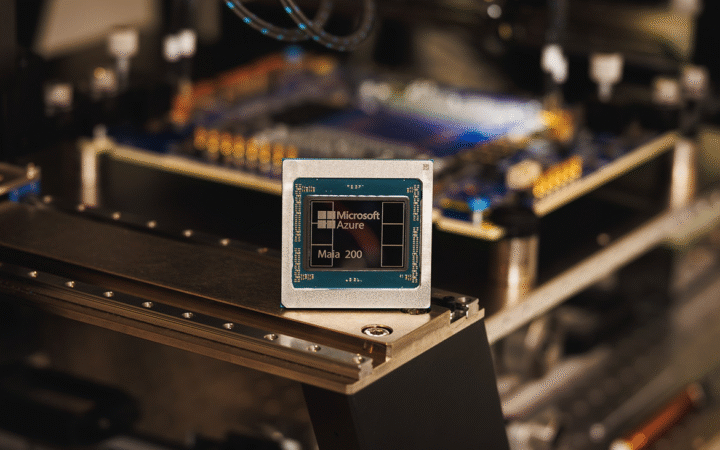
Microsoft has introduced Maia 200, a new AI chip built with TSMC and designed to power GPT-5.2 and Microsoft 365 Copilot, promising faster, more efficient AI performance.
Taiwanese electronics manufacturer Pegatron, a supplier to Apple, is building its first U.S. factory in Texas to produce AI server products, including those using Nvidia chips.
Intel shares fell 14% after the chipmaker issued soft guidance and warned of a supply shortage, raising concerns over its foundry business and AI competitiveness.
A House committee will vote on the AI Overwatch Act, which would give Congress authority to review and block advanced AI chip exports to China and other adversaries.
OpenAI has unveiled the Stargate Community plan to ensure its AI data centers do not raise local electricity costs while expanding energy infrastructure.
Elon Musk said Tesla is restarting development of its Dojo3 supercomputer to support AI training, after previously pausing the project to focus on in-vehicle AI chips.
Taiwan plans closer AI ties with the US after a trade deal cutting tariffs and driving semiconductor and AI investment amid rising geopolitical tensions.
Amazon Web Services launched the AWS European Sovereign Cloud, a fully independent EU-based cloud designed to meet strict data sovereignty and regulatory requirements.
The Trump administration approved China-bound sales of Nvidia’s H200 AI chips under new restrictions. The move sets review and allocation limits aimed at balancing trade and security concerns.
Microsoft outlined a community-first strategy for expanding AI data centers, promising to cover electricity costs and reduce local environmental impact. The move comes amid rising public opposition to large-scale AI infrastructure projects.
Meta has introduced a new top-level initiative, Meta Compute, to expand its AI infrastructure and energy capacity at large scale. The effort signals a long-term push to support advanced AI development and global data center growth.
Meta signed 20-year agreements to purchase nuclear power from three Vistra plants and develop small modular reactors with Oklo and TerraPower, aiming to meet growing AI-related electricity demand.