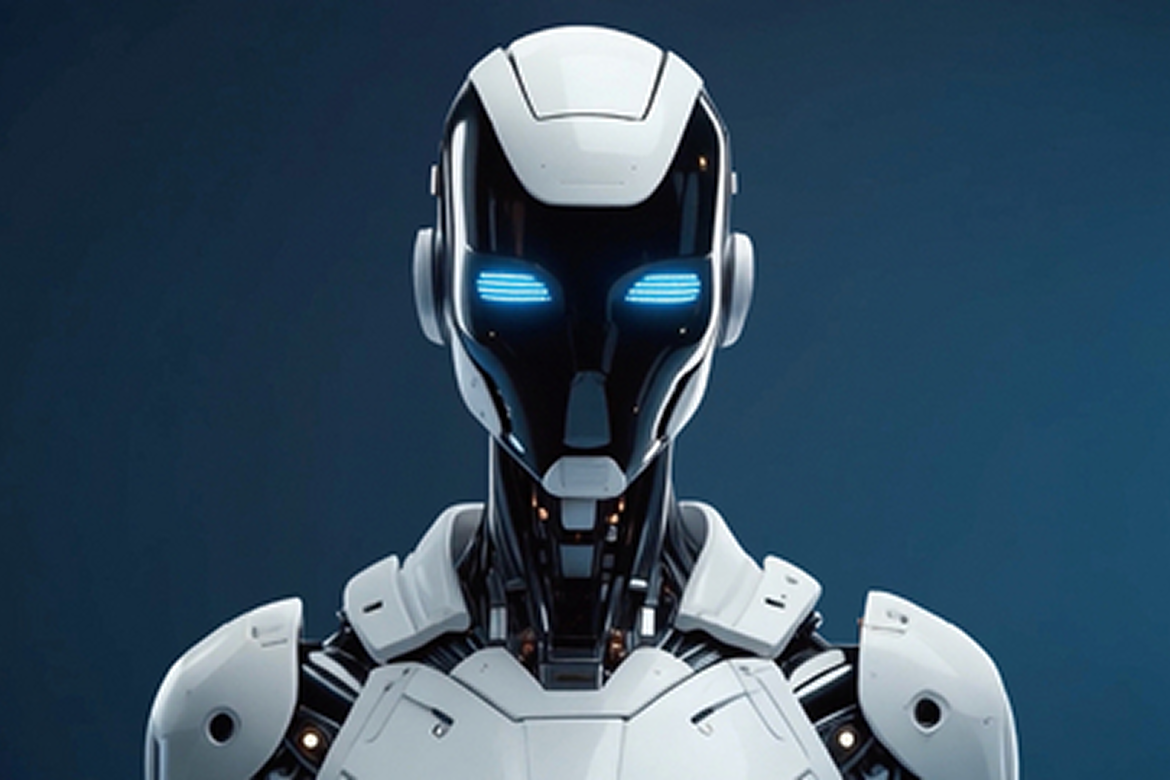

Barclays Research has identified humanoid robots as the next major frontier for artificial intelligence, citing rapid advances in AI reasoning, physical actuation, and battery technology that are accelerating commercial deployment. In a new Impact Series report titled The Future of Work: AI Gets Physical, the firm said humanoid robots are increasingly shifting from research environments into real-world applications across manufacturing, logistics, and healthcare.
According to the report, production costs for humanoid robots have fallen roughly 30-fold over the past decade, removing a key barrier to adoption. Barclays said the decline reflects improvements across software intelligence, mechanical motion systems, and energy storage, allowing humanoid platforms to perform complex physical tasks more efficiently and at lower cost.
The research highlights growing demand driven by aging populations and persistent labor shortages in industrialized economies. Rather than replacing workers outright, Barclays said humanoid robots are likely to augment human labor by taking on repetitive, physically demanding, or hazardous tasks in sectors struggling to attract and retain workers.
Market Growth and Supply Chain Dynamics
Barclays estimates the global humanoid robotics market is currently valued at approximately $2 billion to $3 billion. Under its most optimistic scenario, the firm projects the market could expand to as much as $200 billion by 2035 as adoption scales across industries.
The report notes that actuators, which function as a robot’s mechanical muscles, account for about half of total production costs. This creates an advantage for regions with strong expertise in precision engineering and automotive manufacturing. Barclays said Europe may be particularly well positioned due to its established industrial base in motion control systems, robotics components, and vehicle manufacturing.
China is also emerging as a dominant force in the sector. The country now accounts for the majority of newly announced humanoid robot models and is rapidly scaling both innovation and manufacturing capacity. Barclays said China’s vertically integrated supply chains and government-backed industrial strategy could accelerate global competition in physical AI systems.
Zornitsa Todorova, head of thematic FICC research at Barclays, described humanoid robots as a structural shift in automation. She said the transition from concept to commercial deployment could have significant implications for labor markets, productivity, and national industrial strategies.
Barclays’ Impact Series emphasizes that humanoid robotics represents a shift in AI-driven value creation from software toward hardware-intensive systems. As production scales, investment opportunities are emerging for actuator manufacturers, precision component suppliers, and automation firms that played a limited role in the first wave of generative AI. Investors are taking notice: Skild AI, for example, recently raised $1.4 billion from SoftBank, Nvidia and others at a valuation above $14 billion to develop a single AI model that can control many types of robots.