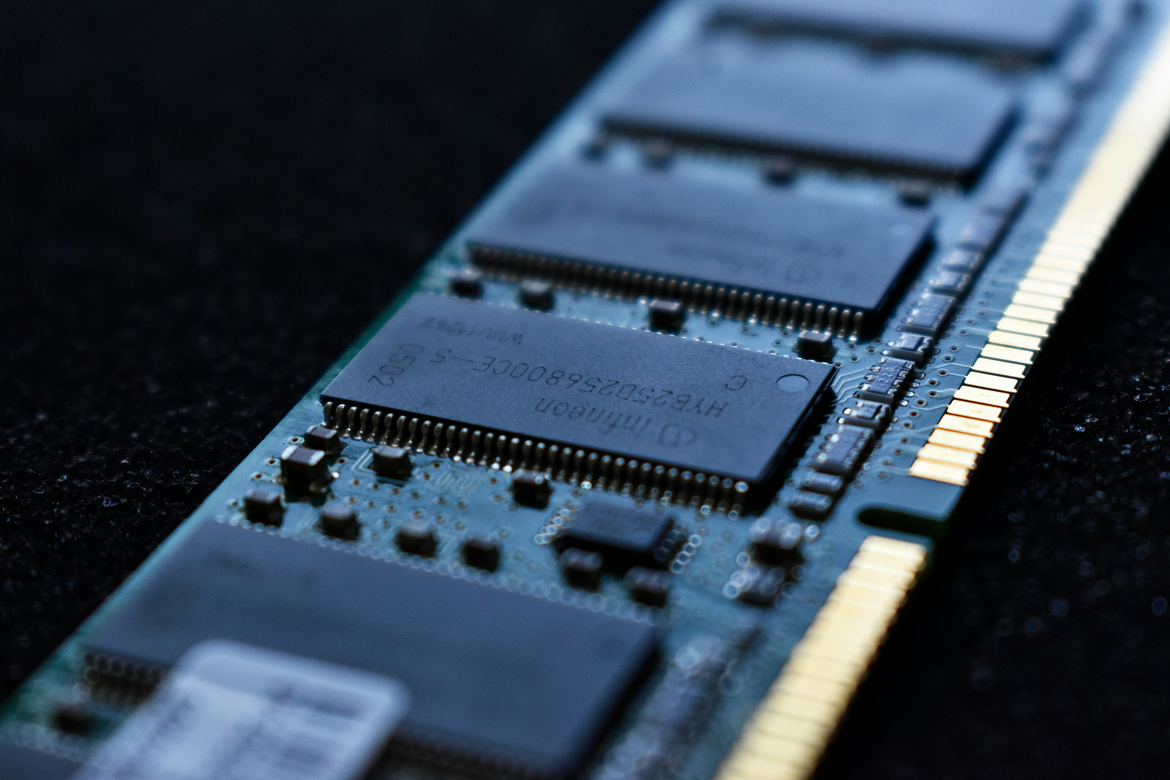
DDR5 memory prices are beginning to show signs of easing after a prolonged surge driven by artificial intelligence demand, with analysts pointing to a recent breakthrough in AI efficiency as a key turning point.
The shift follows the introduction of TurboQuant, a compression algorithm unveiled by Google that significantly reduces the memory requirements of large AI models. By lowering demand for high-bandwidth memory and DRAM, the development is starting to rebalance a market that had been under intense pressure from AI infrastructure expansion.
The price movement marks a rare reversal after a sharp increase in 2025, when expectations around AI-driven demand pushed memory costs to record levels.
AI Demand Fueled Price Surge
Last year, the market reacted strongly to reports that OpenAI had signed preliminary agreements with major memory manufacturers Samsung and SK Hynix for up to 40% of global DRAM output. Although the agreements were non-binding letters of intent rather than firm purchase commitments, they were widely interpreted as indicative of massive future demand.
That perception drove DDR5 prices up by as much as 171%, with high-capacity memory kits becoming significantly more expensive. The surge also reflected broader investment in AI data centers, where memory is a critical component for training and running large-scale models.
However, some large infrastructure projects later faced delays or cancellations amid uncertainty over actual demand, contributing to growing volatility in the memory market.
TurboQuant Shifts Market Dynamics
The release of Google’s TurboQuant algorithm has introduced a new variable into the equation. The technology reduces key-value cache memory requirements by up to six times while maintaining performance, potentially lowering the amount of DRAM needed for AI workloads.
This improvement could have a direct impact on data center design, enabling operators to run large models with fewer memory modules. As a result, some supply may shift back toward consumer markets, including gaming and personal computing.
Early signs of this shift are emerging. In the United States, certain DDR5 modules, including Corsair Vengeance kits, have seen modest price declines at major retailers. Similar trends have been reported in parts of Europe, suggesting a broader stabilization in pricing.
Limited Relief for Consumers
Despite these developments, the overall memory market remains constrained. Most DRAM supply continues to be prioritized for enterprise customers, particularly hyperscalers building AI infrastructure.
Industry trackers indicate that while prices are leveling off, widespread declines have yet to materialize across all products. Analysts caution that improvements in efficiency could paradoxically drive further AI adoption, sustaining long-term demand for memory.
The broader impact of TurboQuant may depend on how quickly it is adopted and whether it leads to a net reduction in hardware requirements or enables even larger and more complex AI systems.
For now, the easing of DDR5 prices reflects an early adjustment in a market that has been heavily influenced by AI-driven expectations. It also highlights how advances in software efficiency can have immediate ripple effects across hardware supply chains.