Spotify and Universal Music Bring AI-Powered Music Remixing to Fans
Spotify and Universal Music Group are launching AI tools that let fans create licensed song covers and remixes with artist revenue sharing.

Spotify is an audio entertainment company known for music streaming, podcasts, audiobooks, creator tools, and personalized discovery.
Spotify is an entertainment and gaming company in audio streaming, podcasting, creator tools, and digital entertainment. It belongs in an AIstify company directory because entertainment is increasingly shaped by interactive platforms, real-time engines, creator tools, digital characters, personalization systems, production software, virtual economies, online communities, and new ways to make, distribute, and experience media. The company is included for its actual role in entertainment or gaming markets rather than because every product must be described as artificial intelligence. Founded in 2006, Spotify is headquartered in Stockholm, Sweden. Its leadership field is listed as Daniel Ek, and its business profile is best described as a Public audio streaming, podcasting, and digital entertainment company. The organization is associated with Daniel Ek and Martin Lorentzon. Its major brands, platforms, franchises, or programs include Spotify, Spotify for Artists, Spotify Advertising, Spotify Audiobooks, Spotify Podcasts.
Within AIstify’s company directory, Spotify fits into the Audio Streaming and Digital Entertainment category. Employee count is listed as 9,000+, funding status is Public company, valuation is described as Public market capitalization varies, ownership is Public, and stock ticker information is SPOT. The company’s products and services include Music streaming, podcasts, audiobooks, creator tools, advertising technology, personalization, recommendations, audio discovery. This product surface matters because modern entertainment is no longer limited to finished films, games, songs, or shows. Many companies operate platforms where creators, studios, advertisers, performers, developers, and fans interact continuously. Games are live services. Streaming platforms rely on discovery and retention. Virtual worlds need moderation, monetization, and creation tools. Production teams need faster pipelines for art, voice, animation, localization, testing, and community management. Spotify’s relevance can be understood through several practical layers.
The first layer is content: franchises, games, audio, video, characters, or virtual spaces must attract audiences. The second layer is creation: studios and creators need engines, asset workflows, animation systems, voice tools, and collaboration software. The third layer is distribution: platforms must manage stores, subscriptions, recommendations, social feeds, community channels, and live events. The fourth layer is trust: entertainment companies must handle rights, safety, moderation, player protection, creator incentives, brand risk, and audience expectations. AI-related features are becoming more common in this vertical, but they are only one part of the story. Some companies use machine learning for recommendations, content discovery, moderation, localization, animation assistance, voice production, game testing, personalized experiences, or developer tooling. Others are primarily media, hardware, publishing, or franchise companies whose value comes from intellectual property, creative execution, community scale, distribution power, and long-running audience relationships.
The strongest companies usually combine technology with recognizable content, reliable operations, and a clear business model. The competitive context around Spotify is changing quickly. Players and viewers expect more content, more personalization, better safety, cross-platform access, and shorter waits between updates. Developers and studios face rising production costs, crowded storefronts, global localization demands, and pressure to keep communities active for years. Rights holders want new revenue without weakening the value of their characters, music, games, or brands. Companies in this vertical must prove that their technology improves creativity, distribution, engagement, or production quality without making the experience feel generic. From an operator, investor, or technology buyer perspective, Spotify is worth tracking because entertainment and gaming companies can become cultural infrastructure over time.
Useful signals include audience scale, franchise durability, creator adoption, developer ecosystem health, live service performance, moderation quality, licensing strategy, cross-platform reach, technology roadmap, and the ability to convert attention into recurring revenue. AIstify tracks Spotify with tags including spotify, music streaming, podcasts, audio entertainment, creator tools, entertainment gaming, spotify profile, spotify company profile. The company’s public website is https://www. spotify. com/.
Additional comparison signals include games media streaming audio avatars engines studios creators players franchises communities moderation localization animation assets worlds distribution monetization licensing platforms workflows production discovery recommendations safety narrative simulation interaction content marketplaces subscriptions hardware software mobile console online services games media streaming audio avatars engines studios creators players franchises communities moderation localization animation assets worlds distribution monetization licensing platforms workflows production discovery recommendations safety narrative simulation interaction content marketplaces subscriptions hardware software mobile console online services games media streaming audio avatars engines studios creators players franchises communities moderation localization animation assets worlds distribution monetization licensing platforms workflows production discovery recommendations safety narrative simulation interaction content marketplaces subscriptions hardware software mobile console online services games media streaming audio avatars engines.
For AIstify, this makes Spotify a useful reference point for tracking entertainment and gaming companies whose products shape interactive media, creator economies, digital characters, game platforms, production workflows, online communities, or media franchises.
SDKs, engines, creator tools, dashboards, APIs, marketplace tools, moderation systems, analytics, content management, partner programs, and production integrations where available.
Game sales, platform fees, subscriptions, advertising, in-app purchases, licensing, enterprise software, usage-based tools, revenue sharing, marketplace commissions, and production services.
Spotify and Universal Music Group are launching AI tools that let fans create licensed song covers and remixes with artist revenue sharing.
Spotify is expanding its Prompted Playlist feature to include podcasts, aiming to improve discovery through AI-driven, personalized recommendations. The move broadens how users explore content beyond music.
Spotify is rolling out its AI-powered Prompted Playlists to Premium users in the U.K., Ireland, Australia, and Sweden, allowing personalized playlists from natural-language prompts.
Spotify says its top engineers are relying on generative AI tools instead of writing code, as the company accelerates product development using internal systems and large language models.
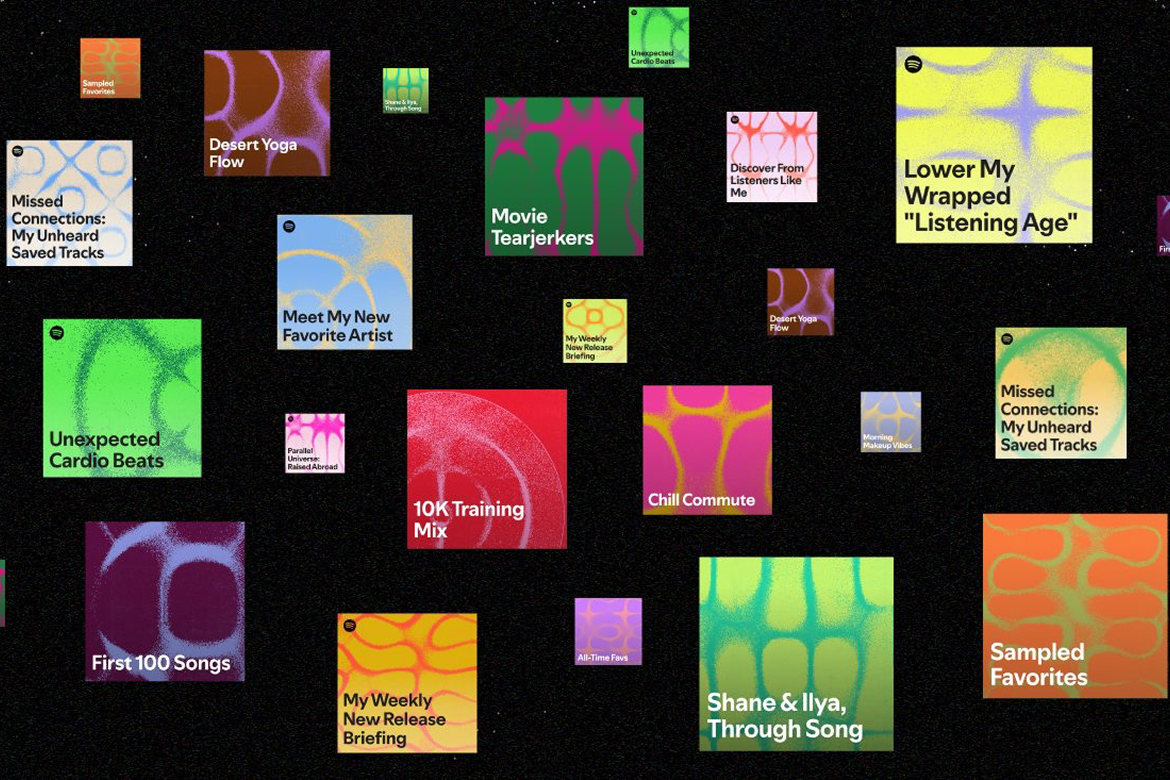
Spotify has launched Prompted Playlists, a new AI-powered playlist creation feature that lets users describe what they want to hear in natural language.
Meta released a v21 update for Ray-Ban Meta and Oakley Meta AI glasses, introducing conversation focus and a Gemini-powered Spotify music matching feature.
OpenAI reports more than 1 million business customers and strong growth in ChatGPT for Work, supported by new enterprise tools, integrations, and model capabilities.
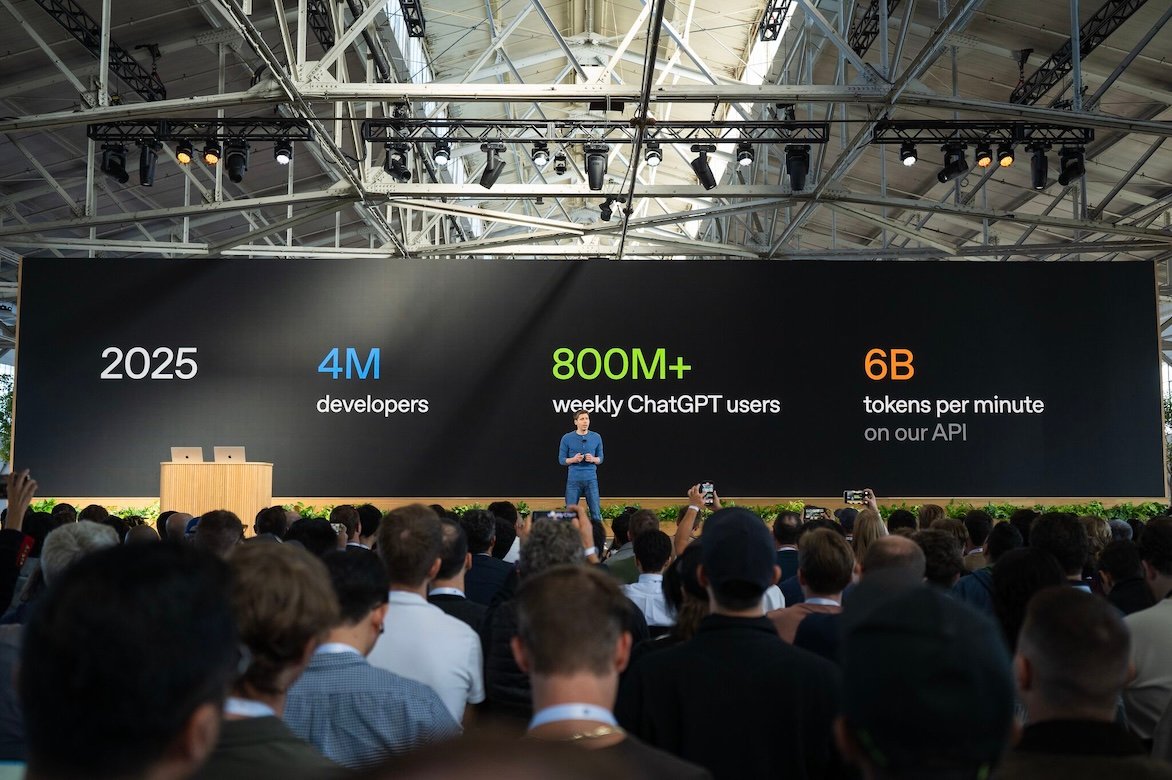
OpenAI is unveiling a new capability - Apps in ChatGPT - which allows developers to integrate apps natively inside ChatGPT. A preview of the Apps SDK is now open, enabling users to perform tasks like booking, design, and music all within a chat.