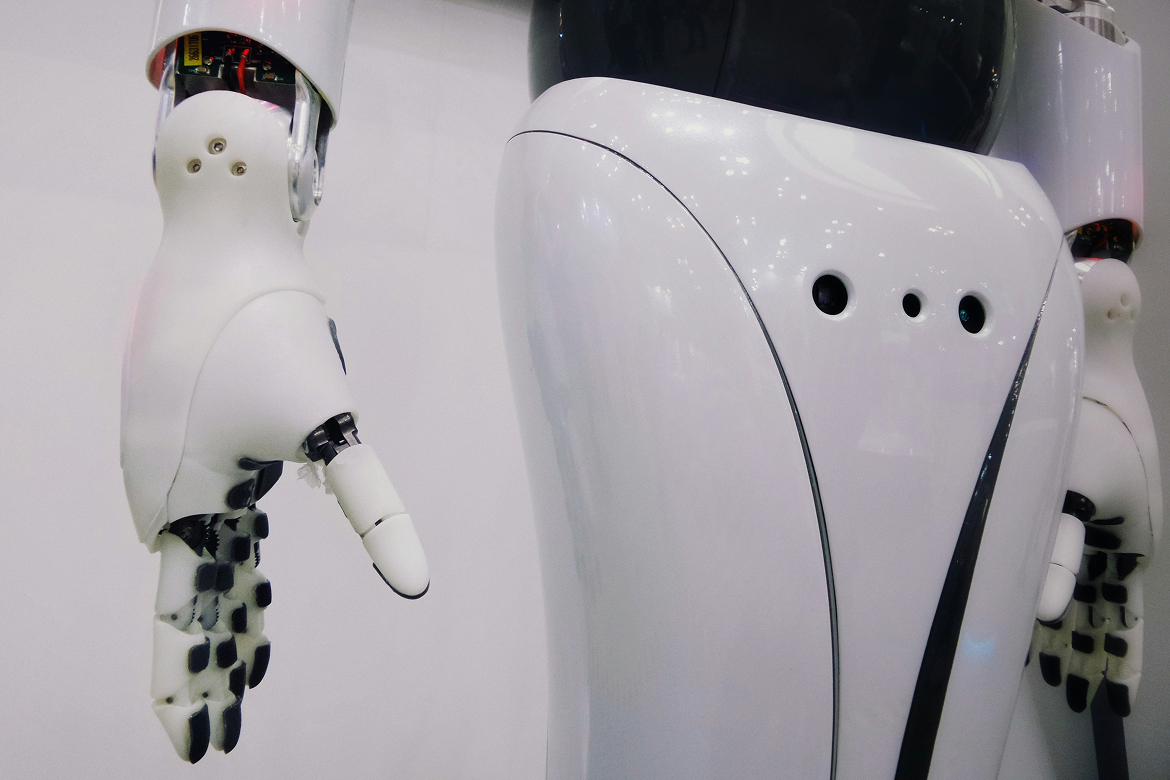
Altman Confirms OpenAI Will Build Humanoid Robots
Sam Altman confirmed OpenAI will build humanoid robots, ending years of speculation and putting the company in direct competition with the hardware makers it once backed.

Figure AI is a leading humanoid robotics and embodied ai company using AI, robotics, automation software, sensing, or intelligent machines across humanoid robotics, embodied AI, and general-purpose automation workflows.
Figure AI is a major company in humanoid robotics, embodied AI, and general-purpose automation. It belongs in an AIstify company directory because robotics and automation are increasingly defined by artificial intelligence, perception models, motion planning, simulation, sensor fusion, robot fleet software, industrial control, machine vision, and data-driven optimization. The company is included as a company-level profile rather than a product line, division name, or one-off brand. Founded in 2022, Figure AI is headquartered in Sunnyvale, California, United States. Its leadership field is listed as Brett Adcock, and its business profile is best described as a Private AI robotics company building general-purpose humanoid robots. The organization is associated with Brett Adcock. Its major brands, platforms, or programs include Figure AI, Figure 01, Figure 02, humanoid robotics platform.
Within AIstify’s company directory, Figure AI fits into the Humanoid Robotics and Embodied AI category. Employee count is listed as N/A, funding status is Private funding rounds, valuation is described as Private valuation varies, ownership is Private, and stock ticker information is N/A. The company’s products and services include General-purpose humanoid robots, embodied AI systems, manipulation software, factory and logistics pilots, robotics foundation model integrations. This product surface matters because the robotics market is no longer only about mechanical arms or isolated machines. Buyers now compare integrated systems that combine hardware, controls, safety, sensing, remote monitoring, analytics, robot orchestration, predictive maintenance, and software workflows. AI capability can appear in vision inspection, object recognition, path planning, grasping, anomaly detection, quality control, human-machine interfaces, and autonomous decision support. Figure AI’s relevance can be understood through several practical layers.
The first layer is deployment: robots must work reliably in factories, warehouses, hospitals, inspection sites, stores, campuses, public spaces, or industrial facilities. The second layer is intelligence: systems need perception, planning, manipulation, localization, and adaptation to changing environments. The third layer is integration: customers need robots to connect with manufacturing execution systems, warehouse management systems, enterprise software, safety systems, and existing equipment. The fourth layer is economics: adoption depends on throughput, uptime, labor availability, service support, training, financing, and measurable return on investment. AI and automation are especially important in this vertical because robotic systems must interact with messy real-world conditions. Warehouse robots need to identify mixed inventory, coordinate fleets, and recover from exceptions. Industrial robots need safer programming, faster changeovers, and better simulation. Humanoid and mobile robots need embodied AI, perception, balance, manipulation, and human-aware behavior.
Vision and sensor companies need deep learning inspection and reliable edge inference. Automation platforms need orchestration and analytics that turn machines into repeatable operations rather than isolated equipment purchases. The competitive context around Figure AI is changing quickly. Traditional industrial automation leaders are adding software, cloud connectivity, AI-assisted programming, and collaborative systems. Warehouse robotics vendors are competing on deployment speed, fleet scale, uptime, and fulfillment performance. Humanoid companies are moving from research demonstrations toward factory and logistics pilots. Machine vision suppliers are embedding deep learning into inspection. Infrastructure and service robotics companies are using autonomy to collect data, reduce dangerous work, and extend automation beyond the factory floor. From an operator, investor, or technology buyer perspective, Figure AI is worth tracking because robotics is becoming a platform market.
The company’s website, customer deployments, funding activity, product launches, safety certifications, partner ecosystem, installed base, service model, and software roadmap can show whether it is moving from impressive demonstrations to repeatable operations. AIstify tracks Figure AI with tags including figure ai, humanoid robots, embodied ai, general purpose robots, robotics foundation models, robotics ai, figure ai profile, figure ai company profile. The company’s public website is https://www. figure. ai/.
Additional comparison signals include robots automation deployment reliability perception manipulation simulation integration safety sensors uptime fleets orchestration software hardware maintenance support warehouses factories logistics inspection cobots humanoids mobility controls analytics productivity adoption manufacturing fulfillment service operations robots automation deployment reliability perception manipulation simulation integration safety sensors uptime fleets orchestration software hardware maintenance support warehouses factories logistics inspection cobots humanoids mobility controls analytics productivity adoption manufacturing fulfillment service operations robots automation deployment reliability perception manipulation simulation integration safety sensors uptime fleets orchestration software hardware maintenance support warehouses factories logistics inspection cobots humanoids mobility controls analytics productivity adoption manufacturing fulfillment service operations robots automation deployment reliability perception manipulation simulation integration safety sensors uptime fleets orchestration software hardware maintenance support warehouses factories logistics inspection cobots humanoids mobility controls.
For AIstify, this makes Figure AI a useful reference point for tracking how robotics, automation, embodied AI, machine vision, warehouse systems, and intelligent machines are moving into practical business operations.
Robot APIs, fleet software, automation controllers, simulation tools, integration SDKs, data dashboards, machine vision tools, or industrial software interfaces where available.
Hardware sales, automation projects, robot-as-a-service subscriptions, software licenses, support contracts, maintenance plans, enterprise deployments, and partner-led implementation services.
Sam Altman confirmed OpenAI will build humanoid robots, ending years of speculation and putting the company in direct competition with the hardware makers it once backed.

Ark Invest CEO Cathie Wood says humanoid robots could become the most transformative opportunity in artificial intelligence, eclipsing sectors like autonomous transport and healthcare.