
Andrej Karpathy says programming has undergone a dramatic shift in just the past two months: not gradual progress, but a clear inflection point.
In a post on X, Karpathy argued that coding agents “basically didn’t work before December and basically work since.” According to him, recent model improvements in quality, long-term coherence, and persistence have made AI agents capable of powering through complex, multi-step tasks — far beyond what was possible only months ago.
A 30-Minute Weekend Project
Karpathy shared a personal example: over a weekend, he set up a local video analysis dashboard for his home cameras by giving an AI agent a single detailed instruction in plain English. The request included logging into his DGX Spark machine, configuring SSH keys, setting up vLLM, downloading and benchmarking Qwen3-VL, building a server endpoint for video inference, creating a web UI dashboard, testing everything, configuring systemd services, and generating a markdown report.
The agent reportedly worked autonomously for around 30 minutes, troubleshooting errors, researching solutions, writing and debugging code, deploying services, and returned with a completed system and documentation. Karpathy said he “didn’t touch anything.”
Just three months ago, he noted, the same work could have taken an entire weekend.
From Typing Code to Orchestrating Agents
Karpathy argues that programming is becoming “unrecognizable.” Instead of writing code line by line in an editor, the default workflow since the invention of computers , developers are increasingly spinning up AI agents, assigning tasks in natural language, and reviewing outputs.
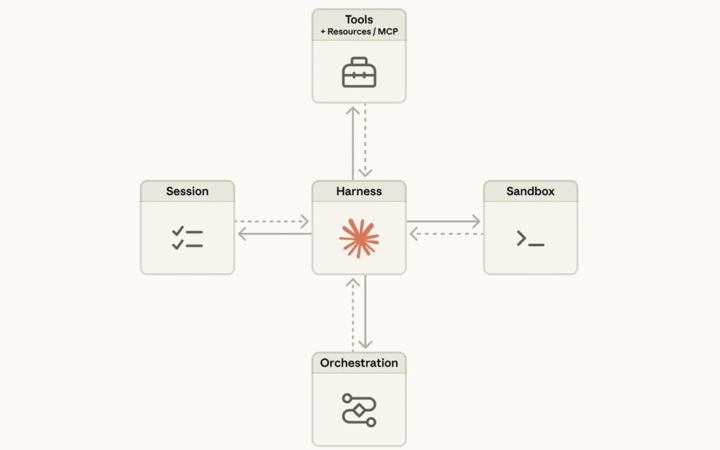
The leverage, he says, comes from building higher-level orchestration systems: long-running agents equipped with tools, memory, and structured instructions that manage multiple coding instances in parallel. He describes this as “agentic engineering,” where the biggest opportunity lies in mastering abstraction layers and task decomposition.
Not Magic, But Disruptive
Karpathy is clear that the systems are not perfect. They require high-level direction, oversight, judgment, and iteration. They perform best on well-specified tasks with clear verification criteria. The skill, he suggests, is learning how to break problems into components that can be reliably delegated to agents while managing the edge cases.
Still, his conclusion is unequivocal: this is not business as usual in software development. And his view is increasingly echoed across the industry – for example, Spotify recently said its best developers haven’t written code in months thanks to generative AI tools, instead focusing on directing and reviewing AI-generated output as the company accelerates product development with internal systems and large language models.
If his assessment proves accurate, the role of the software engineer may be shifting from code writer to task architect, from syntax to strategy, at a pace far faster than most anticipated.