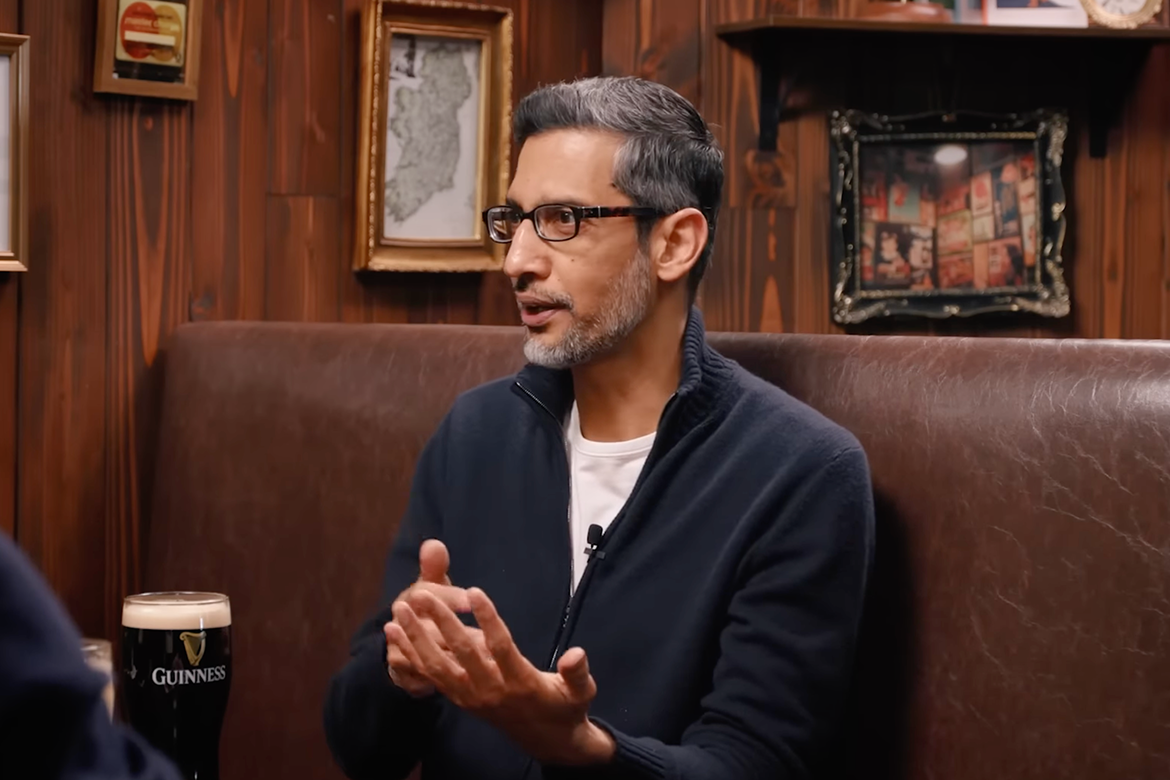
Alphabet is preparing to expand its direct investments in artificial intelligence startups, buoyed by massive gains from earlier bets such as SpaceX. CEO Sundar Pichai said the company sees a growing number of opportunities to deploy capital as AI reshapes the technology landscape. His comments come as Alphabet’s 2015 investment in SpaceX could be worth around $100 billion, depending on future valuation milestones tied to a potential IPO.
Speaking in a conversation published Tuesday, Pichai pointed to SpaceX and Anthropic as examples of how early investments can scale alongside major technology shifts. Alphabet initially invested $900 million in SpaceX at a $12 billion valuation. Following a merger between SpaceX and xAI earlier this year, the combined entity has been valued as high as $1.25 trillion, with reports suggesting a future IPO could target $1.75 trillion. If Alphabet has maintained its stake, the return would rank among the most successful venture-style investments in the company’s history.
The company is now adapting its investment strategy to match the scale of the AI boom. Rather than relying solely on its venture arms GV and CapitalG, Alphabet is increasingly deploying capital directly from its balance sheet. This approach mirrors moves by other major technology firms, including Nvidia, Microsoft, and Amazon, as AI startups require significantly larger funding rounds than traditional venture deals.
Anthropic illustrates this shift. Alphabet invested $300 million in the AI startup in 2023, followed by an additional $2 billion later that year. Its total investment now exceeds $3 billion, with a reported ownership stake of about 14%. Over the same period, Anthropic’s valuation has surged to roughly $380 billion, reflecting rapid growth in demand for generative AI systems. The partnership also has strategic value, as Anthropic relies on Google’s cloud infrastructure and tensor processing units to run its models.
From Venture Bets to Strategic Capital
Pichai’s comments suggest Alphabet is moving beyond passive venture investing toward a more strategic model tied closely to its core business. Large AI investments can drive demand for its cloud services, custom chips, and infrastructure, creating a feedback loop between capital deployment and product growth.
This shift also reflects lessons from past investments. Pichai noted that Alphabet could have invested more heavily in its own autonomous vehicle unit, Waymo, at earlier stages. Waymo has since raised significant external funding, including a $16 billion round this year that valued the company at $126 billion.
A New Era of Mega Investments
The scale of current AI funding rounds is reshaping how tech giants allocate capital. Companies are increasingly making multi-billion-dollar investments to secure strategic partnerships and infrastructure demand, rather than pursuing smaller, diversified venture portfolios.
Alphabet’s experience with companies like Stripe, where early investments have grown significantly in value, reinforces the potential upside of this approach. But the AI era is raising the stakes, with fewer deals and much larger check sizes.
As competition intensifies, Alphabet’s willingness to invest aggressively could determine its position in the next phase of AI development, where capital, infrastructure, and partnerships are becoming as critical as the technology itself.