Cloud Computing Explained: A Beginner’s Guide
By Olivia Grant Published: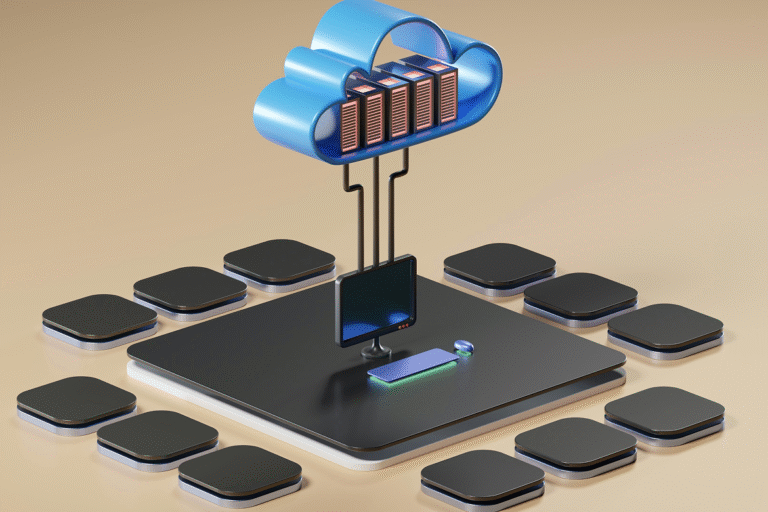
Cloud computing allows individuals and organizations to store data and run applications on remote servers instead of local computers. This guide explains how cloud computing works and why it is widely used.
Modern digital services rely on large amounts of computing power and data storage. Instead of running all software and storing files directly on personal computers or local servers, many organizations now use cloud computing to access computing resources over the internet.
Cloud computing allows users to store data, run applications, and access computing power through remote data centers managed by cloud providers. This approach enables businesses and individuals to use powerful computing infrastructure without maintaining their own hardware.
Cloud technology supports many everyday services, including online storage platforms, streaming services, collaboration tools, and artificial intelligence systems. Major technology companies operate large cloud platforms that provide computing resources to businesses, developers, and researchers around the world.
This guide explains what cloud computing is, how it works, the different types of cloud services, and how cloud infrastructure supports modern digital technologies.
What Is Cloud Computing?
Cloud computing is a method of delivering computing services through the internet. Instead of using a personal computer or local server to process data and run applications, users access remote servers hosted in data centers.
These remote servers provide various computing resources, including storage, processing power, networking, and software applications. Users can access these resources through web interfaces, mobile apps, or specialized software tools.
For example, when someone stores files in an online storage service, the files are not stored on the user’s device. Instead, they are stored on servers located in a cloud data center. The user can then access the files from different devices connected to the internet.
This approach allows computing resources to be delivered as on-demand services rather than requiring individuals or companies to purchase and maintain their own infrastructure.
How Cloud Computing Works
Cloud computing relies on large networks of servers located in data centers around the world. These servers provide the computing resources needed to store data and run applications.
When a user accesses a cloud service, their request is sent through the internet to a remote server. The server processes the request, performs the necessary operations, and sends the results back to the user’s device.
For example, when someone edits a document in an online collaboration tool, the document is processed and stored in the cloud rather than on the user’s local computer. Multiple users can access and edit the same document simultaneously because the cloud server manages the shared data.
Cloud providers use advanced technologies such as virtualization to divide physical servers into multiple virtual machines. This allows a single server to support many users at the same time while maintaining security and performance.
By distributing workloads across large networks of servers, cloud platforms can provide reliable and scalable computing services.
Types of Cloud Computing Services
Cloud computing services are typically categorized into three main models based on the level of control and responsibility provided to users.
Infrastructure as a Service
Infrastructure as a Service, often abbreviated as IaaS, provides basic computing resources such as virtual servers, storage, and networking.
In this model, users rent computing infrastructure from a cloud provider and manage their own software, applications, and operating systems.
This approach allows businesses to scale their computing resources as needed without investing in physical hardware.
Platform as a Service
Platform as a Service, or PaaS, provides a platform where developers can build, test, and deploy applications without managing the underlying infrastructure.
The cloud provider manages servers, operating systems, and development tools, allowing developers to focus on writing and deploying software.
This model is commonly used for application development and web services.
Software as a Service
Software as a Service, or SaaS, delivers complete software applications through the internet.
Users access the software through a web browser or mobile application, while the cloud provider manages the infrastructure, maintenance, and updates.
Examples of SaaS applications include email services, document editing tools, and customer relationship management platforms.
Types of Cloud Deployment Models
Cloud computing environments can also be categorized based on how the infrastructure is deployed and managed.
Public Cloud
Public cloud platforms are operated by large technology companies and provide services to multiple customers over the internet.
Users share the same physical infrastructure, but each customer’s data and applications remain isolated and secure.
Public cloud services are widely used because they offer scalability and cost efficiency.
Private Cloud
Private cloud environments are dedicated to a single organization. The infrastructure may be located on the organization’s premises or hosted by a third-party provider.
Private clouds provide greater control over security and data management, making them suitable for industries with strict regulatory requirements.
Hybrid Cloud
Hybrid cloud environments combine public and private cloud resources. Organizations can run sensitive workloads in a private cloud while using the public cloud for less sensitive tasks or additional computing capacity.
This approach provides flexibility and allows organizations to optimize performance and cost.
Benefits of Cloud Computing
Cloud computing offers several advantages compared with traditional on-premise infrastructure.
One major benefit is scalability. Cloud resources can be increased or decreased based on demand, allowing organizations to handle varying workloads efficiently.
Another advantage is cost efficiency. Instead of purchasing expensive hardware, organizations pay for cloud resources as they use them. This model reduces upfront investment and ongoing maintenance costs.
Cloud computing also supports global accessibility. Users can access cloud services from anywhere with an internet connection, making remote work and global collaboration easier.
Reliability is another important benefit. Cloud providers operate multiple data centers and backup systems, reducing the risk of data loss or service interruptions.
Cloud Computing and Artificial Intelligence
Cloud computing plays an important role in supporting artificial intelligence technologies.
AI systems often require large amounts of data storage and powerful computing resources for training and running models. Cloud platforms provide the infrastructure needed to support these workloads.
Many cloud providers offer specialized services for machine learning, deep learning, and data analysis. These services allow developers and researchers to build AI systems without managing complex hardware environments.
For example, companies developing large language models or recommendation systems often rely on cloud-based computing clusters equipped with high-performance processors and AI chips.
By providing scalable computing power, cloud platforms enable rapid innovation in artificial intelligence research and development.
Real-World Applications of Cloud Computing
Cloud computing is used in a wide range of industries and technologies.
Streaming services rely on cloud infrastructure to deliver video and audio content to millions of users simultaneously.
Online collaboration tools allow teams to edit documents, manage projects, and communicate through cloud-based platforms.
E-commerce companies use cloud computing to manage product catalogs, process transactions, and analyze customer behavior.
Healthcare organizations store and analyze medical records using secure cloud systems.
Scientific researchers also use cloud computing to analyze large datasets, run simulations, and share research results with collaborators.
These applications demonstrate how cloud computing supports many of the digital services used in modern society.
Challenges and Considerations
Despite its advantages, cloud computing also presents several challenges.
One important consideration is data security. Organizations must ensure that sensitive information stored in the cloud is properly protected.
Another challenge involves data privacy regulations. Some industries must follow strict rules about where and how data can be stored and processed.
Reliance on internet connectivity is another factor. Cloud services require stable network access, and disruptions can affect availability.
Additionally, organizations must carefully manage cloud usage to avoid unexpected costs, especially when large amounts of data processing or storage are involved.
The Future of Cloud Computing
Cloud computing continues to evolve as technology advances. Emerging trends include edge computing, which processes data closer to where it is generated, and serverless computing, which allows developers to run applications without managing servers.
Cloud providers are also investing in energy-efficient data centers and renewable energy sources to reduce environmental impact.
As digital services continue to expand, cloud computing is expected to remain a core part of the global technology infrastructure.
Conclusion
Cloud computing allows individuals and organizations to access computing resources through remote servers rather than local hardware. By providing scalable storage, processing power, and software services, cloud platforms support many of the digital technologies used today.
From online collaboration tools and streaming services to artificial intelligence research and large-scale data analysis, cloud computing enables modern applications to operate efficiently and reliably.
Understanding cloud computing helps explain how modern digital systems are built and why remote infrastructure has become a foundation of today’s technology landscape.