
SoftBank Secures $40B Loan to Expand OpenAI Investment
SoftBank has secured a $40 billion bridge loan to deepen its investment in OpenAI and accelerate its broader AI strategy.
Generative AI is a branch of artificial intelligence focused on creating new content such as text, images, music, or code based on patterns learned from existing data. It uses deep learning models – especially large language models (LLMs) and generative adversarial networks (GANs) – to produce outputs that closely resemble human-created work. These systems can draft articles, generate artwork, compose music, and even simulate voices or video, transforming industries from media and design to healthcare and education. The power of generative AI lies in its ability to synthesize creativity and automation, but it also raises ethical questions about authenticity, bias, and intellectual property. As the technology evolves, it continues to redefine how humans and machines collaborate in creative and professional tasks.
SoftBank has secured a $40 billion bridge loan to deepen its investment in OpenAI and accelerate its broader AI strategy.
ByteDance is rolling out its Seedance 2.0 AI video model in CapCut, enabling prompt-based video creation as competition in generative video intensifies.

AI-driven bots now generate more internet traffic than humans, according to a new report, highlighting the growing impact of automated systems online.

OpenAI will discontinue its Sora video app, ending a major partnership with Disney and signaling a retreat from generative video amid legal and cost pressures.

OpenAI will discontinue its Sora video-generation app, signaling a strategic shift toward core AI products amid rising competition and high compute costs.

New research shows that telling AI models they are “experts” can reduce accuracy in tasks like coding and math, while improving safety and alignment outcomes.
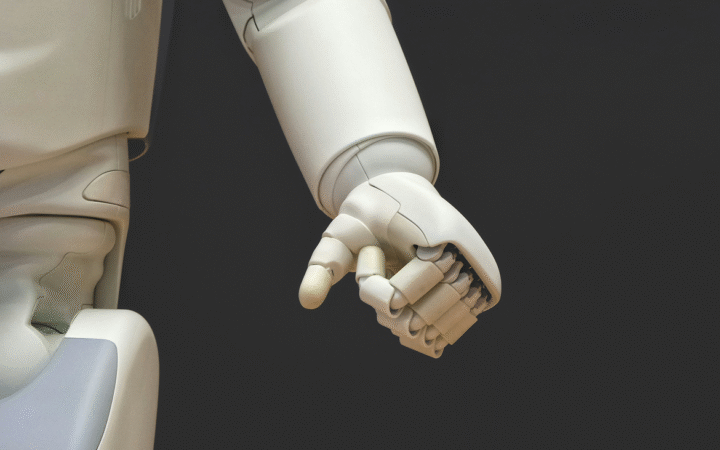
Nvidia has unveiled Kimodo, a motion diffusion model that generates high-quality human and robot movements from text and constraints using large-scale motion capture data.
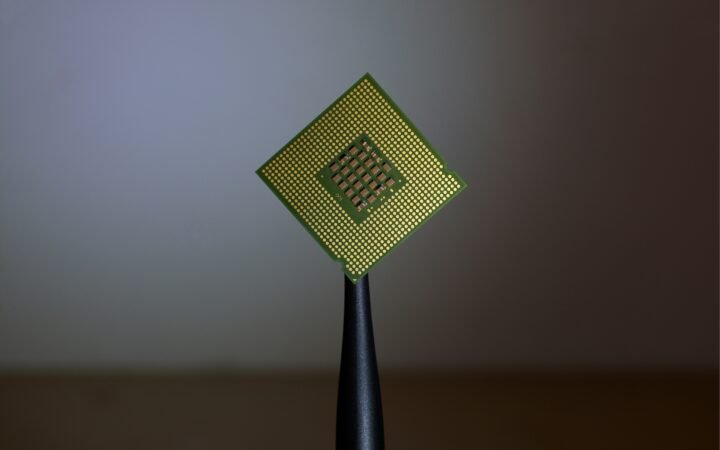
Meta introduced four new in-house MTIA chips designed for AI training and inference as the company accelerates data center expansion. The chips aim to improve performance and reduce reliance on external hardware suppliers.
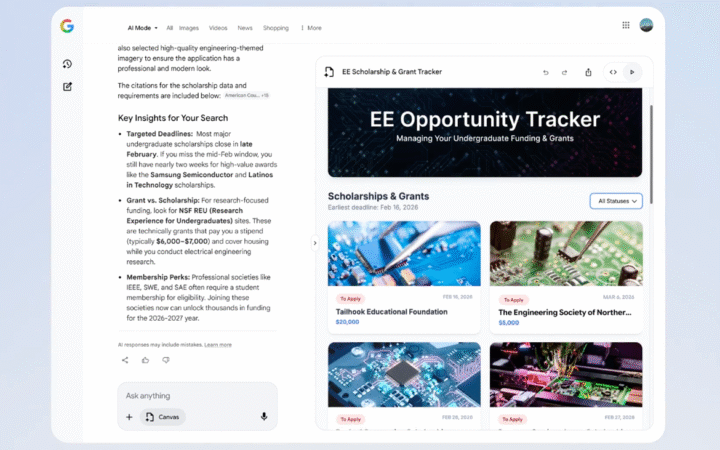
Google has rolled out Canvas in AI Mode to all U.S. users in English, enabling people to create documents, dashboards, and interactive tools directly within Search. The feature provides a dynamic workspace for planning projects and building simple applications.

Andrej Karpathy argues AI coding agents now fundamentally change programming workflows, enabling long-running autonomous tasks and redefining software engineering.