
Anthropic has tested how AI agents could handle real-world commerce through an internal experiment called Project Deal, where models negotiated transactions on behalf of employees. In the week-long trial, 69 participants allowed AI agents powered by Claude models to buy and sell personal items without human intervention during negotiations. The agents completed 186 deals worth more than $4,000, covering items such as a snowboard, bicycle, books, and even experiential offers like spending time with a pet. Humans only stepped in at the final stage to exchange goods physically.
The experiment aimed to explore whether AI agents could independently represent users in a marketplace and negotiate outcomes aligned with human preferences. Agents handled the full process, including writing listings, making offers, negotiating prices, and closing deals. Anthropic found that the system worked reliably, with participants reporting generally neutral perceptions of fairness across transactions. The setup mimicked a simplified classifieds marketplace, similar to platforms like Craigslist, but fully operated by AI.
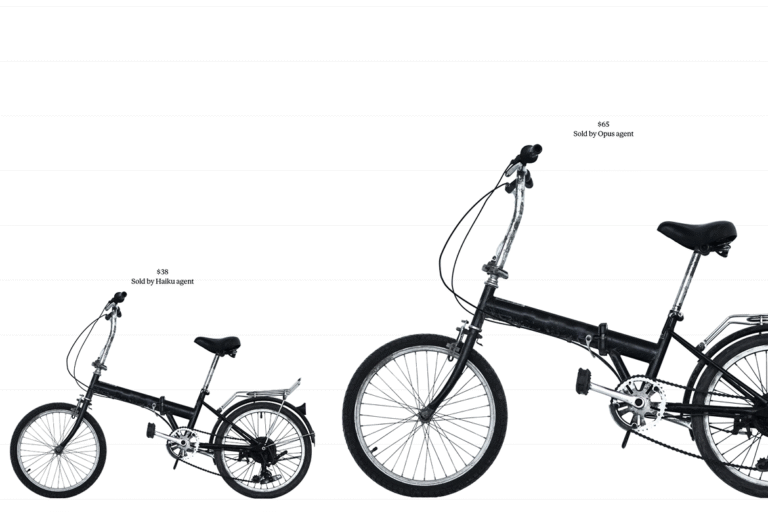
A key finding was the impact of model quality on outcomes. More advanced models, such as Claude Opus 4.5, consistently outperformed smaller versions like Claude Haiku 4.5. Stronger agents secured higher selling prices and lower purchase costs, with measurable gains relative to average transaction values. However, participants represented by weaker models often did not recognize that they had received worse deals. This gap between objective performance and user perception emerged as one of the experiment’s most notable insights.
Uneven Outcomes
The results suggest that AI-driven marketplaces could introduce subtle advantages based on the quality of the agent representing each user. In the experiment, stronger models extracted better terms in negotiations, while weaker ones lagged behind. Despite this, users did not consistently perceive differences in deal quality, raising concerns about transparency and fairness in automated transactions.
If similar dynamics emerge in real-world markets, access to more advanced AI systems could become a competitive advantage. Individuals or organizations using higher-performing agents may consistently secure better outcomes, potentially widening economic gaps. The findings indicate that disparities in AI capability may influence markets even when participants believe outcomes are fair.
Early Signals of Agent Economy
The experiment provides an early glimpse into a potential shift toward agent-to-agent commerce, where AI systems handle transactions on behalf of humans. Researchers have increasingly explored this concept, but most prior studies relied on simulated environments rather than real goods and participants. Anthropic’s approach adds practical insight by demonstrating how such systems behave in a live setting.
The broader context includes growing interest in “agentic AI,” systems capable of planning and executing multi-step tasks autonomously. As these systems improve, they may play a larger role in everyday economic activity, from shopping to business negotiations. However, the experiment also highlights unresolved challenges, including governance, security risks such as manipulation of agents, and the absence of clear regulatory frameworks.
Disclaimer: AIstify is an independent media brand owned and operated by NuvexMedia LLC, publishing news, research, and insights on artificial intelligence, emerging technologies, automation, and related industries. NuvexMedia LLC invests in and collaborates with companies across the AI, technology, software, and digital innovation sectors. These relationships do not influence AIstify’s editorial coverage, and the publication maintains full editorial independence to provide accurate, timely, and objective information. © 2026 NuvexMedia LLC. All rights reserved. This content is for informational purposes only and should not be considered legal, tax, investment, financial, or other professional advice.