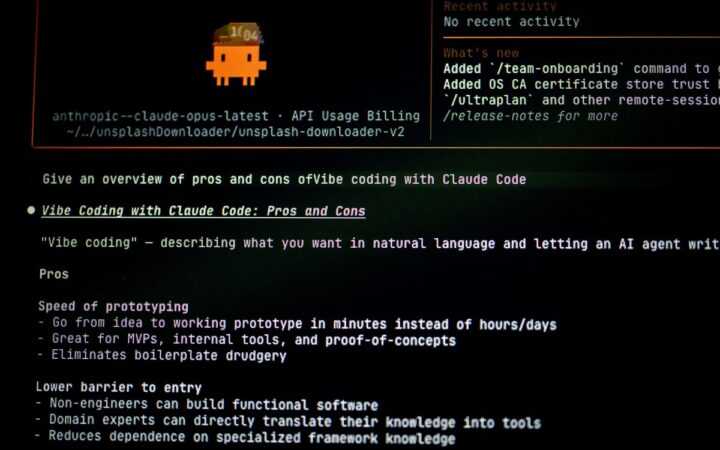

An enterprise company reportedly accumulated $500 million in Anthropic Claude usage charges in a single month after failing to establish spending limits or access controls for employees, according to an AI consultant cited by Axios.
The reported incident illustrates how rapidly AI costs can escalate when advanced models are deployed at enterprise scale without governance mechanisms. According to the consultant, unrestricted access allowed employees across multiple departments to use Claude extensively for software development, automation, and AI agent workflows, generating far higher consumption than anticipated.
The spending surge reportedly stemmed from developers running long coding sessions, autonomous agents executing chained tasks, and employees repeatedly submitting large-context prompts. Unlike traditional software subscriptions with fixed per-seat pricing, modern AI platforms often rely on usage-based billing tied to token consumption and compute resources.
The report comes as enterprises increasingly adopt AI coding assistants and agentic systems capable of operating with minimal human supervision. These tools can analyze large codebases, generate software, process documents, retry failed tasks, and execute complex workflows for extended periods, significantly increasing resource consumption compared with conventional software applications.
The reported case also follows broader concerns about AI spending across large organizations. AIstify previously reported that Microsoft reduced many internal Claude Code licenses after usage costs rose sharply, while Uber reportedly exhausted its planned 2026 AI budget by April following extensive adoption of AI development tools.
Although the identity of the company involved was not disclosed, the incident has become one of the most extreme examples of the financial risks associated with large-scale AI deployment without cost controls.
NEW: AI consultant reveals a client accidentally spent $500,000,000.00 in a single month after failing to set employee limits on Claude usage.
— Polymarket (@Polymarket) May 28, 2026
The Cost of Agentic AI
The reported spending highlights a growing challenge facing enterprises as AI systems move beyond simple chatbots into autonomous workflows. Agentic AI tools can perform tasks continuously, launch additional processes, analyze large datasets, and generate multiple outputs without requiring constant user input.
As a result, costs can scale far faster than many organizations initially expect. What appears manageable during pilot programs can become a significant expense once thousands of employees gain access to advanced models and automated workflows.
The situation is prompting companies to treat AI infrastructure more like cloud computing environments, where monitoring, usage alerts, spending caps, and approval processes are standard operational requirements.
Enterprise AI’s Governance Challenge
Many organizations spent the past two years accelerating AI adoption amid concerns about falling behind competitors. During that period, implementation often took priority over governance, budgeting, and operational oversight.
That dynamic is now shifting as finance and technology leaders seek clearer visibility into AI spending and business outcomes. Companies are increasingly introducing role-based access controls, model selection policies, usage dashboards, and departmental budgets to manage costs more effectively.
The reported Claude incident underscores a broader transition taking place across the industry. While the first wave of enterprise AI adoption was driven by experimentation and rapid deployment, the next phase is expected to focus on efficiency, accountability, and return on investment. For many organizations, controlling AI spending may become as important as adopting the technology itself.
Disclaimer: AIstify is an independent media brand owned and operated by NuvexMedia LLC, publishing news, research, and insights on artificial intelligence, emerging technologies, automation, and related industries. NuvexMedia LLC invests in and collaborates with companies across the AI, technology, software, and digital innovation sectors. These relationships do not influence AIstify’s editorial coverage, and the publication maintains full editorial independence to provide accurate, timely, and objective information. © 2026 NuvexMedia LLC. All rights reserved. This content is for informational purposes only and should not be considered legal, tax, investment, financial, or other professional advice.