

OpenAI launched ChatGPT Work, an AI agent that goes beyond answering questions to producing finished materials, alongside the public release of its GPT-5.6 models.
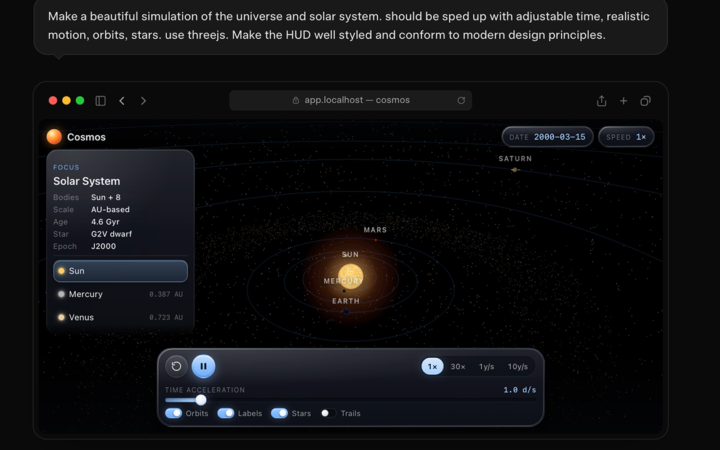
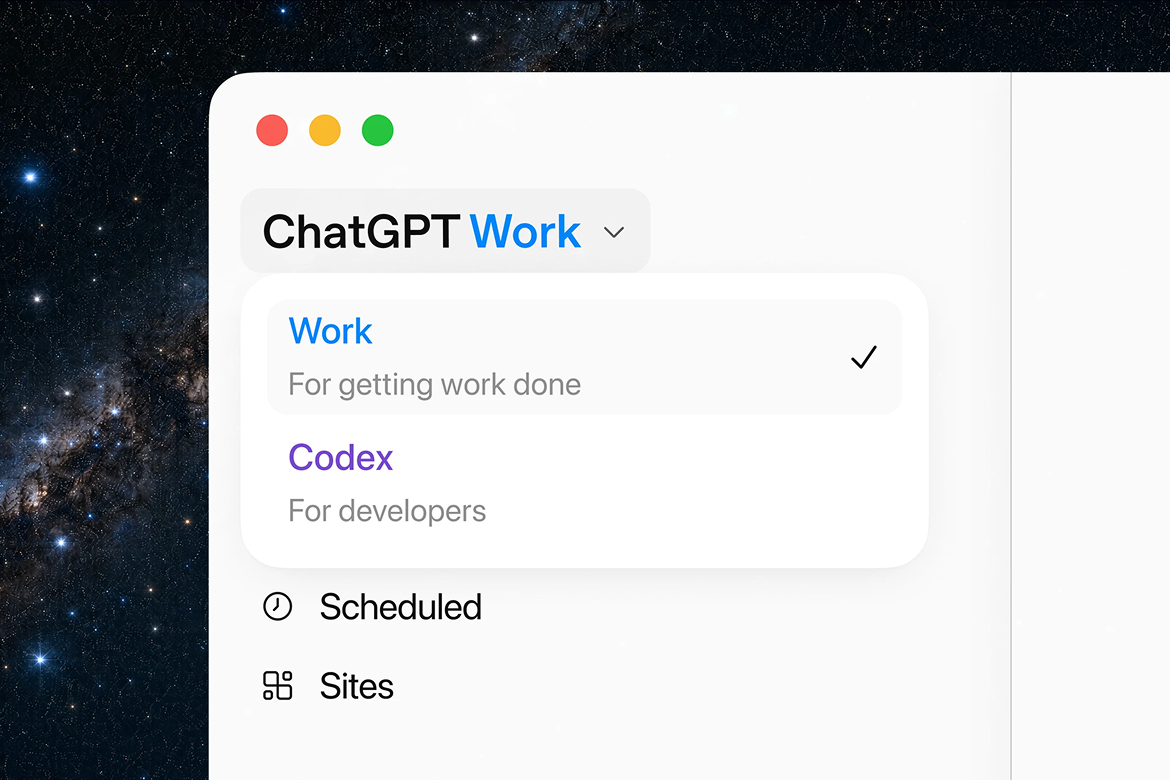
Built on the technology behind Codex, OpenAI’s coding agent, ChatGPT Work takes a goal, gathers context from a user’s connected apps and files, breaks the job into steps, and returns completed spreadsheets, slide decks, documents and even interactive web apps. It can stay with a complex project for hours, working in the background while the user reviews progress, answers questions and approves sensitive actions. OpenAI positions it as a third mode alongside Chat, which answers questions, and Codex, which handles technical work.
The agent connects to the tools where work already happens through plugins, including Slack, Microsoft Teams, Google Drive, SharePoint, email, calendars, CRMs and project trackers, which a user can invoke by typing “@” followed by an app name.
Two features extend its reach. Scheduled Tasks let it run recurring jobs on its own, such as turning new Teams and Slack messages into updated documents each week or monitoring a dashboard and sending a daily summary. A new Sites feature, in public beta, turns work into shareable interactive websites or dashboards accessible by URL. OpenAI says nearly all of its internal teams, including finance and sales, now use ChatGPT Work, a self-reported figure it offers as evidence of the product’s scope, citing examples like cutting month-end financial close from days to hours.
The launch comes with a major structural change: OpenAI is merging its standalone Codex app into a single ChatGPT desktop application for Mac and Windows, putting Chat, Work and Codex in one place on every plan, including Free.
On desktop, the app gains a built-in browser and Computer Use, letting it click, type and move files across a user’s local apps and the web. OpenAI is also folding its Atlas browser experiment into ChatGPT and beginning to retire the standalone version. ChatGPT Work rolls out first to Pro, Enterprise and Edu users on web and mobile, reaching Plus and Business over the coming days, and uses metered pricing similar to Codex, since long-running tasks consume more compute than a normal chat.
The Agent Becomes the Product
The release marks a shift in what OpenAI is selling: not a smarter chatbot but a system meant to execute entire workflows with minimal supervision. The unit of work changes from a single request to a whole project, and the bet is that ChatGPT becomes the default place where work is planned, delegated, reviewed and delivered.
That reframes the competition around trust and reliability rather than benchmark scores, since the useful agent is one a person can hand an afternoon of unsupervised work and get back something worth reviewing. The desktop consolidation, led by applications chief Fidji Simo, also resolves years of product fragmentation, uniting tools OpenAI built separately into one interface it hopes users will spend the day in.
A Crowded Agentic Field
ChatGPT Work is OpenAI’s direct answer to rivals already selling agentic knowledge work, most notably Anthropic’s Claude Cowork, along with agent offerings from Microsoft and Google, so this is a fast follow into a contested category rather than a first mover. The advantage OpenAI is pressing is its consumer scale and the cost efficiency of GPT-5.6, which it says nearly matches Anthropic’s Claude Fable 5 on some measures at roughly a third of the cost.
The risks are equally clear. Handing an agent access to a company’s Slack, email and CRM raises real security and oversight concerns, which OpenAI addresses with enterprise admin controls, spend limits and an auto-review layer it says blocked all red-team attempts to extract protected data in testing. Whether that is enough to make organizations comfortable pointing an autonomous agent at their sensitive systems is the question that will decide adoption.