
SoftBank Secures $40B Loan to Expand OpenAI Investment
SoftBank has secured a $40 billion bridge loan to deepen its investment in OpenAI and accelerate its broader AI strategy.
In artificial intelligence, a hallucination refers to an output generated by an AI model that appears confident and factual but is actually false or unsupported by real data. This phenomenon often occurs in large language models and generative systems when they fill gaps in knowledge or misinterpret training information. Hallucinations can take the form of incorrect facts, fabricated sources, or unrealistic images, depending on the AI application. They highlight one of the biggest challenges in AI development—ensuring reliability, accuracy, and verifiable outputs. Researchers and developers use techniques like model fine-tuning, retrieval-augmented generation, and human oversight to reduce hallucinations and build more trustworthy systems.
SoftBank has secured a $40 billion bridge loan to deepen its investment in OpenAI and accelerate its broader AI strategy.

AI-driven bots now generate more internet traffic than humans, according to a new report, highlighting the growing impact of automated systems online.

New research shows that telling AI models they are “experts” can reduce accuracy in tasks like coding and math, while improving safety and alignment outcomes.
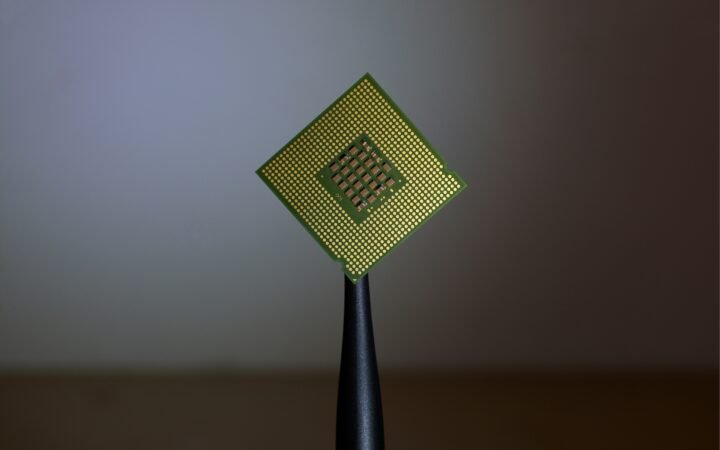
Meta introduced four new in-house MTIA chips designed for AI training and inference as the company accelerates data center expansion. The chips aim to improve performance and reduce reliance on external hardware suppliers.
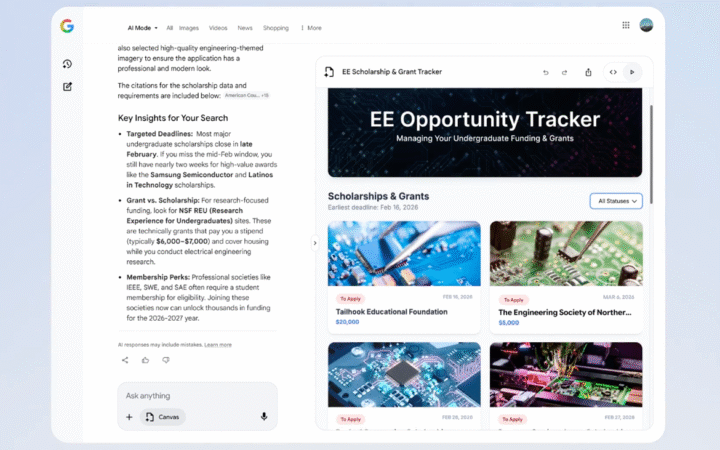
Google has rolled out Canvas in AI Mode to all U.S. users in English, enabling people to create documents, dashboards, and interactive tools directly within Search. The feature provides a dynamic workspace for planning projects and building simple applications.

Andrej Karpathy argues AI coding agents now fundamentally change programming workflows, enabling long-running autonomous tasks and redefining software engineering.

MSCI introduces AI connectors enabling access to its data via MSCI ONE, ChatGPT, and Claude, debuting IndexAI Insights to deliver conversational index analytics powered by large language models.

Anthropic unveils a revised Responsible Scaling Policy with a Frontier Safety Roadmap, regular Risk Reports, and clearer separation between company commitments and industry recommendations.

ŌURA unveils a proprietary large language model for women’s health, combining clinical research and biometric data to deliver personalized, privacy-first AI guidance through Oura Advisor.
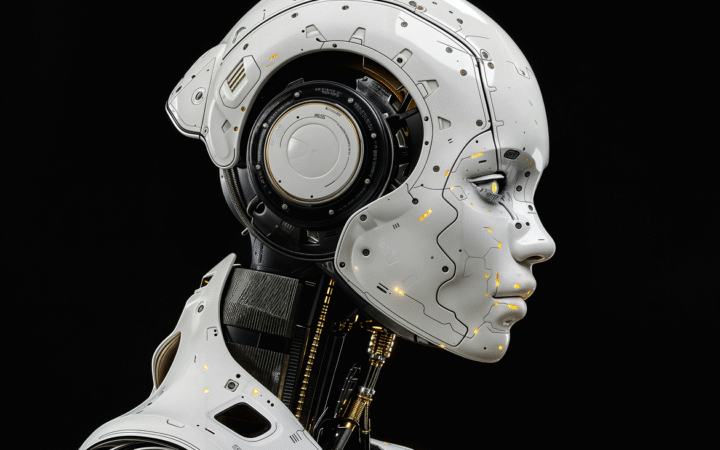
A former Citigroup executive says commercially available humanoid robots can now deliver a return on investment in under 10 weeks, potentially accelerating enterprise automation.