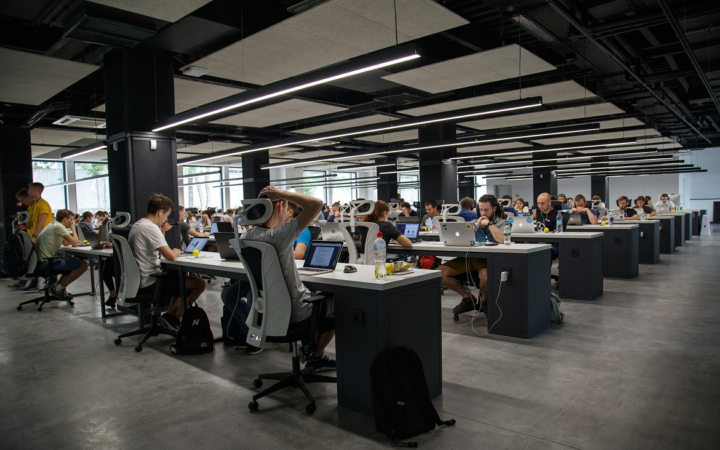
The Royal Observatory Greenwich has warned that increasing dependence on artificial intelligence tools for instant answers and problem-solving could weaken human critical thinking and intellectual curiosity.
Paddy Rodgers, director of the Royal Museums Greenwich group, said society risks losing the habits of questioning, evaluation, and independent investigation that have historically driven scientific progress and innovation. Speaking during the institution’s ongoing First Light transformation project, Rodgers emphasized that centuries of astronomical discovery were built not only on technology, but also on sustained human inquiry and unexpected experimentation.
The Royal Observatory, one of the United Kingdom’s oldest scientific institutions, has played a major role in astronomy and navigation research over the past 350 years. Rodgers argued that many historical breakthroughs emerged from collecting and analyzing information that initially appeared unnecessary or unrelated – work that highly optimized AI systems might not prioritize.
He said early astronomers created extensive datasets that later became valuable for applications the original researchers could not have predicted. According to Rodgers, those discoveries were possible because humans pursued questions beyond immediate utility, often uncovering insights accidentally through exploration and persistence.
The comments come as generative AI systems increasingly replace traditional search and information workflows. AI-generated summaries and conversational responses are now integrated into products such as Google Search, social media platforms, and enterprise software tools, reducing the need for users to independently navigate primary sources and supporting material.
Rodgers warned that unlike earlier internet tools such as Wikipedia, which encouraged users to trace information back to original references, modern AI systems often present answers without exposing the underlying sources or reasoning process. That, he said, can distance users from information that is directly verifiable or open to scrutiny.
Researchers studying AI use have raised similar concerns around what academics describe as “cognitive outsourcing” – the process of delegating memory, reasoning, and problem-solving tasks to digital systems. Dr. Anuschka Schmitt, assistant professor of information systems at the London School of Economics, said conversational AI has significantly lowered the barrier for people to avoid cognitive effort in work, learning, and leisure activities.
Schmitt noted that emerging research suggests excessive reliance on AI tools may negatively affect memory retention, competencies, and long-term learning behaviors. However, she also acknowledged that the broader issue of overreliance on technology predates generative AI systems.
At the same time, AI tools are increasingly contributing to scientific and educational progress. Google DeepMind CEO Demis Hassabis received the 2024 Nobel Prize in Chemistry for work involving AlphaFold2, an AI system capable of predicting protein structures. Educators and researchers have also described productive uses for AI in brainstorming, idea testing, and collaborative learning.