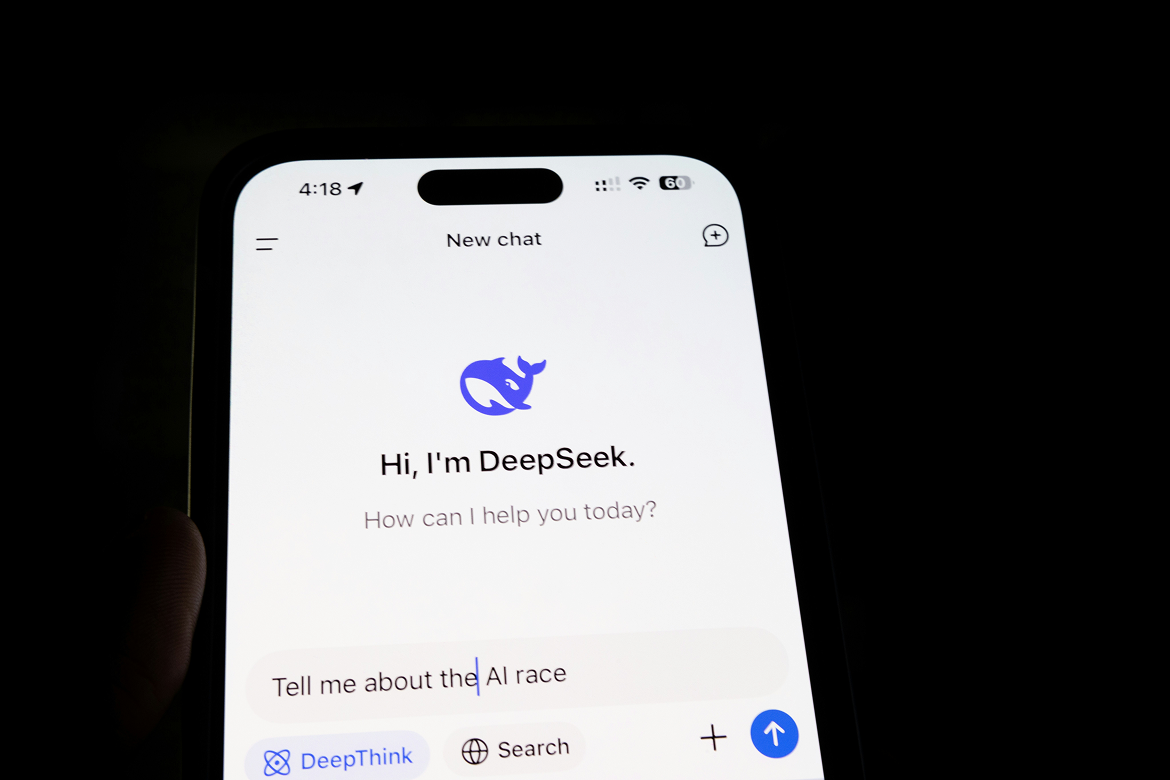


DeepSeek has released a preview version of its V4 large language model, offering developers early access to its latest capabilities. The Hangzhou-based company said the model is available in both “pro” and “flash” versions, designed for different performance and size requirements. Like its earlier releases, V4 is open-source, allowing users to download, modify, and run the model locally. The launch follows more than a year after DeepSeek introduced its R1 reasoning model, which drew global attention for its performance and low development cost.
DeepSeek claims that V4 delivers strong results in agent-based tasks, knowledge processing, and inference, which refers to the computational cost of generating outputs from a trained model. Analysts at Counterpoint Research said the model shows improved efficiency, with lower inference costs compared to earlier versions. The system has also been optimized to work with agent tools such as Claude Code from Anthropic and OpenClaw. These integrations point to a growing focus on AI agents, which automate multi-step tasks using language models.
The release comes as competition in China’s AI sector accelerates. Companies including Alibaba and ByteDance have launched new models this year, intensifying rivalry in both enterprise and open-source segments. Market reactions reflected the shifting landscape, with shares of firms such as MiniMax and Zhipu declining, while chip manufacturers like SMIC and Hua Hong Semiconductor rose following the announcement.
Cost and Capability Shift
DeepSeek’s V4 reinforces a key trend in AI development: improving performance while reducing costs. Lower inference costs make AI tools more accessible to businesses, particularly for applications that require continuous or large-scale usage. For developers, open-source availability allows customization and deployment without relying on centralized providers, potentially accelerating innovation.
The model’s reported ability to run on domestic chips could also shift the balance in the global AI supply chain. If widely adopted, this capability may reduce dependence on U.S.-based hardware providers such as Nvidia. That would support China’s push for greater technological self-sufficiency and reshape how AI infrastructure is built and deployed worldwide.
China’s AI Arms Race
DeepSeek first gained prominence with its V3 model in late 2024 and the R1 reasoning model in early 2025, which reportedly matched or exceeded leading systems at a fraction of the cost. The company said R1 was developed in about two months for under $6 million using lower-capacity chips, raising questions about the scale of spending by larger AI players.
Since then, the market has evolved, with investors and companies increasingly recognizing that Chinese AI developers can compete on both cost and capability. Analysts suggest V4 is unlikely to trigger the same market shock as R1, as expectations have adjusted. However, the model’s positioning against domestic rivals highlights how quickly competition within China has intensified, signaling a more crowded and mature AI ecosystem.