

South Korea unveiled plans to channel at least 1,350 trillion won, about $880 billion, of mostly private investment into semiconductors and artificial intelligence over the coming years. President Lee Jae-myung presented the package, branded the Three Mega Projects, alongside the chairmen of Samsung Electronics and SK Hynix, the world’s two largest memory chipmakers.
Lee framed it as a race against time, calling semiconductors, physical AI and data centers the “triple axis” of a national leap forward and arguing the country must move faster than rivals such as China, Taiwan and Japan. He said he would personally oversee the projects.
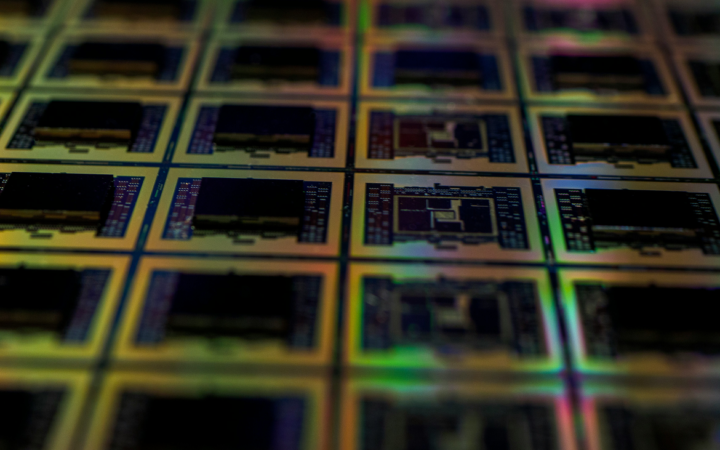
The headline number combines several commitments, and figures vary by how they are counted. The core is roughly 800 trillion won, about $518 billion, from Samsung and SK Hynix and their suppliers to build new chip fabrication plants in the country’s southwest.
A separate 81 trillion won is earmarked for a chip-packaging hub in the Chungcheong region, and more than 1,000 trillion won is targeted at AI data centers nationwide, including a plan by companies such as Naver to develop 8.4 gigawatts of capacity by 2029. The government says the aim is to double the country’s memory chip production within five years and lock in a lead in the chips that power AI systems.
A central goal is regional, not just industrial. Most of South Korea’s advanced factories sit in and around Seoul, near Yongin and Pyeongtaek, where Lee said existing sites have reached their limits. By steering new clusters to the underdeveloped southwest, around Gwangju and South Jeolla, the government wants to spread the benefits of the AI boom and revive areas that have lost population and industry.
Lee called the effort a matter of survival and equity. The state is pairing the plan with support for power, water, land, infrastructure, workforce training and housing, since large fabs and data centers are intensely resource-hungry.
Why It Matters
The plan shows how completely the AI boom has reshaped industrial policy. South Korea is treating chips and data centers as strategic national assets, much as it once did shipbuilding and steel, because its economy is heavily exposed to memory chips and to the high-bandwidth memory that AI servers depend on.
Samsung and SK Hynix have been among the biggest winners of the global build-out, and SK Hynix’s market value topped $1 trillion in May. The surge has also created a worldwide chip shortage that is pushing up prices, with Apple and Microsoft recently raising some device prices on higher component costs, so adding capacity has economic stakes well beyond Korea.
Reasons for Caution
The reception was not uniformly positive. Shares of Samsung and SK Hynix fell on the news, with Samsung down nearly 5% at one point, and the broader Kospi dropped more than 2% as global tech stocks cooled and some investors questioned whether AI spending has run ahead of returns.
Opposition politicians criticized the choice to site a second chip cluster in the southwest, a stronghold that backed Lee heavily in last year’s election, arguing the decision is driven more by politics than commercial logic and that chipmakers may be pressed to invest where it is not most efficient. Lee, whose approval rating has slid for six weeks, rejected that, saying companies are not being forced to take on losses. Execution will hinge on power, water and whether demand holds.