
Samsung Unveils Galaxy S26 Series With Proactive Galaxy AI

Samsung introduces the Galaxy S26, S26+ and S26 Ultra, featuring advanced Galaxy AI, a new Privacy Display, and upgraded performance powered by Snapdragon 8 Elite Gen 5 for Galaxy.

By Daniel Mercer Edited by Maria Konash Published:
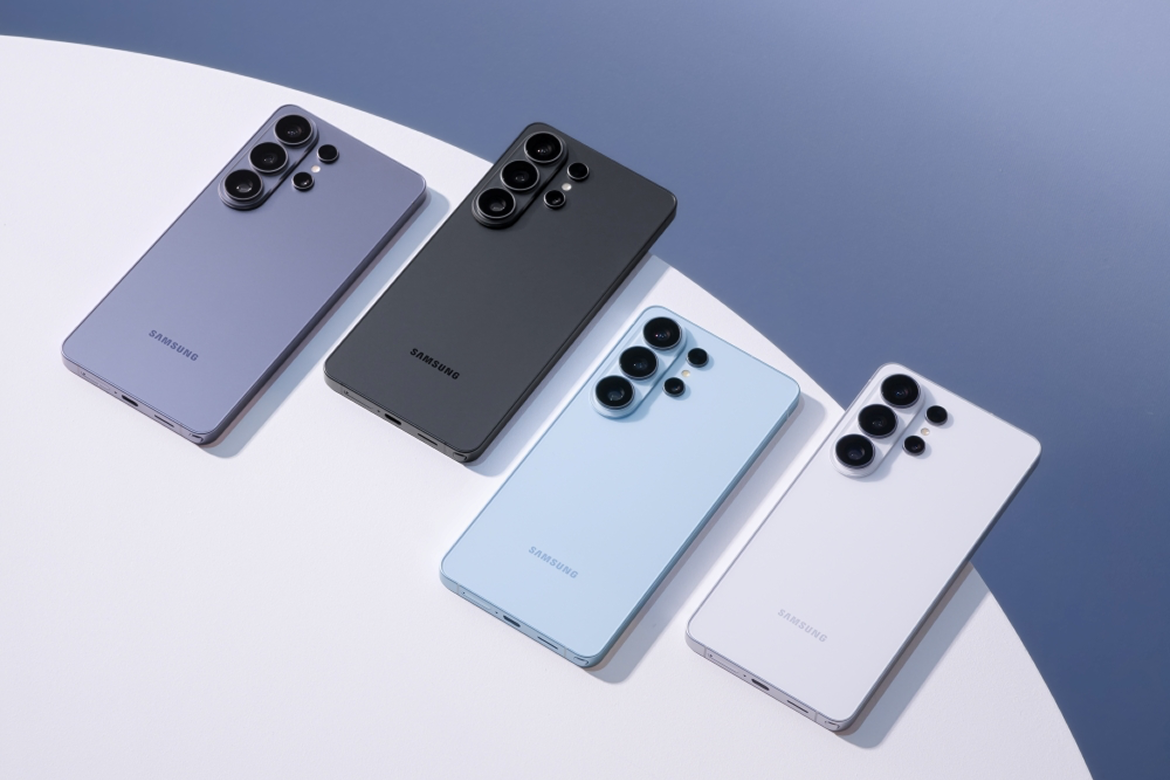
Samsung unveils Galaxy S26 with proactive AI, Snapdragon 8 Elite Gen 5, and built-in Privacy Display. Photo: Samsung

Samsung Electronics has officially unveiled the Galaxy S26 series, introducing what it calls its most proactive and adaptive Galaxy AI experiences yet. The new lineup – Galaxy S26, S26+ and S26 Ultra – is designed to simplify everyday tasks by handling complex processes in the background, allowing users to focus on results rather than the technology itself.

As Samsung’s third-generation AI smartphones, the Galaxy S26 devices aim to reduce friction across common activities, from planning schedules and searching for information to capturing and refining content.

Performance Built for AI

The Galaxy S26 series is powered by Samsung’s most advanced hardware platform to date, led by the customised Snapdragon® 8 Elite Gen 5 Mobile Platform for Galaxy in the S26 Ultra.

Samsung says the Ultra delivers:

  • Up to 19% faster CPU performance
  • A 39% improvement in NPU performance for always-on Galaxy AI features
  • A 24% GPU boost for smoother visuals and gameplay

To sustain performance, the S26 Ultra introduces a redesigned vapor chamber and enhanced thermal interface materials for better heat dissipation during gaming, multitasking, and video capture. Super-Fast Charging 3.0 enables up to 75% battery in around 30 minutes.

Samsung’s proprietary ProScaler and upgraded mobile Digital Natural Image engine (mDNIe) further enhance display sharpness, colour accuracy, and image clarity.

Industry-First Built-In Privacy Display

A standout feature of the Galaxy S26 Ultra is the mobile industry’s first built-in Privacy Display. Unlike traditional stick-on privacy films, Samsung’s integrated solution dynamically limits side-angle visibility while maintaining full brightness and clarity for the user.

Privacy Display can automatically activate when entering PINs, opening selected apps, or viewing sensitive content. Users can also enable Partial Screen Privacy for notifications or Maximum Privacy Protection for enhanced discretion.

This hardware-level privacy feature reinforces Samsung’s broader security strategy, which includes Samsung Knox, Knox Vault, post-quantum cryptography protections, and expanded AI-driven Privacy Alerts.

Galaxy’s Most Advanced Camera System

The Galaxy S26 series also introduces Samsung’s most advanced camera system to date.

On the S26 Ultra:

  • Wider apertures improve low-light photography
  • Enhanced Nightography Video keeps footage vibrant in dim environments
  • Upgraded Super Steady adds horizontal lock for stable framing
  • Support for APV, a new professional-grade video codec for high-quality compression

AI enhancements now extend to the selfie camera through an improved AI ISP, delivering more natural skin tones in mixed lighting.

Editing tools have also been expanded. The upgraded Photo Assist suite allows users to describe edits in natural language – such as changing a scene from day to night, restoring missing objects, or even modifying outfits in photos. Creative Studio centralises design tools for generating stickers, wallpapers, and invitations from sketches or prompts.

More Proactive Galaxy AI

Galaxy AI on the S26 series becomes more context-aware and anticipatory.

Features include:

  • Now Nudge, which suggests relevant content – such as surfacing trip photos when a friend asks for them
  • A more personalised Now Brief widget
  • Enhanced Circle to Search with Google, now supporting multi-object recognition
  • Integration with Bixby, Gemini, and Perplexity agents for natural, multi-step task completion
  • Users can request actions like booking a ride or coordinating across apps with a single voice prompt, as AI agents handle the process in the background.

Security for the AI Era

As AI becomes more deeply embedded into mobile workflows, Samsung is emphasising layered protection. The Galaxy S26 series includes:

  • AI-powered Call Screening
  • Real-time Privacy Alerts for sensitive data access
  • Private Album within Gallery
  • PQC-enabled encryption for eSIM transfers via Knox Matrix
  • Seven years of security updates

Samsung says these features combine hardware-level and software-based safeguards to provide transparency and control over how personal data is used.

Availability

The Galaxy S26, S26+ and S26 Ultra will be available for pre-order from 26 February to 19 March 2026. Recommended retail pricing starts at:

  • Galaxy S26 Ultra 256GB: R30,999
  • Galaxy S26+ 256GB: R25,999
  • Galaxy S26 256GB: R20,999

The series will be offered in Cobalt Violet, White, Black, and Sky Blue.

With the Galaxy S26 lineup, Samsung is positioning AI not as a feature users activate, but as an invisible system that works proactively in the background – marking its most ambitious step yet toward agentic, privacy-aware mobile computing.

AI & Machine Learning, Consumer Tech, News

AWS Launches Amazon Bio Discovery to Accelerate Drug Design

AWS has launched Amazon Bio Discovery, an AI-powered platform that helps scientists design, test, and refine drugs faster using integrated models and lab workflows.

By Laura Bennett Edited by Maria Konash Published:

Amazon Web Services has launched Amazon Bio Discovery, a new AI-powered application designed to help scientists accelerate drug discovery by combining machine learning models with real-world lab testing. The platform introduces a “lab-in-the-loop” workflow, where AI-generated drug candidates are tested experimentally and fed back into the system to improve future results.

The application provides access to a broad catalog of biological foundation models, or bioFMs, trained on large biological datasets. These models can generate and evaluate potential drug candidates, particularly antibodies, during early-stage research. Scientists interact with the system through an AI agent that helps design experiments, select appropriate models, and optimize inputs using natural language rather than code.

Amazon Bio Discovery is designed to lower barriers to AI adoption in life sciences. Traditionally, using advanced models required specialized computational expertise and infrastructure. The new platform simplifies this process by offering pre-benchmarked models, automated workflows, and integrated tools for comparing performance. Researchers can also fine-tune models using their own experimental data without building custom pipelines, keeping proprietary data secure within their organization.

Closing the Loop Between AI and the Lab

A key feature of the platform is its integration with laboratory partners, including Twist Bioscience and Ginkgo Bioworks. Scientists can send AI-generated candidates directly for synthesis and testing, with results automatically routed back into the system. This creates a continuous feedback loop, allowing each experiment to improve the next iteration.

The approach has already shown early results. In collaboration with Memorial Sloan Kettering Cancer Center, researchers used the platform to design hundreds of thousands of antibody candidates for pediatric cancer therapies. What traditionally takes months or even a year was reduced to a matter of weeks, from initial design to lab testing.

Democratizing AI in Life Sciences

Amazon Bio Discovery reflects a broader push to make advanced AI tools accessible to a wider range of scientists, not just those with machine learning expertise. By combining model access, experiment design, and lab coordination into a single platform, AWS aims to streamline workflows that are often fragmented across multiple systems and teams.

The platform is built on infrastructure already widely used in the pharmaceutical industry, with AWS noting that 19 of the top 20 global drugmakers rely on its cloud services. Early adopters include Bayer, the Broad Institute, and Fred Hutch Cancer Center. The launch also aligns with a wider wave of AI-driven partnerships across the sector, such as Novo Nordisk teaming up with OpenAI to accelerate drug discovery for obesity and diabetes treatments.

As AI becomes more embedded in drug development, platforms like Amazon Bio Discovery highlight a shift toward integrated systems that connect computational design with real-world experimentation. This convergence could significantly shorten development timelines and expand access to advanced research tools across the life sciences ecosystem.

AI & Machine Learning, News, Research & Innovation

OpenAI Buys Hiro Finance in Strategic Talent Acquisition

OpenAI has acquired personal finance startup Hiro Finance in an apparent acquihire, bringing its team and expertise into its growing AI ecosystem.

By Samantha Reed Edited by Maria Konash Published: Updated:
OpenAI acquires Hiro Finance in acquihire, adding fintech talent to expand AI in financial tools. Image: Hiro Finance

OpenAI has acquired personal finance startup Hiro Finance in what appears to be a talent-focused deal, as the company continues expanding its capabilities across business and consumer applications. Financial terms were not disclosed, but Hiro will shut down operations on April 20 and delete user data by May 13, indicating a full integration into OpenAI.

Hiro was founded in 2023 by Ethan Bloch and developed an AI-powered financial planning tool designed to help users model different financial scenarios. The app allowed consumers to input data such as income, expenses, and debt, and then simulate outcomes to guide decision-making. The startup positioned itself around accuracy in financial calculations, addressing a longstanding weakness in earlier AI systems.

As part of the acquisition, Hiro’s team will join OpenAI, though the exact number of employees has not been disclosed. The company was backed by prominent venture firms including Ribbit Capital, General Catalyst, and Restive Ventures. The move suggests OpenAI is prioritizing talent and domain expertise as it builds out specialized AI applications.

Expanding Into Financial Workflows

The acquisition highlights OpenAI’s growing interest in financial use cases. Its flagship products are already widely used by finance teams for analysis, reporting, and forecasting. Adding Hiro’s expertise could strengthen OpenAI’s ability to deliver more tailored tools for both consumers and enterprises.

This is not OpenAI’s first move in the financial space, and it reflects a broader trend of AI companies targeting high-value professional workflows. Financial planning, in particular, offers a compelling use case due to its reliance on data modeling, projections, and scenario analysis—areas where AI models have improved significantly in recent years.

Bloch brings prior experience in fintech, having previously founded Digit, a digital banking service that was acquired for over $200 million. His background in consumer finance products may help OpenAI explore new applications or refine existing offerings in this domain.

Talent as a Strategic Asset

The deal underscores a common pattern in the AI industry: acquisitions driven more by talent than by standalone products. With Hiro shutting down shortly after the acquisition, the focus appears to be on integrating its team and expertise into OpenAI’s broader roadmap.

The move also comes amid intensifying competition in AI, particularly in areas like coding agents and enterprise tools. By bringing in specialized teams, OpenAI can accelerate development in targeted domains without building capabilities from scratch.

Novo Nordisk Partners With OpenAI to Accelerate Drug Discovery

Novo Nordisk is teaming up with OpenAI to use AI in drug discovery and development, aiming to speed up treatments for obesity and diabetes.

By Laura Bennett Edited by Maria Konash Published:
Novo Nordisk partners with OpenAI to accelerate AI-driven drug discovery for obesity and diabetes. Image: Amari Shutters / Unsplash

Novo Nordisk has partnered with OpenAI to accelerate drug discovery and development using artificial intelligence, as pharmaceutical companies increasingly turn to AI to improve efficiency and outcomes. The collaboration will focus on analyzing complex biological datasets, identifying potential treatments, and shortening the timeline from early research to patient use. Shares of Novo Nordisk rose about 2.8% following the announcement.

The partnership aims to apply AI to some of the most resource-intensive stages of drug development. By leveraging advanced models, Novo Nordisk expects to uncover patterns in large datasets that would be difficult to detect using traditional methods. This could help researchers identify promising drug candidates earlier and test hypotheses more quickly. The company said the approach could ultimately lead to faster development of treatments, particularly for conditions such as obesity and diabetes, where demand remains high.

For OpenAI, the deal represents a further expansion into the life sciences sector, where AI is increasingly being used to support research, clinical trials, and operational workflows. CEO Sam Altman said the technology has the potential to transform industries by enabling new discoveries and improving health outcomes.

AI’s Growing Role in Pharma

The partnership reflects a broader industry trend. Drugmakers are exploring how AI can streamline processes that traditionally take years and cost billions of dollars. While fully AI-driven drug discovery remains an emerging field, companies are already seeing benefits in areas such as clinical trial design, patient recruitment, and data analysis.

Momentum is building across the sector. Eli Lilly recently signed a $2.75 billion deal with Insilico Medicine to commercialize AI-developed therapies globally, underscoring how major pharmaceutical players are investing heavily in AI-driven pipelines. In parallel, AstraZeneca has entered a $555 million milestone-based partnership with Algen Biotechnologies to combine AI with CRISPR gene-editing for immunology drug discovery. Together, these deals illustrate how AI is moving from experimental use into core R&D and commercialization strategies.

Competing in a High-Stakes Market

Novo Nordisk’s investment in AI comes as it faces intense competition from Eli Lilly in the fast-growing weight loss and diabetes treatment market. The company has been working to strengthen its pipeline with new therapies, including next-generation drugs and alternative formulations.

The partnership also builds on Novo Nordisk’s existing AI initiatives. The company has previously collaborated with Nvidia to leverage high-performance computing infrastructure for drug discovery, including the use of the Gefion supercomputer to develop customized AI models.

By combining its pharmaceutical expertise with OpenAI’s technology, Novo Nordisk is aiming to gain an edge in both innovation speed and treatment development. As AI adoption accelerates across the healthcare sector, such partnerships are likely to become a key differentiator in the race to bring new therapies to market.

AI & Machine Learning, News, Research & Innovation

X Launches XChat App as Musk Pushes Super App Vision

X will launch its XChat messaging app on iOS, marking a key step in Elon Musk’s plan to build a WeChat-style super app.

By Samantha Reed Edited by Maria Konash Published:
X readies XChat on iOS with encryption and calling, advancing Musk’s super app vision. Image: XChat

X is set to launch its standalone messaging app, XChat, on Apple’s App Store on April 17, marking a major step in Elon Musk’s effort to transform the platform into an all-in-one “super app.” The release follows months of testing and positions messaging as a central component of X’s broader strategy to compete with multifunction platforms like WeChat.

XChat began internal testing in May 2025 and entered public beta on iOS in March 2026. The app builds on X’s existing user base of more than 500 million monthly active users, giving it a potential distribution advantage as it rolls out more advanced communication features. An Android release timeline has not yet been announced.

The messaging app includes a range of privacy and communication tools designed to compete with established platforms. These include end-to-end encryption, voice and video calling, disappearing messages, screenshot blocking, and message recall. XChat is also built using the Rust programming language, which is known for performance and security. Notably, users will be able to sign up without providing a phone number, differentiating it from many competing messaging services.

Building the Super App Layer

XChat is intended to serve as the foundational communication layer for Musk’s broader vision of a super app that integrates messaging, payments, and digital services into a single platform. Musk has repeatedly pointed to WeChat as a model, where users can manage everything from messaging to financial transactions within one ecosystem.

The introduction of a dedicated messaging app suggests X is moving toward a modular approach, where separate but interconnected products form a larger platform. Messaging is typically a core feature in super apps, acting as the gateway for user engagement and service integration.

Competing in a Crowded Market

The launch places X in direct competition with established messaging platforms, including those already offering encryption and multimedia communication. However, X’s differentiation may come from its integration with a broader ecosystem, including social media, content distribution, and potentially financial services.

The ability to onboard users without phone numbers could also appeal to privacy-conscious users, though it may raise regulatory and security questions in some regions.

As Musk continues to reshape X, XChat represents a critical test of whether the company can evolve beyond its origins as a social network into a more comprehensive digital platform. The success of the app may determine how quickly X can expand into additional services and realize its ambitions of becoming a global super app.

Consumer Tech, News

Alibaba’s Open-Source HappyHorse Model Tops Global AI Video Leaderboard

HappyHorse-1.0, an open-source AI video model, has topped global benchmarks, outperforming leading proprietary systems and signaling a shift in the video generation market.

By Samantha Reed Edited by Maria Konash Published:
HappyHorse-1.0 tops benchmarks, intensifying competition between open and proprietary AI video models. Image: Detail.co / Unsplash

Alibaba’s open-source AI video model, HappyHorse-1.0, has surged to the top of global performance rankings, outperforming leading proprietary systems and shaking up the rapidly evolving video generation market. The model now leads the Artificial Analysis Video Arena leaderboard in multiple categories, surpassing ByteDance’s Seedance 2.0 by a significant margin in blind user evaluations.

HappyHorse-1.0 achieved between 1333 and 1357 Elo points in text-to-video generation, beating its closest competitor by nearly 60 points. It also set a new record in image-to-video tasks with scores exceeding 1390 Elo, while ranking second in more complex audio-inclusive benchmarks. The results are notable not only for performance, but because the model is fully open source with commercial licensing, making its capabilities broadly accessible.

The system uses a 15-billion-parameter Transformer architecture designed to generate synchronized audio and video in a single pass. It supports features such as native lip-sync across multiple languages, including Mandarin, English, and Japanese, and can produce 1080p video in under a minute using a single NVIDIA H100 GPU. The full model weights, along with distilled versions and supporting tools, have been released publicly, allowing developers to run the system locally.

HappyHorse-1.0 was developed by an independent research team with roots in Alibaba Group’s former Taotian research unit and led by Zhang Di, previously a senior executive at Kuaishou. The team emphasized a focus on real-world user preference in evaluation, rather than traditional benchmark optimization.

Open Source Gains Ground

The model’s success highlights a broader shift in the AI industry, where open-source systems are increasingly competitive with proprietary offerings. Historically, leading performance in areas like video generation has been dominated by closed models developed by large technology companies. HappyHorse-1.0 suggests that smaller, independent teams can now rival or exceed those capabilities.

This dynamic mirrors trends seen in other areas of AI, including language models and image generation, where open ecosystems have accelerated innovation and lowered barriers to entry. By releasing full model weights and tools, the developers are enabling rapid experimentation and customization across industries.

Implications for the AI Video Market

The emergence of a high-performing open-source video model could intensify competition among AI providers, particularly in creative and media applications. Lower-cost access to advanced video generation may benefit startups and developers, while putting pressure on proprietary platforms to differentiate through features, integration, or performance.

At the same time, the availability of powerful video generation tools raises questions around misuse, content authenticity, and regulation. As capabilities improve, ensuring responsible deployment will remain a key challenge for both developers and policymakers.

HappyHorse-1.0’s rapid rise signals that the balance of power in AI video may be shifting, with open-source innovation playing an increasingly central role in shaping the next phase of the market.

AI & Machine Learning, News
Exit mobile version