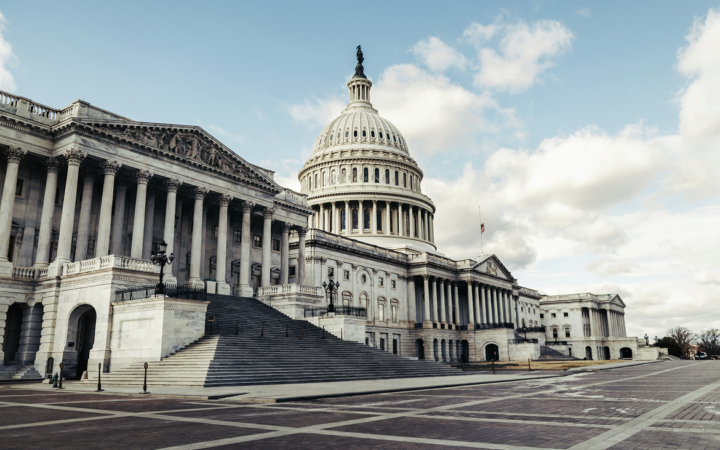


OpenAI has publicly backed the creation of an international artificial intelligence oversight organization modeled after the International Atomic Energy Agency, renewing its push for global AI governance ahead of the Trump-Xi summit in Beijing.
Chris Lehane, OpenAI’s vice president of global affairs, said the United States should use its leadership position in AI development to establish a governance framework focused on safety, standards, and international coordination. According to Bloomberg, the proposed system would include China as a participant rather than exclude it from oversight discussions.
The proposal revives an idea OpenAI has promoted since 2023, when CEO Sam Altman first advocated for IAEA-style AI oversight during congressional testimony. However, the latest push arrives at a more politically sensitive moment as AI competition between Washington and Beijing accelerates and scrutiny of OpenAI’s own governance structure intensifies.
The company envisions a framework built around the U.S. Commerce Department’s Center for AI Standards and Innovation, or CAISI, which evaluates advanced AI systems before deployment. OpenAI and Anthropic were among the first companies to sign voluntary testing agreements with the agency in 2024, while Google DeepMind, Microsoft, and xAI joined similar arrangements this year.
Under the proposed structure, an international body would monitor frontier AI development, establish deployment standards, track computing power used for advanced training, and verify compliance across participating countries. OpenAI has also previously argued that companies cooperating with federal oversight programs should receive protection from conflicting state-level AI regulations.
The governance proposal comes during a period of major strategic pressure for OpenAI. The company is currently defending its corporate structure in the ongoing lawsuit brought by Elon Musk, while reports of a potential IPO and large employee share sales have increased attention on how the company balances commercial incentives with its public safety commitments.
The broader geopolitical backdrop is equally significant. The Trump-Xi summit marks the first U.S. presidential state visit to China since 2017, with AI competition and safety discussions expected to feature prominently alongside trade, export controls, and technology policy.
The Stakes for the AI Industry
The proposal highlights growing concern over the narrowing technological gap between the United States and China. Researchers increasingly describe Chinese AI labs as approaching parity with leading American systems, intensifying pressure for formal governance mechanisms that prevent uncontrolled escalation while protecting national interests.
Meanwhile, governments worldwide are struggling to regulate an industry where development costs and infrastructure demands are rapidly escalating. Global hyperscaler capital expenditure is expected to exceed $500 billion in 2026, while regulatory agencies often operate with comparatively limited budgets and technical resources.
OpenAI’s governance push also coincides with a series of aggressive strategic moves by the company this year, including the launch of GPT-5.5 and GPT-5.5-Cyber, expansion into AI-powered advertising, enterprise consulting initiatives, and revised financial agreements with Microsoft.
Whether the governance proposal gains international support may depend heavily on the outcome of the Trump-Xi summit and broader U.S.-China negotiations over AI cooperation. For now, OpenAI is positioning itself not only as a developer of advanced AI systems, but also as a leading voice attempting to shape the rules governing the technology’s future.