Nvidia is pushing deeper into the future of computing with the launch of Ising, a new family of open-source AI models designed to solve some of quantum computing’s hardest problems, calibration and error correction.
The models aim to bridge a critical gap. Today’s quantum systems are powerful but fragile, and scaling them into reliable, real-world machines depends on overcoming persistent noise, instability, and error rates. Nvidia is betting that AI, not just physics, will be the key unlock.
Turning AI Into Quantum Infrastructure
Named after the Ising model, the system provides tools that act almost like an operating layer for quantum machines. According to Nvidia, Ising models can deliver up to 2.5x faster performance and 3x greater accuracy in quantum error correction compared to traditional approaches.
The family includes two core components:
- Ising Calibration: A vision language model that interprets quantum processor signals and automates calibration, reducing processes that once took days down to hours.
- Ising Decoding: Neural network models that handle real-time error correction, a fundamental requirement for scaling quantum systems.
Together, they move AI closer to being the “control plane” for quantum hardware. CEO Jensen Huang described this as essential to making quantum computing practical.
From Fragile Qubits to Scalable Systems
Quantum computers rely on qubits, which are notoriously sensitive to environmental noise. Even small disturbances can introduce errors, making large-scale, reliable computation extremely difficult.
Ising directly targets this bottleneck by automating both calibration and error correction. These are processes that traditionally require intensive manual tuning and specialized expertise.
The models are also designed to integrate with Nvidia’s broader ecosystem, including CUDA-Q software and NVQLink hardware. This enables hybrid systems where classical GPUs and quantum processors work together in real time.
Open Source as a Strategic Move
Unlike many frontier AI systems, Nvidia is releasing Ising as open source. The models can run locally, allowing researchers and enterprises to maintain full control over sensitive data and customize them for specific quantum architectures.
This approach reflects a broader shift in AI infrastructure. Open models are increasingly used to accelerate adoption in specialized domains where customization and data privacy are critical.
A Bigger Bet on AI-Driven Science
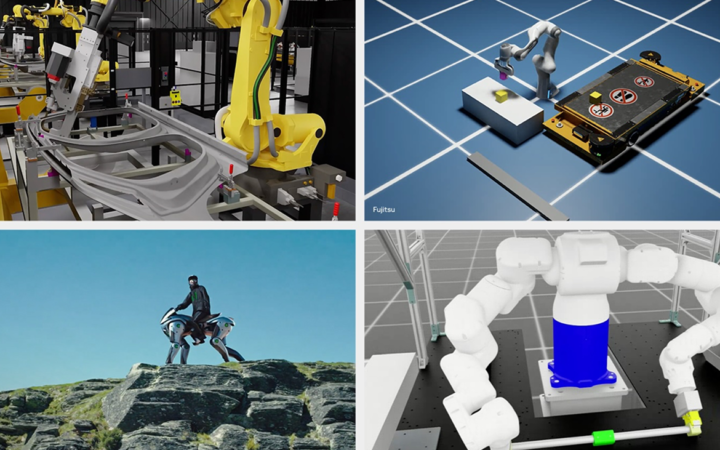
Ising is part of Nvidia’s expanding portfolio of domain-specific AI models, joining systems like Nemotron for agents, BioNeMo for biotech, and Isaac GR00T for robotics.
The broader strategy is clear. Apply AI not just to software, but to foundational scientific and industrial challenges, from biology to robotics to quantum computing.
With the quantum computing market projected to exceed $11 billion by 2030, tools like Ising could play a critical role in determining whether the technology transitions from experimental promise to real-world utility.