
Microsoft has introduced new multi-model capabilities to its Copilot assistant, enabling users to leverage multiple artificial intelligence systems within a single workflow as competition intensifies in the enterprise AI market.
The update allows Copilot’s Researcher agent to combine outputs from OpenAI’s GPT models and Anthropic’s Claude, marking a shift from relying on a single model to a collaborative AI approach. The company said the feature is designed to improve accuracy, reduce errors, and enhance overall productivity.
The move reflects a broader industry trend toward integrating multiple AI systems to balance strengths and mitigate weaknesses, particularly as businesses increasingly depend on AI for critical workflows.
AI Models Collaborate on Responses
At the core of the update is a new feature called “Critique.” In this workflow, GPT generates an initial response, which is then reviewed by Claude for quality and accuracy before being delivered to the user.
Microsoft said this layered approach helps address one of the key challenges in generative AI, known as hallucinations, where models produce incorrect or misleading information. By introducing a second model as a reviewer, the system aims to provide more reliable outputs.
The company plans to expand this capability further by making the process bi-directional, allowing GPT to also review Claude-generated responses. This would create a feedback loop between models, potentially improving performance over time.
Toward Multi-Model AI Systems
Microsoft is also launching a feature called “Model Council,” which allows users to compare outputs from different AI models side by side. This gives users greater visibility into how different systems interpret the same query and enables more informed decision-making.
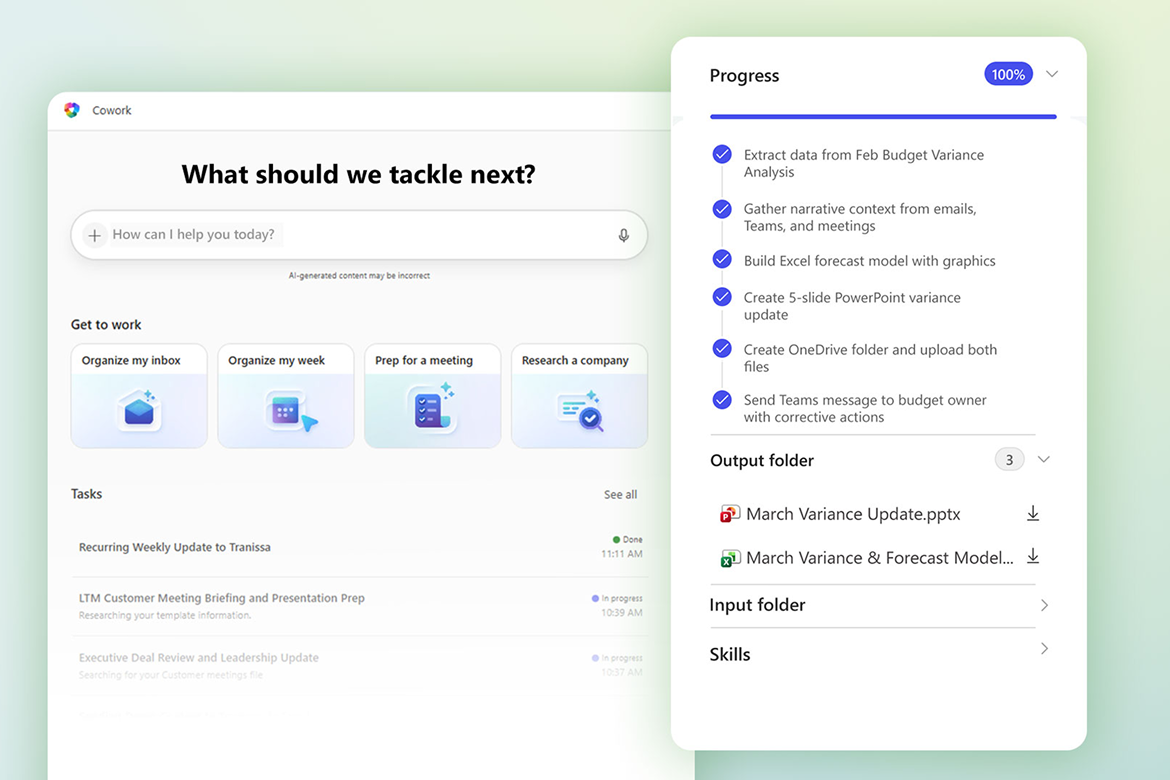
The updates are part of Microsoft’s broader effort to evolve Copilot into a more advanced agentic system capable of handling complex, multi-step tasks. The company has been expanding access to Copilot Cowork, an AI agent designed to assist with collaborative workflows across enterprise environments.
The introduction of multi-model functionality highlights a shift in strategy, where AI tools are no longer tied to a single provider or architecture. Instead, platforms are increasingly designed to orchestrate multiple models to deliver better results.
Microsoft faces growing competition from other AI providers, including Google’s Gemini and Anthropic’s enterprise-focused tools. By enabling collaboration between leading models, the company is positioning Copilot as a flexible platform that can integrate capabilities from across the AI ecosystem.
The latest updates underscore the importance of reliability and interoperability in enterprise AI adoption, as organizations seek systems that can deliver consistent and trustworthy results at scale. The expansion also aligns with Microsoft’s broader push into applied AI, including the launch of Copilot Health, a secure assistant designed to analyze medical records, wearable data, and health history to deliver personalized health insights.