Google Reinvents Search Around AI Agents and Interactive Results
Google has unveiled a major redesign of Search powered by Gemini and AI agents, replacing traditional link-based results with interactive experiences, persistent AI assistants, and customizable mini apps.
Google has announced one of the largest overhauls in the history of Search, replacing the traditional “ten blue links” model with AI-powered agents, interactive interfaces, and conversational experiences built on Gemini.
Presented at Google I/O 2026, the redesigned Search experience introduces a new AI-centric search box capable of handling longer, more conversational requests while dynamically generating interactive results rather than static lists of links.
Google said the updated system combines Gemini with Antigravity, the company’s agentic development platform, to transform Search from a retrieval engine into an action-oriented AI interface. Instead of manually navigating websites, users will increasingly interact with AI-generated experiences, persistent assistants, and automatically synthesized information.
The company is also introducing a new AI query suggestion system that helps users formulate more nuanced and complex searches beyond traditional autocomplete functionality. AI Overviews and AI Mode will additionally support follow-up questions directly within Search.
According to Google, AI Overviews now reach more than 2.5 billion monthly users, while AI Mode exceeds 1 billion monthly users globally.
AI Agents Begin Searching the Web for Users
One of the most significant additions is a new class of “information agents” that can continuously monitor the web and provide updates on behalf of users.
Starting this summer, users will be able to create and manage multiple agents inside Search that operate in the background 24 hours a day. These agents can monitor websites, financial markets, news developments, or other changing information sources and then deliver synthesized updates when conditions are met.
Google described the feature as an evolution of Google Alerts, but with reasoning capabilities layered on top of real-time monitoring systems. Rather than simply identifying matching keywords, the agents can analyze changes, summarize developments, and determine relevance using AI models.
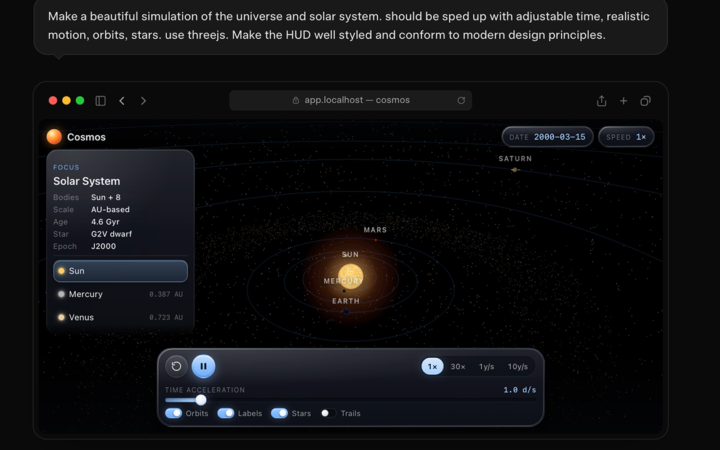
The company also showcased “generative UI” capabilities that dynamically create custom visualizations, interfaces, and widgets directly inside search results. For example, scientific concepts, financial data, or educational topics can generate interactive visual experiences that evolve through conversational follow-up questions.
Google said these experiences are powered by Gemini Flash 3.5 and were developed alongside the Google DeepMind team.
Search Expands Into Mini Apps and Persistent Experiences
Google is also transforming Search into a lightweight application platform.
Using natural language prompts, users will be able to create personalized “mini apps” directly inside Search. These stateful experiences can combine information from calendars, preferences, external services, and web data to automate recurring tasks or workflows.
Google suggested examples such as meal-planning systems integrated with personal schedules or custom fitness tools tailored to individual goals. The company said these experiences are designed to persist over time rather than disappear after a single query session.
The rollout builds on Google’s broader expansion of Gemini across its ecosystem, including Gemini 3.5 Flash for coding and AI agents, Gemini Omni Flash for multimodal video generation, and Antigravity 2.0 for agentic software development and orchestration.
The changes also represent a major shift for the web publishing ecosystem. As AI-generated summaries, agents, and interactive interfaces replace traditional search results, publishers may receive even less referral traffic from Google Search. Media companies have already faced declining traffic from AI Overviews, and the expansion of AI-native experiences could further reduce direct visits to websites.
Google said the new AI-powered search box launches this week, while generative UI and information agents begin rolling out this summer. Some advanced agentic and mini-app capabilities will initially be limited to Google AI Pro and Ultra subscribers before broader expansion over time.
SK Hynix raised $26.5 billion in its Nasdaq debut, the largest US listing ever by a foreign company, as investors rushed to buy into the AI memory chip…