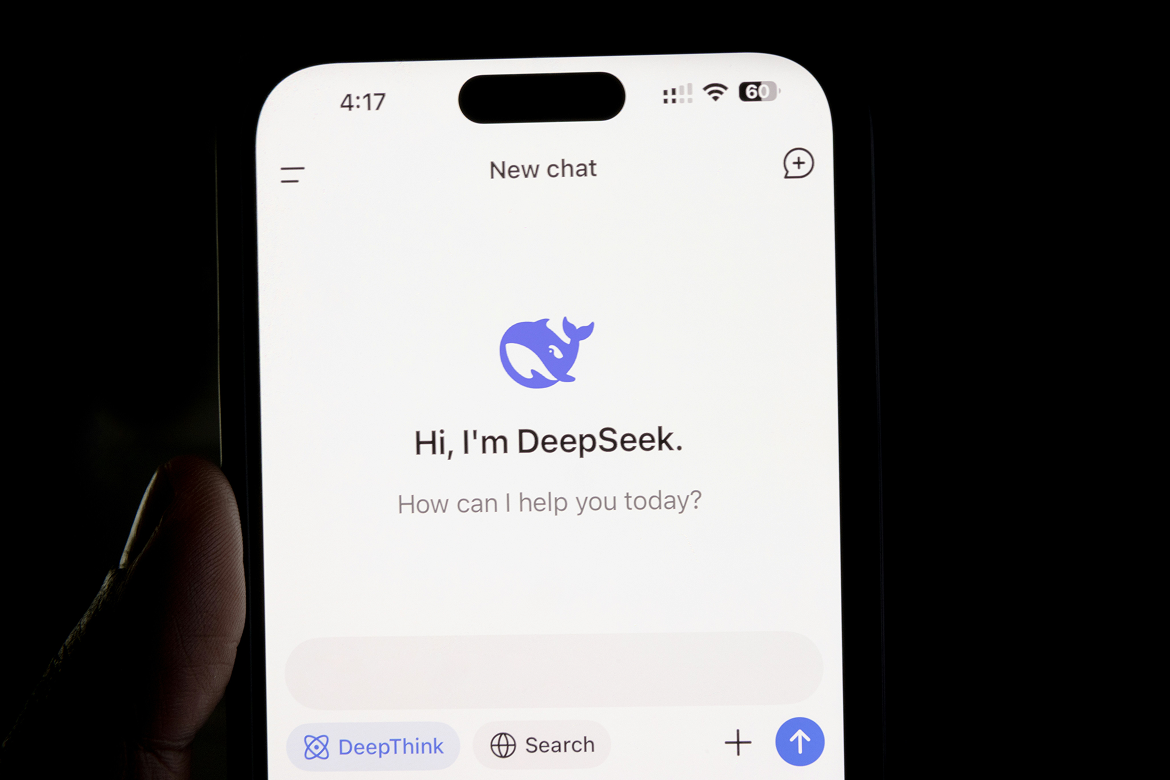
A high-capacity artificial intelligence model released anonymously on a developer platform is drawing scrutiny from engineers and researchers, with some suggesting it could be an early test version of a forthcoming system from Chinese startup DeepSeek.
The model, named Hunter Alpha, appeared on AI gateway platform OpenRouter on March 11 without attribution. It was later labeled a “stealth model” by the platform. Neither OpenRouter nor DeepSeek has confirmed its origin, and both organizations have not responded to requests for comment.
During independent testing by Reuters, the chatbot identified itself as “a Chinese AI model primarily trained in Chinese,” with a knowledge cutoff extending to May 2025. This detail aligns with the reported cutoff of DeepSeek’s current systems, though the model declined to disclose its developer when prompted.
Hunter Alpha’s technical profile has contributed to the speculation. It is described as a one-trillion-parameter model, placing it among the largest known language models. Parameter count is a key measure of model scale and computational complexity. Larger models typically require substantial infrastructure and are associated with advanced reasoning capabilities.
The system also advertises a context window of up to one million tokens, significantly exceeding most publicly available models. A larger context window allows the system to process and retain more information within a single interaction, which is useful for tasks such as long document analysis or multi-step reasoning.
Advanced Capabilities Raise Questions
Developers testing the system have highlighted its combination of scale, reasoning ability, and free access as unusual. Comparable models with similar specifications are typically restricted or priced at a premium due to their operational cost.
Some engineers have pointed to the model’s reasoning patterns as a potential indicator of its origin. Observers noted similarities in how Hunter Alpha structures multi-step responses, a feature often shaped by training methods and data design.
The model’s capabilities also align with reports from Chinese media about DeepSeek’s anticipated next-generation system, commonly referred to as V4. Those reports suggest the upcoming release could feature enhanced reasoning and expanded memory capacity, with a potential launch timeline as early as April.
Uncertainty Remains Over Origin
Despite the overlap in specifications, not all analysts are convinced of a direct connection. Independent benchmarking efforts have identified differences in token handling and architectural behavior compared to DeepSeek’s known models.
These discrepancies have led some researchers to conclude that Hunter Alpha may originate from a different developer or represent an experimental system with distinct design choices.
DeepSeek has gained attention in the AI sector for its rapid development of large-scale models and its unconventional structure as a subsidiary of a quantitative hedge fund. The company has positioned itself among a growing group of Chinese firms competing in the global AI race.
For now, Hunter Alpha remains an unidentified entrant in the increasingly competitive landscape of large language models. Its emergence highlights both the pace of development and the limited transparency that can accompany new AI releases.